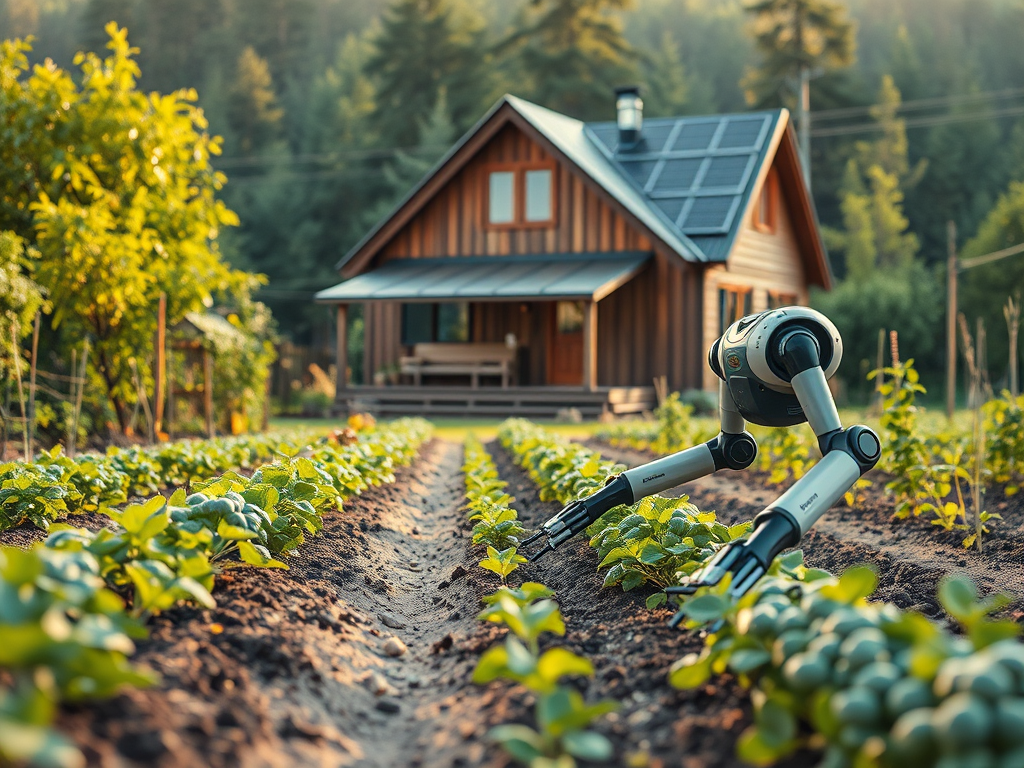
Homesteading has always been about independence, resilience, and self-reliance. From wood heat and root cellars to solar panels and rainwater catchment systems, homesteaders have consistently adopted tools that increase efficiency without sacrificing freedom.

Now a new wave of technology is arriving: artificial intelligence (AI) and robotics.
At first glance, AI might seem like the opposite of off-grid living. But in reality, it could become one of the most powerful tools modern homesteaders ever use.
Let’s explore how AI and robotics will shape the future of homesteading — and what it means for small farms, off-grid cabins, and self-sufficient families.
Smarter Food Production
Food production is at the heart of homesteading. AI-powered systems are already transforming agriculture, and those benefits are slowly becoming accessible to small-scale growers.
1. Precision Gardening
Future AI garden systems will:
- Monitor soil moisture in real time
- Analyze nutrient levels
- Detect plant diseases early
- Recommend exact planting schedules
Imagine a system that sends a notification:
“Your tomatoes are showing early signs of blight. Adjust airflow and apply organic treatment within 48 hours.”
Instead of reacting to problems after damage is done, homesteaders can prevent them.
2. Autonomous Garden Robots
Small robotic weeders already exist. In the future, affordable models may:
- Identify weeds vs. crops using AI vision
- Remove weeds mechanically (no chemicals)
- Plant seeds at exact spacing
- Harvest ripe produce automatically
For aging homesteaders or those managing large gardens alone, this could be game-changing.
Livestock Monitoring and Care
Animals require constant observation. AI will make that easier — without replacing hands-on stewardship.
Smart Monitoring Systems
Wearable livestock trackers may:
- Detect illness early
- Monitor body temperature
- Track grazing patterns
- Alert you if an animal is in distress
Instead of discovering a sick goat too late, you could receive an early warning.
For poultry keepers, AI coop systems could:
- Automatically close doors at dusk
- Detect predator movement
- Monitor egg production trends
This reduces loss while improving animal welfare.
Water and Energy Optimization
For off-grid homesteaders, water and power are critical.
AI systems can optimize both.
AI for Solar and Battery Systems
Future AI energy managers could:
- Predict weather patterns
- Adjust power usage automatically
- Shift loads to peak solar hours
- Protect batteries from overuse
Imagine your system automatically delaying heavy appliance use when cloudy weather is forecasted.
That’s resilience powered by intelligence.
Water Management Systems
AI-driven systems may:
- Monitor well levels
- Detect leaks
- Optimize irrigation schedules
- Predict drought stress
For homesteaders in remote areas, water intelligence could prevent costly emergencies.
Robotics for Physical Labor
Homesteading is physically demanding. Robotics may help reduce strain without replacing meaningful work.
Future robotics may assist with:
- Firewood processing
- Snow clearing
- Fence line inspection
- Field tilling
- Heavy lifting
Rather than eliminating work, these tools can extend the working life of homesteaders and reduce injury.
For solo homesteaders, this is especially valuable.
AI Planning and Decision Support
One overlooked benefit of AI is decision-making support.
AI systems can analyze:
- Crop rotation history
- Weather trends
- Soil health data
- Market conditions (for those who sell goods)
It could recommend:
- What to plant this season
- When to butcher livestock
- How to rotate pasture
- Which crops will thrive in your microclimate
This type of guidance doesn’t replace experience — it enhances it.
Emergency Preparedness and Security
Homesteaders often live in remote locations. AI could improve safety significantly.
Future systems may:
- Detect wildfire risk early
- Monitor forest health
- Identify intruders or predators
- Predict extreme weather events
An AI-enabled wildfire detection system could alert you before smoke is visible.
For forest homesteads, this alone could save property — or lives.
The Risk: Overdependence on Technology
There’s an important balance to consider.
Homesteading is about independence. Over-reliance on cloud-based systems or internet-dependent technology could create vulnerabilities.
Potential risks include:
- System failures
- Power dependency
- Cybersecurity concerns
- Loss of traditional skills
The goal should not be replacing knowledge — but strengthening it.
Smart homesteaders will likely adopt a hybrid approach:
Use AI as a tool, not a crutch.
Keep manual backups. Maintain traditional skills. Stay adaptable.
Will AI Destroy the Spirit of Homesteading?
Many worry that technology removes the authenticity of simple living.
But history tells a different story.
Wood stoves replaced open fires. Chainsaws replaced crosscut saws. Solar panels replaced kerosene lamps.
Each innovation initially felt “too modern.” Yet today, they are considered standard homestead tools.
AI may follow the same path.
The heart of homesteading isn’t about rejecting tools — it’s about choosing tools that increase self-reliance.
If AI helps you:
- Grow more food
- Waste less water
- Reduce animal suffering
- Protect your land
- Stay off the grid
Then it aligns with homesteading values.
The Future: Micro-Homesteads Powered by Intelligence
In the next 10–20 years, we may see:
- Fully automated greenhouse systems
- Self-driving electric tractors for small farms
- AI-managed food forests
- Drone-based property monitoring
- Intelligent compost management systems
Small homesteads may operate with the efficiency of large farms — without losing their independence.
The irony?
AI may actually make it easier for families to live simply.
Final Thoughts
AI and robotics will not replace homesteaders.
They will empower them.
The future homestead may look like this:
- Solar-powered
- Data-informed
- Highly efficient
- Environmentally optimized
- Still deeply human
Technology is only a threat when it controls us. But when used intentionally, it becomes another tool in the workshop.
The same mindset that built cabins, gardens, and off-grid systems can guide how we use AI.
The future of homesteading isn’t less hands-on.
It’s smarter, stronger, and more resilient.
Leave a Reply