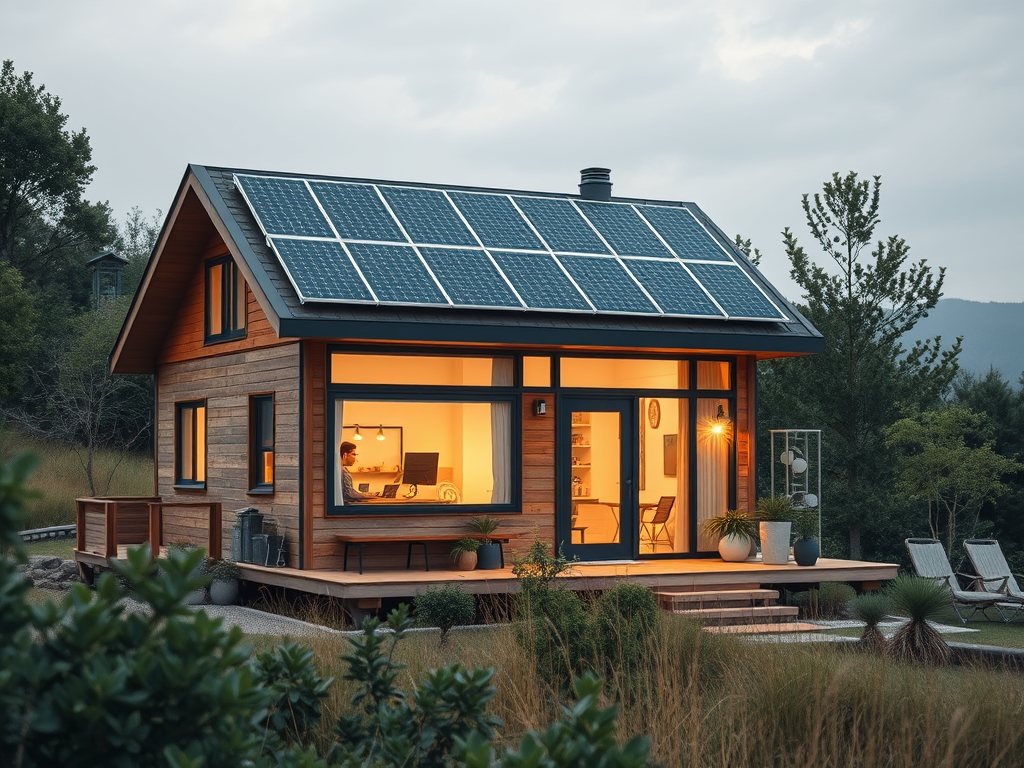

Off-grid living has exploded in popularity, but social media feeds full of picture-perfect tiny homes and YouTube vlogs don’t tell the whole story. If you’re considering making the jump to off-grid life or just curious about what it really takes, you’ve probably encountered plenty of myths about costs, complexity, and daily challenges.
This guide is for anyone who wants the real scoop on off-grid living in 2026—from city dwellers dreaming of escape to homesteaders planning their next move. We’ll cut through the noise and show you what modern off-grid life actually looks like.
We’ll break down the truth about startup costs and ongoing expenses, since many people either vastly underestimate or overestimate what it takes financially. You’ll also discover how recent technology advances have made off-grid living more sustainable and user-friendly than ever before. Plus, we’ll tackle the big question everyone asks: can you really stay connected to the internet and communicate reliably when you’re miles from the nearest cell tower?
Common Misconceptions About Off-Grid Living Costs and Complexity

Breaking down the “too expensive to start” myth with 2026 pricing data
The biggest barrier keeping people from going off-grid isn’t actually the cost—it’s the outdated belief that you need tens of thousands upfront. Solar panel prices have dropped 85% since 2010, and in 2026, a basic 5kW system costs around $8,000-12,000 installed. Compare that to the average American household spending $125-150 monthly on electricity, and you’re looking at payback in 5-7 years.
Battery technology tells an even better story. Lithium iron phosphate (LiFePO4) batteries that cost $800 per kWh in 2020 now run about $200-300 per kWh. A 20kWh home battery bank—enough for most households—costs roughly $4,000-6,000. Many families spend more than that on a used car.
| System Component | 2020 Cost | 2026 Cost | Savings |
|---|---|---|---|
| 5kW Solar Array | $18,000 | $10,000 | 44% |
| 20kWh Battery Bank | $16,000 | $5,000 | 69% |
| Inverter System | $3,500 | $2,200 | 37% |
Wind turbines for residential use have also become viable. Small 2-3kW units cost $3,000-5,000 and work great in conjunction with solar. Water systems are surprisingly affordable too—a decent well pump, pressure tank, and filtration setup runs $2,000-4,000.
The real game-changer? Modular systems. You don’t need everything at once. Start with a small solar setup and expand gradually. Many people begin with a $3,000-5,000 starter system and build from there.
Revealing how modern technology has simplified system maintenance
Remember when off-grid meant constantly checking battery levels and manually switching generators? Those days are long gone. Smart inverters now handle load balancing automatically, and battery management systems prevent overcharging without any input from you.
Smartphone apps connect to your entire power system via WiFi or cellular. You can monitor solar production, battery levels, and energy consumption from anywhere. Some systems even send alerts when maintenance is due or if something needs attention. No more daily trips to check gauges in a shed.
Solar panels essentially maintain themselves. Modern panels carry 25-year warranties and lose only 0.3-0.5% efficiency annually. Rain washes away most debris, and occasional hosing handles the rest. Microinverters and power optimizers mean if one panel has issues, the others keep working normally.
Battery technology has evolved dramatically. LiFePO4 batteries last 6,000-8,000 cycles compared to 500-800 for old lead-acid types. They charge faster, work in wider temperature ranges, and need zero maintenance. No more adding distilled water or checking specific gravity levels.
Water systems run mostly hands-off too. UV sterilizers work automatically, and modern pumps have built-in pressure controls. Whole-house filtration systems use quick-change cartridges you swap out every 6-12 months.
The biggest maintenance task? Cleaning solar panels maybe twice a year and changing water filters. Most people spend more time maintaining their cars than their off-grid systems.
Comparing actual monthly expenses versus traditional utility bills
Grid-tied households face relentless price increases. Electricity rates jumped 15% in 2024 alone, and experts predict another 20-30% increase by 2028. Meanwhile, off-grid systems have fixed costs that actually decrease over time as equipment pays for itself.
Average monthly utility bills tell the story:
- Electricity: $135
- Natural gas: $85
- Water/sewer: $75
- Internet: $65
- Total: $360/month
Off-grid monthly costs look different:
- Generator fuel (backup): $15-30
- System maintenance: $20-40
- Internet (satellite/cellular): $80-120
- Water filters/testing: $10-25
- Total: $125-215/month
That’s $145-235 in monthly savings, or $1,740-2,820 annually. Over 20 years, you save $34,800-56,400—enough to pay for your entire off-grid system twice over.
Property taxes often drop too since many areas assess off-grid properties lower than grid-connected ones. Insurance sometimes costs less because you’re not dependent on infrastructure that storms can damage.
The numbers get better when you factor in food production. A small greenhouse and garden can cut grocery bills by $100-200 monthly. Chickens provide eggs for about $15/month in feed costs versus $25-30 buying organic eggs.
Winter heating costs vanish with wood stoves fed by property timber or purchased wood at $150-200 per cord. Most off-grid homes use 2-4 cords annually—far less than propane or heating oil equivalents.
Understanding the real time investment for daily operations
The biggest misconception? That off-grid living means constant work. Modern systems run themselves most of the time. Daily “maintenance” involves checking a smartphone app for five minutes and maybe starting the generator if weather’s been poor for several days.
Morning routines stay basically the same. Coffee makers, showers, and lights work normally. The main difference is energy awareness—you naturally start using appliances during sunny hours and running dishwashers when solar production peaks.
Weekly tasks add maybe 2-3 hours:
- Checking generator oil levels (5 minutes)
- Cleaning solar panels if dusty (30 minutes)
- Monitoring water pressure and filters (10 minutes)
- Planning energy-intensive tasks around weather (15 minutes)
Seasonal maintenance requires more time but happens infrequently. Spring means checking connections and cleaning winter debris. Fall involves generator tune-ups and battery testing. These tasks take a weekend afternoon every few months.
Food production does require more time if you choose that path. Gardens need 30-60 minutes daily during growing season, plus weekend harvesting and preservation. But many people find this therapeutic rather than burdensome.
The learning curve is real but manageable. Most people become comfortable with their systems within 3-6 months. Online communities, YouTube tutorials, and manufacturer support make troubleshooting straightforward.
Emergency situations actually prove easier off-grid. When storms knock out power lines, off-grid homes keep running normally. No waiting for utility crews or wondering when service will restore.
The Truth About Off-Grid Internet and Communication Capabilities

Satellite Internet Speeds That Rival Urban Broadband Connections
Gone are the days when living off-grid meant accepting dial-up speeds or spotty connections. Starlink’s second-generation satellites now deliver download speeds between 100-200 Mbps to remote locations, matching what most suburban homes get through cable providers. HughesNet’s Jupiter 3 satellite pushes speeds up to 100 Mbps, while Amazon’s Project Kuiper promises similar performance when it launches fully in late 2024.
The latency issue that plagued older satellite services has dropped dramatically. Low Earth Orbit (LEO) satellites now achieve 20-40ms latency, compared to the 600ms+ delays of traditional geostationary satellites. This makes video calls, online gaming, and real-time collaboration possible from locations hundreds of miles from the nearest cell tower.
Equipment costs have become reasonable too. Starlink’s residential kit runs about $599 upfront with $120 monthly service, while HughesNet offers packages starting at $70 monthly. For many off-grid households, these costs are comparable to what they’d pay for utilities in traditional homes.
Mobile Coverage Expansion Reaching Remote Locations
Cell carriers have invested billions in expanding rural coverage through their own towers and partnerships with satellite providers. Verizon’s partnership with Amazon’s Kuiper and T-Mobile’s deal with Starlink mean standard smartphones can connect to satellites when terrestrial towers aren’t available.
Coverage maps show dramatic improvements since 2020. Areas that previously had zero bars now get reliable 4G and even 5G signals. FirstNet’s expansion specifically targets rural areas for emergency services, creating a secondary benefit for residents in those zones.
Signal boosters and external antennas can extend coverage even further. A quality cellular booster system costs $500-800 and can capture weak signals from towers 20+ miles away, amplifying them for indoor use.
Professional Remote Work Possibilities From Off-Grid Locations
Remote work infrastructure in off-grid locations now supports everything from video editing to software development. Multiple off-grid professionals successfully run consulting businesses, design firms, and tech companies from properties with solar power and satellite internet.
Cloud-based tools eliminate the need for powerful local servers. Video conferencing works smoothly with proper bandwidth management, and file syncing happens automatically when connections are stable. Many off-gridders use redundant internet connections – combining satellite and cellular services for backup.
The biggest challenge isn’t technical capability but power management. High-performance laptops and equipment require substantial solar arrays and battery storage. A typical remote worker needs 3-5kWh daily just for computers and networking equipment, doubling their baseline power requirements.
Professional success stories include architects designing buildings via CAD software, writers managing editorial teams, and programmers contributing to major tech projects – all from locations without traditional infrastructure.
Food Production and Self-Sufficiency Realities

Year-round growing techniques that maximize small spaces
Vertical growing systems have completely changed what’s possible in small spaces. Tower gardens, hydroponic walls, and stacked growing systems can produce 10 times more food per square foot than traditional gardens. LED grow lights now cost 75% less than they did five years ago, making indoor food production affordable year-round.
Cold frames and hoop houses extend growing seasons naturally without electricity. You can harvest fresh greens through winter using these simple structures. Succession planting every 2-3 weeks keeps vegetables coming continuously rather than getting overwhelmed with massive harvests all at once.
Microgreens pack incredible nutrition into tiny spaces and grow in just 7-14 days. A single 10×20 tray produces enough microgreens for a family of four for a week. They grow beautifully on windowsills, under LED strips, or in basements.
Preservation methods that eliminate grocery store dependence
Pressure canning preserves low-acid foods safely for years without refrigeration. Modern pressure canners are foolproof with digital gauges and automatic shut-offs. Dehydrators preserve fruits, vegetables, and meats using minimal electricity, especially when paired with solar power systems.
Fermentation requires no electricity and actually increases nutritional value. Sauerkraut, kimchi, and fermented vegetables stay fresh for months in cool storage. Salt-cured meats, when done properly, last without refrigeration and provide protein through winter months.
Root cellars maintain 32-40°F temperatures naturally, keeping potatoes, carrots, apples, and cabbage fresh for 6-8 months. You can build simple versions using earth-sheltered designs that cost under $500.
Livestock management for sustainable protein sources
Chickens provide both eggs and meat while requiring minimal space and feed. Six hens produce enough eggs for a family of four, and heritage breeds handle cold weather better than commercial varieties. Rabbits reproduce quickly, require little space, and convert feed to meat more efficiently than any other livestock.
Rotational grazing maximizes pasture use while keeping animals healthy. Moving livestock every few days prevents overgrazing and naturally fertilizes different areas. Electric fence systems make this manageable for one person and run efficiently on solar power.
Goats clear brush while providing milk and meat. Nigerian Dwarf goats work well for small properties and produce milk with higher butterfat content than many cow breeds. Two does provide enough milk for drinking, cheese-making, and soap production.
Community networks that enhance food security
Local food swaps connect neighbors who grow different crops. Trading excess tomatoes for someone’s surplus eggs creates food diversity without money changing hands. These networks often share equipment, seeds, and knowledge that individual homesteaders couldn’t access alone.
Bulk buying cooperatives reduce costs on feed, seeds, and preservation supplies by 30-50%. Groups of 10-15 families can access wholesale pricing on items that make off-grid food production more affordable.
Skill-sharing workshops spread knowledge faster than individual trial-and-error learning. Someone who masters cheese-making teaches others, while receiving lessons on beekeeping or meat processing. These relationships create resilient communities where everyone benefits from collective expertise.

Off-grid living in 2026 looks nothing like the expensive, primitive lifestyle many people imagine. Modern technology has made it more accessible, connected, and sustainable than ever before. Solar systems work better and cost less, internet reaches even the most remote areas, and food production doesn’t require massive farms or perfect soil. The safety concerns that once kept families away have been solved with better communication tools and smarter emergency planning.
The biggest barrier to off-grid living isn’t money or complexity – it’s outdated information. If you’ve been curious about this lifestyle but held back by old myths, it’s time to take a fresh look. Start small by researching current solar options in your area, testing satellite internet speeds, or trying container gardening. The off-grid life you’ve been dreaming about might be more realistic than you think.
Leave a Reply