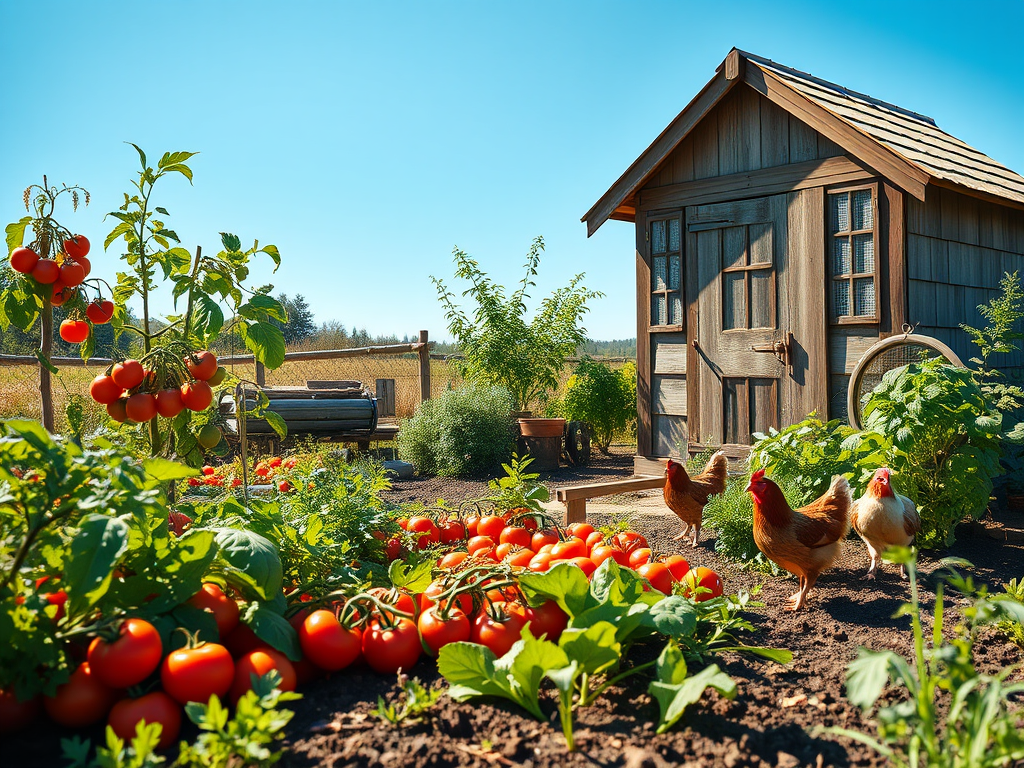

Starting a homestead doesn’t require hundreds of acres like you might think. Many aspiring homesteaders wonder exactly how much land they need to achieve their self-sufficiency dreams without breaking the bank or biting off more than they can handle.
This guide is for anyone considering the homesteading lifestyle, from complete beginners dreaming of leaving city life to experienced gardeners ready to expand into small-scale farming. You’ll discover the minimum land requirements for essential homesteading activities and learn how to maximize productivity on small acreage through smart planning and intensive growing methods.
We’ll also walk through how to scale your homestead based on different acreage options and cover the legal and financial considerations that can make or break your land selection decision. By the end, you’ll know exactly how much land fits your goals and budget.
Determine Your Homesteading Goals and Lifestyle Needs

Define your food production requirements
Before you start shopping for land, get crystal clear on what you want to grow and how much food you actually need. Start by tracking your family’s eating habits for a few weeks. Note how many pounds of vegetables, fruits, grains, and proteins you consume monthly. This baseline helps you calculate realistic production goals.
Consider which crops make the most sense for your climate and skill level. Root vegetables like potatoes and carrots store well and provide excellent caloric return per square foot. Leafy greens grow quickly and can be succession planted for continuous harvests. If you’re passionate about fresh tomatoes all summer, factor in space for multiple varieties.
Think about preservation methods too. Do you want to can, freeze, or dehydrate your harvest? Each method influences how much you should grow. A family planning to preserve 50 pounds of tomatoes needs significantly more growing space than one buying store-bought sauce.
Create a priority list ranking your most important crops. Maybe fresh herbs and salad greens top your list because store prices are high. Perhaps you dream of your own apple orchard for homemade cider. These preferences directly impact your land requirements and help you make smart property decisions.
Assess your livestock preferences and needs
Your animal choices dramatically affect land requirements. A few backyard chickens need minimal space – about 4 square feet per bird in the coop plus a small run. But if you want grass-fed beef, you’re looking at 1-2 acres per cow depending on pasture quality.
Start with your protein preferences. Do you eat mostly chicken and eggs, or does your family consume significant amounts of beef and pork? Each animal has different space, fencing, and shelter needs. Goats are excellent for clearing brush and providing milk on smaller acreages, while sheep work well for meat production and wool if that interests you.
Factor in processing and storage capabilities. Raising a steer requires not just grazing land but also access to butchering services and adequate freezer space. Dairy animals need daily milking commitments and proper cooling systems.
Consider your experience level honestly. Starting with chickens or rabbits allows you to learn animal husbandry basics without massive land investments. You can always expand your livestock operation as you gain confidence and potentially acquire more property.
Consider your family size and future growth plans
Your current household might include two adults, but what about five years from now? Growing families need more food production, larger gardens, and potentially different living arrangements. Plan for reasonable growth scenarios to avoid outgrowing your property quickly.
Think about extended family visits and your desire to share homegrown food. Many homesteaders love hosting family dinners featuring their own vegetables and meat. If you envision regular gatherings of 15 people around your harvest table, scale your production accordingly.
Consider aging parents or adult children who might return home. These life changes affect both housing needs and food production requirements. Additional residents might also bring extra hands for farm work, allowing you to manage larger gardens or more livestock.
Account for changing dietary needs too. Young families with growing teenagers consume significantly more food than empty nesters. Medical conditions might require special diets that influence what you choose to grow.
Evaluate your desired level of self-sufficiency
Self-sufficiency exists on a spectrum, and your goals determine land needs dramatically. Maybe you want fresh vegetables eight months of the year but you’re fine buying grains and meat. This approach requires much less land than producing 90% of your family’s food.
Be realistic about your time and energy commitments. Complete self-sufficiency demands extensive food preservation, grain storage, and year-round production planning. Partial self-sufficiency might mean growing summer vegetables and keeping chickens while purchasing everything else.
Consider your backup plans for crop failures or bad weather years. Most successful homesteaders maintain some financial buffer and alternative food sources. Planning for 80% self-sufficiency with 20% purchased food creates more resilience than aiming for complete independence.
Think about non-food items too. Do you want to produce your own firewood, grow fiber for clothing, or raise animals for leather? These goals require additional land and specialized knowledge but might align with your vision of homestead life.
Understand Minimum Land Requirements for Essential Homesteading Activities

Calculate space needed for vegetable gardens and orchards
A productive vegetable garden requires surprisingly little space when planned efficiently. For a family of four, you can grow a substantial portion of your annual vegetables in just 600-1,000 square feet. This assumes you’re growing a mix of space-efficient crops like tomatoes, peppers, beans, squash, and leafy greens.
Your garden layout should account for pathways, which typically consume 20-30% of your total garden space. Most vegetables need full sun exposure for 6-8 hours daily, so choose your location carefully. Raised beds maximize growing space while improving soil drainage and pest management.
For fruit production, dwarf fruit trees can thrive in spaces as small as 8×8 feet each, while standard trees need 20-30 feet between them. A small orchard of 10 dwarf trees requires roughly 1,600 square feet but can produce 200-500 pounds of fruit annually once mature.
Berry bushes offer excellent space efficiency. Blueberry bushes need 4-6 feet spacing and produce for decades, while strawberry patches yield impressive harvests from just 100 square feet. Consider vertical growing with grape arbors or trellised berry vines to maximize production per square foot.
Determine pasture requirements for different livestock types
Livestock significantly impacts your land requirements, with grazing animals needing the most space. Here’s what different animals require for healthy, sustainable grazing:
| Animal | Minimum Pasture per Animal | Ideal Pasture per Animal |
|---|---|---|
| Dairy Cow | 1-2 acres | 2-3 acres |
| Beef Cattle | 1-1.5 acres | 2-2.5 acres |
| Sheep | 0.2-0.5 acres | 0.5-1 acre |
| Goats | 0.2-0.5 acres | 0.5-1 acre |
| Pigs (pasture-raised) | 0.1-0.25 acres | 0.25-0.5 acres |
These numbers assume decent pasture quality and rotational grazing practices. Poor soil or overgrazed land requires significantly more space per animal. Chickens need much less space – 25 birds can free-range comfortably on one acre, though many homesteaders successfully raise flocks on much smaller plots with proper management.
Rotational grazing systems can double your carrying capacity by allowing pastures to recover while animals graze elsewhere. This requires fencing multiple paddocks but dramatically improves both animal health and pasture sustainability.
Plan for essential outbuildings and storage needs
Smart placement of outbuildings maximizes functionality while minimizing your land footprint. A basic homestead requires several key structures that work together efficiently.
Your barn or livestock shelter should be centrally located near both pastures and your home. A 24×32 foot barn provides adequate space for hay storage, animal shelter, and equipment storage for a small to medium homestead. Include 12-foot doors for equipment access and plan for proper ventilation.
Tool and equipment storage needs vary based on your activities, but budget 200-400 square feet minimum. A simple pole barn costs less than traditional construction while providing excellent protection for tractors, tools, and seasonal equipment.
Food preservation and storage buildings become critical as your production increases. A root cellar, whether built into a hillside or constructed as a separate building, requires only 8×10 feet but stores months worth of vegetables. Smokehouses for meat preservation need just 6×8 feet of space.
Consider multi-purpose buildings when space is limited. A greenhouse attached to your barn creates a warm, protected growing environment while taking advantage of existing infrastructure. Similarly, chicken coops can be built into barn structures, saving both space and construction costs while keeping everything centrally located for easier daily management.
Maximize Small Acreage Through Intensive Growing Methods

Implement Vertical Gardening and Container Systems
Small spaces don’t have to limit your growing potential. Vertical gardening transforms walls, fences, and even simple trellises into productive growing areas. Stack planters, hanging baskets, and wall-mounted systems can triple your growing space without expanding your footprint.
Container gardening offers flexibility that traditional beds can’t match. You can move crops to follow sunlight, protect plants during harsh weather, and create perfect growing conditions for specific plants. Large containers work well for tomatoes, peppers, and small fruit trees, while window boxes handle herbs and leafy greens beautifully.
Build simple A-frame structures for vining crops like cucumbers and beans. These vertical supports double your growing area while keeping plants organized and easy to harvest. Strawberry towers and potato towers pack serious production into minimal square footage.
Practice Succession Planting and Companion Growing
Succession planting keeps your harvests coming all season long instead of getting overwhelmed with everything ready at once. Plant lettuce every two weeks, start new bean rows before the current ones finish, and stagger your corn plantings for continuous fresh ears.
Companion planting maximizes every inch by growing compatible crops together. The classic “Three Sisters” combination of corn, beans, and squash works because each plant supports the others – corn provides structure for beans, beans add nitrogen to soil, and squash shades the ground to retain moisture.
Plant quick-growing crops like radishes between slower vegetables. By the time your tomatoes need the space, the radishes are long gone. Interplant lettuce with peppers, herbs with vegetables, and flowers with everything to create a diverse, productive garden that uses space efficiently.
Apply Permaculture Design Principles
Permaculture design creates systems that work with nature instead of against it. Zone planning places frequently used plants closest to your home, reducing daily walking while ensuring high-maintenance crops get proper attention.
Design water catchment systems that direct rainwater to your plants naturally. Swales, berms, and strategic placement of rain barrels can eliminate the need for constant watering while building soil health.
Stack functions wherever possible – a fruit tree provides food, shade for understory plants, and habitat for beneficial insects. Chickens eat bugs and weeds while fertilizing the soil. Every element should serve multiple purposes.
Create microclimates using existing features. South-facing walls extend growing seasons, while areas near water sources stay naturally moist. Wind barriers protect tender plants and create calmer spaces for both plants and people.
Apply Intensive Livestock Management Techniques
Rotational grazing transforms small pastures into highly productive systems. Move livestock frequently between paddocks, allowing grass to recover while preventing overgrazing. Even a quarter-acre can support several goats or sheep with proper rotation.
Chickens excel in small-space agriculture through managed foraging. Chicken tractors – portable coops that move daily – let birds clear garden beds, eat pests, and add fertilizer while preventing damage to growing crops. Free-ranging chickens in designated areas provide pest control while reducing feed costs.
Consider smaller livestock breeds that produce well in confined spaces. Miniature goats, heritage breed chickens, and rabbits require less room than standard animals while still providing meat, milk, and eggs for your family.

The amount of land you need for homesteading really comes down to your specific goals and how you want to live. A family focused on growing vegetables and raising a few chickens can thrive on just one acre using smart growing techniques like raised beds and vertical gardening. Those dreaming of cattle ranching and grain production will need significantly more space, often 10-20 acres or more depending on their location and soil quality.
Remember that more land doesn’t always mean better homesteading. Small acreage forces you to be creative and efficient, often leading to higher productivity per square foot than larger spreads. Before you start shopping for property, sit down and honestly assess what you want to accomplish, how much work you’re willing to take on, and what your budget can handle. Start small if you’re unsure – you can always expand later as your skills and confidence grow. The perfect homestead is the one that matches your vision, your energy level, and your wallet.
Leave a Reply