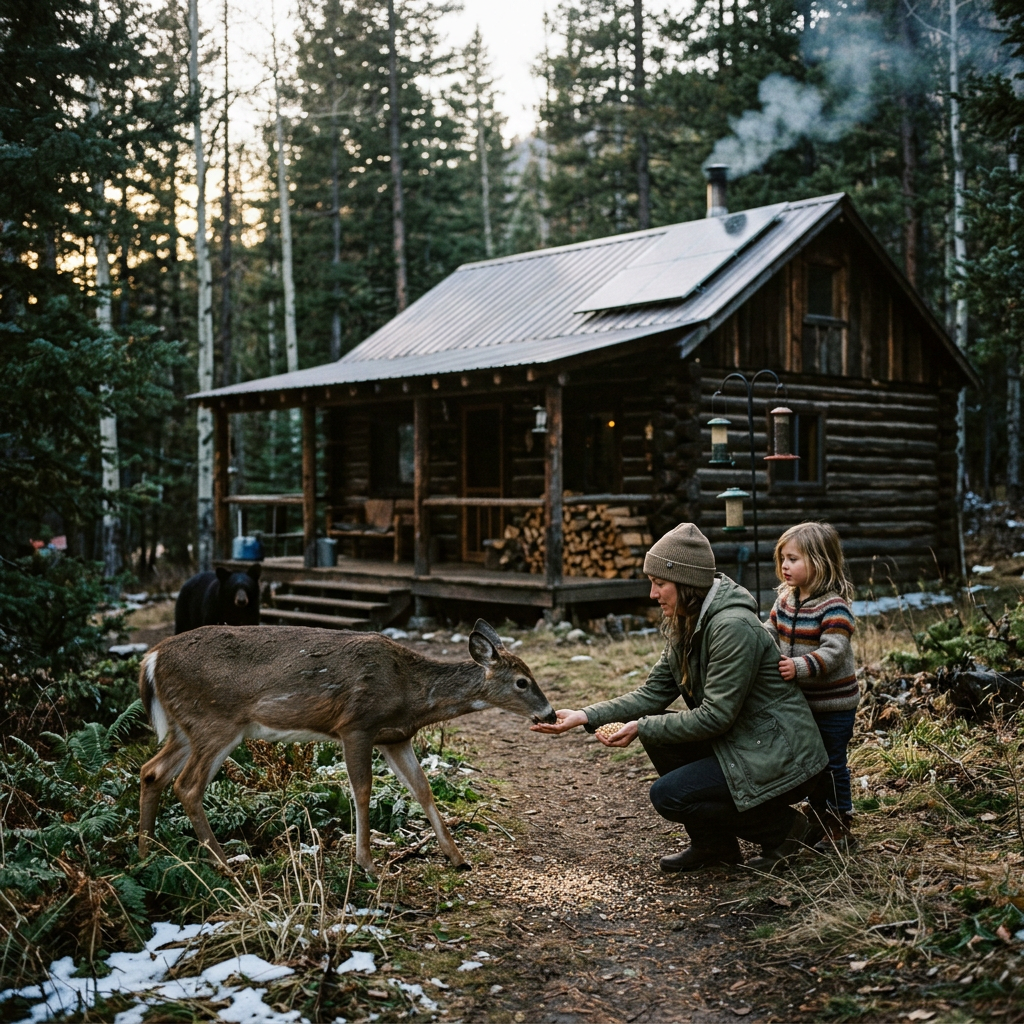

Feeding Wild Animals Around Your Off-Grid Cabin: Pros and Cons
If you live off-grid or spend serious time at a remote cabin, the idea of feeding wild animals nearby probably feels pretty tempting. Watching a deer eat from your hand or coaxing a fox closer to your porch sounds magical — and honestly, it can be. But feeding wildlife around your off-grid cabin comes with real trade-offs that are worth understanding before you toss out those first scraps.
This guide is for off-grid cabin owners, homesteaders, and remote property dwellers who want a honest look at both sides of the equation.
Here’s what we’ll cover:
- The real benefits — why people do it and what makes the experience genuinely rewarding
- The risks and dangers — to you, your property, and the animals themselves
- Smarter alternatives — ways to attract and enjoy wildlife without creating bigger problems down the road
No sugarcoating, no scare tactics — just straightforward information so you can make the right call for your setup.
Understanding the Appeal of Feeding Wild Animals Near Your Cabin

Building a Deeper Connection with Local Wildlife
There’s something genuinely magical about sitting on your cabin porch with a cup of coffee and watching a white-tailed deer step quietly out of the tree line, or seeing a family of raccoons shuffle past at dusk. For people who choose off-grid living, that closeness to nature isn’t just a perk — it’s often the whole point.
Feeding wild animals creates a kind of ritual. You start recognizing the same individuals. Maybe there’s a squirrel missing half its tail, or a particular doe who always shows up before the others. Over time, you stop seeing “wildlife” as a category and start seeing actual animals with personalities and habits. That shift changes how you relate to the natural world in a pretty profound way.
This kind of connection can also sharpen your observational skills in ways that are genuinely useful for off-grid living:
- Tracking patterns – Animals become predictable when fed regularly, helping you learn their natural movement routes and behaviors.
- Reading seasonal cues – Changes in which species visit, and when, can signal shifts in weather, food availability, and seasonal cycles.
- Understanding local ecosystems – Watching which animals interact, compete, or avoid each other teaches you about the food web right in your backyard.
For many cabin owners, this isn’t just casual interest. It becomes a form of daily mindfulness — a reason to slow down, pay attention, and stay present.
Enhancing the Off-Grid Living Experience Through Nature
Off-grid living is built around the idea of stepping away from the noise and reconnecting with something more real. Feeding wildlife fits naturally into that philosophy, at least on the surface. It transforms your property into a living ecosystem you’re actively participating in rather than just observing from a distance.
There’s a real psychological benefit here too. Studies have consistently shown that regular interaction with nature lowers stress, reduces anxiety, and improves mood. When you’re already out in the woods, adding a layer of animal interaction amplifies those effects. Watching animals go about their lives — foraging, grooming, playing — is oddly grounding. It pulls you out of your head and into the present moment in a way that’s hard to replicate.
For families or couples living off-grid, feeding wildlife can also create a shared daily experience that builds routine and meaning. Kids especially tend to form strong emotional bonds with animals they see regularly, and those early experiences with wildlife often translate into lifelong environmental awareness and responsibility.
Here’s how regular wildlife feeding can weave into the fabric of off-grid life:
| Off-Grid Value | How Wildlife Feeding Connects |
|---|---|
| Self-sufficiency | Learning animal behavior helps with hunting, pest management, and land stewardship |
| Simplicity | A quiet morning watching birds at a feeder replaces screen time and digital noise |
| Community | Shared wildlife sightings become conversation and bonding moments with family or neighbors |
| Seasonal living | Animal visits mark the rhythm of the year more vividly than any calendar |
| Land stewardship | Understanding resident animals informs better land management decisions |
That said, this enhanced experience comes with responsibility. The more you invite wildlife into your daily routine, the more your choices affect them — and that weight is worth taking seriously.
Creating Memorable Wildlife Viewing Opportunities
Ask any off-grid cabin owner what they love most about their lifestyle, and wildlife sightings almost always make the list. A moose wading through the pond at sunrise. A red fox teaching her kits to hunt in the tall grass. A great horned owl landing silently on the fence post twelve feet away. These aren’t things you schedule or plan — they happen, and when they do, they stick with you.
Feeding wildlife increases the frequency of these moments. When animals know your property is a reliable food source, they return. They bring their young. They stick around longer. What might have been a once-a-season sighting becomes a weekly or even daily occurrence.
This makes off-grid cabins particularly special for:
- Wildlife photographers who want consistent, close-up opportunities with wild subjects in natural settings
- Naturalists and hobbyists keeping personal records of local species, behaviors, and seasonal changes
- Families with children who want kids to grow up with firsthand wildlife experiences rather than purely screen-based nature content
- Hunters and trackers who benefit from understanding local animal populations and movement habits
- People recovering from illness or burnout who find animal interaction genuinely therapeutic and restorative
The viewing experience is also deeply personal. You’re not at a zoo or a wildlife park — these animals are choosing to be there, and that distinction matters emotionally. There’s no glass between you and the fox sniffing around your woodpile. That proximity, that sense of being trusted or at least tolerated by a wild creature, taps into something ancient and deeply human.
The memories created through regular wildlife encounters at an off-grid cabin often become some of the most treasured stories people carry from that chapter of their lives. And that’s a powerful thing, even before you start weighing any of the complications that come with it.
Key Benefits of Feeding Wild Animals Around Your Cabin

Attracting Diverse Species for Natural Pest Control
One of the most practical perks of feeding wild animals near your off-grid cabin is what happens behind the scenes with your pest population. When you bring in the right wildlife, you’re essentially hiring a free, around-the-clock pest control crew.
Here’s how different species pull their weight:
- Birds like swallows, wrens, and chickadees are absolute machines when it comes to eating insects. A single chickadee can consume thousands of caterpillars, aphids, and beetles in a single season.
- Bats, attracted by water sources and roosting spots near a fed colony area, will devour mosquitoes by the hundreds every hour after dusk.
- Foxes and owls keep rodent populations in check, which matters a great deal when you’re storing grain, firewood, or food supplies in an off-grid setup.
- Toads and frogs, drawn in when you create feeding and watering stations, silently work through slugs and beetles that would otherwise devastate a garden.
The beauty of this approach is that it creates a layered defense system. Instead of relying on chemical repellents or traps — which often come with their own set of problems in a natural setting — you’re leaning on the food chain to do the work naturally.
| Predator Species | Primary Pest Controlled | Best Attracted By |
|---|---|---|
| Barn Owl | Mice, voles, rats | Nesting boxes, open meadow habitat |
| Purple Martin | Mosquitoes, flying insects | Martin houses near water |
| Eastern Toad | Slugs, beetles, ants | Shallow water dish, leaf cover |
| Red Fox | Rabbits, squirrels, rodents | Minimal disturbance, open land |
| Bat Species | Mosquitoes, moths | Water sources, bat boxes |
When you support these animals with supplemental food during lean seasons, they stick around longer and maintain territory close to your property — which keeps the pest pressure consistently low.
Supporting Animals During Harsh Weather and Food Scarcity
Winter and drought seasons can be genuinely brutal for wildlife. Natural food sources disappear fast — berries are picked clean, insects go dormant, and the ground freezes solid, cutting off access to grubs and seeds. For animals living near your cabin, this is when supplemental feeding can make a real, tangible difference.
Think about what a deer herd faces during a sustained snowstorm. Their ability to forage drops dramatically when snow depth goes past their knee joint. Same goes for songbirds — a sudden freeze after a warm spell can wipe out a bird’s entire local food supply overnight. Offering high-fat, calorie-dense food during these windows genuinely helps animals survive periods they might otherwise not.
Foods that provide meaningful support during scarcity:
- Black oil sunflower seeds — High fat content, easy to crack, loved by dozens of bird species
- Suet cakes — Critical cold-weather food for woodpeckers, nuthatches, and Carolina wrens
- Cracked corn and dried fruit — Good for ground-feeding birds like juncos, doves, and sparrows
- Deer mineral blocks and hay — Supports herd health when natural browse is buried under snow
- Whole peanuts — Squirrels, jays, and even woodpeckers go after these with serious enthusiasm
The key thing to keep in mind here is timing and consistency. If you start feeding during a hard freeze, animals will come to rely on that source. That’s not automatically a bad thing — but it does mean you need to stay consistent through the rest of the season. Stopping suddenly during a cold snap after animals have adjusted their foraging territory around your cabin can actually leave them worse off than if you’d never started.
Done thoughtfully, winter feeding becomes a meaningful conservation act right in your own backyard.
Encouraging a Thriving Local Ecosystem
An off-grid cabin surrounded by healthy, active wildlife isn’t just pleasant — it’s a sign that the surrounding habitat is working as it should. When you feed wildlife in a smart, intentional way, you can actually play a small but real role in keeping that balance going.
Here’s what tends to happen over time when wildlife is consistently supported near a cabin:
- Seed dispersers move through more regularly. Birds and squirrels that visit feeders carry seeds far beyond your property, naturally replanting native species across a wider area.
- Pollinator corridors strengthen. Feeding hummingbirds and supporting native bees with supplemental nectar plants creates small but important links in regional pollination networks.
- Predator-prey cycles stabilize. When prey species like rabbits, mice, and songbirds maintain healthy numbers near your property, predators like hawks, owls, and foxes stay active in the area — keeping everything in balance.
- Water sources become ecosystem hubs. A simple birdbath or shallow pond set up as part of your feeding station becomes a gathering point for amphibians, insects, birds, and small mammals — sparking a miniature food web around your cabin.
Off-grid properties that actively support wildlife often become what ecologists loosely call refuge habitat — patches of land where species can find reliable resources in landscapes that have otherwise been fragmented by development. This is especially meaningful in rural areas where agricultural practices or logging have removed natural food and cover.
Your cabin doesn’t need to be a wildlife sanctuary to contribute here. Even small, consistent efforts — a feeder here, a brush pile there, a water source kept clean and full — add up to something real at the landscape level over time.
Providing Entertainment and Educational Value for Families
There’s something almost magnetic about watching wildlife up close that no screen can fully replicate. For families living off the grid — especially those raising kids away from urban environments — a well-managed feeding station near the cabin becomes one of the richest learning environments imaginable.
What kids pick up naturally through wildlife observation:
- Behavioral patterns — Children quickly notice that certain birds dominate the feeder, others wait their turn, and some species only appear at dawn or dusk. These observations are early lessons in animal behavior and ecology without a textbook in sight.
- Seasonal changes — Watching which species appear in winter versus summer, when migratory birds arrive and depart, and how animal activity shifts with temperature gives children a felt understanding of seasons that goes much deeper than a calendar date.
- Food webs in action — When a hawk shows up and scatters songbirds from the feeder, that’s a live, real-time demonstration of predator-prey relationships. Kids who witness this tend to remember it far longer than any classroom lesson.
- Patience and stillness — Wildlife watching teaches kids to slow down, be quiet, and pay attention. These are underrated life skills, and wild animals are excellent teachers.
For adults, the entertainment value is just as genuine. Morning coffee tastes different when there’s a red fox trotting across the clearing or a pair of cardinals working through sunflower seeds ten feet from the window. It grounds you in place and season in a way that’s hard to put into words but deeply satisfying.
Practical ways to enhance the educational experience:
| Activity | What It Teaches | Age Range |
|---|---|---|
| Keeping a wildlife journal | Observation, recording, pattern recognition | 6 and up |
| Learning bird calls | Memory, sensory awareness, species ID | All ages |
| Tracking animal visits with a camera trap | Technology, wildlife behavior, patience | 8 and up |
| Sketching animals at the feeder | Artistic skills, attention to detail | 5 and up |
| Identifying scat and tracks near feeding areas | Field naturalist skills, ecology | 7 and up |
Living off-grid already puts families in closer contact with the natural world than most people ever experience. Feeding wildlife thoughtfully deepens that connection and turns the land around your cabin into a living classroom that never runs out of material.
Serious Risks and Dangers to Be Aware Of

A. Increasing the Chance of Aggressive Animal Encounters
When wild animals associate your cabin with food, they stop fearing you — and that’s when things get genuinely dangerous. Animals that have been fed by humans repeatedly start to lose their natural wariness. A deer that once bolted at the sound of your footsteps may now walk right up to your porch. A bear that found a food reward near your cabin will return, and each visit makes it bolder than the last.
The problem isn’t just the initial encounter. It’s what happens when the food runs out. Animals that have been conditioned to expect a handout can become frustrated and aggressive when that expectation isn’t met. This is especially true for larger mammals like black bears, moose, elk, and even wild boars.
Common scenarios where aggression escalates:
- A doe protecting her fawns becomes territorial near a feeding area
- A black bear charges when food is present but out of reach
- A moose, normally avoidant of humans, stands its ground near a regular feeding spot
- Raccoons or squirrels bite when hand-feeding doesn’t go as expected
- Wild turkeys become bold and may attack smaller pets or children
Injuries from habituated wildlife are far more common than most people realize, and they’re disproportionately tied to situations where humans have been feeding animals, either intentionally or accidentally. Wildlife agencies across North America report that the majority of bear-human conflicts involve animals that have previously been food-conditioned.
B. Spreading Disease and Parasites to Humans and Pets
Wild animals carry a wide range of pathogens and parasites — many of which can jump to humans and domestic animals with very little contact. When you start attracting wildlife to your cabin on a regular basis, you’re essentially rolling out the welcome mat for those health risks too.
Diseases commonly carried by wildlife near cabins:
| Animal | Diseases/Parasites |
|---|---|
| Raccoons | Baylisascaris (raccoon roundworm), leptospirosis, rabies |
| Deer | Chronic Wasting Disease (CWD), Lyme disease (via ticks) |
| Foxes & Coyotes | Sarcoptic mange, rabies, parvovirus |
| Birds | Salmonella, histoplasmosis, avian influenza |
| Rodents | Hantavirus, plague, leptospirosis |
| Bears | Giardia, trichinosis |
Some of these diseases are serious. Hantavirus, for example, can be fatal, and it spreads through contact with infected rodent droppings or urine — something that becomes much more likely when you’re regularly attracting rodents with food. Rabies, though treatable if caught early, requires immediate medical attention and is terrifying to deal with in a remote off-grid setting where you may be hours from a hospital.
Ticks hitching a ride on deer that visit your yard regularly dramatically increase your risk of Lyme disease, Rocky Mountain spotted fever, and other tick-borne illnesses. Your dogs and cats face the same threat, plus additional exposure risks from directly sniffing or playing around wild animal feeding zones.
Fecal contamination is another overlooked danger. When animals congregate at feeding stations, they defecate nearby. Over time, that buildup can contaminate soil, water sources, and even garden areas — a significant problem if you rely on a well or surface water near your cabin.
C. Creating Dangerous Dependency in Wild Animals
One of the biggest long-term harms of wildlife feeding is something that unfolds slowly and quietly — animals lose the ability to take care of themselves. It sounds dramatic, but it’s a real ecological tragedy that plays out every year across rural areas and wilderness zones.
When you consistently provide food, animals adjust their behavior around that supply. Young animals, in particular, may never fully develop proper foraging and hunting skills because supplemental feeding shortcuts the learning process. Fawns that grow up near feeding stations, for example, may have a harder time surviving on natural browse once the feeding stops — whether because you’ve moved away, stopped feeding, or wildlife authorities have intervened.
What dependency looks like in practice:
- Animals stop migrating or adjusting their range naturally
- Nutritional imbalances develop because artificial food doesn’t match wild dietary needs
- Animals lose the seasonal weight gain patterns that help them survive winter
- Wildlife congregates in unnaturally high densities, creating stress and increased disease transmission
- When feeding stops abruptly, animals may starve or fail to thrive
Bears are a textbook example. A bear that learns to rely on human food sources often abandons its natural feeding patterns. These animals are sometimes called “nuisance bears,” but they didn’t choose that path — they were trained into it. The outcome is almost always tragic: the bear is relocated (which often fails) or euthanized. The phrase wildlife managers use is stark — “a fed bear is a dead bear.” That saying exists because it’s true.
The dependency issue also affects animal behavior on a population level. Artificially congregating animals at feeding stations allows diseases to spread faster and disrupts natural territorial behaviors that keep populations healthy and balanced.
D. Attracting Predators That Threaten Your Safety and Property
Here’s something people don’t always think through: when you attract prey animals — deer, rabbits, squirrels, birds — you are also sending an open invitation to the predators that hunt them. And those predators can pose a very real threat to you, your pets, and your livestock.
Predators commonly drawn to cabin areas where prey is concentrated:
- Mountain lions / cougars – follow deer populations closely; can kill dogs and threaten children
- Wolves and coyotes – attracted to deer and small animals, will take pets and small livestock
- Bears – drawn to bird feeders, pet food, garbage, and prey congregating at feeding spots
- Bobcats and lynx – attracted by rabbits and ground-feeding birds
- Birds of prey (eagles, great horned owls, red-tailed hawks) – will take small pets and poultry
The real danger isn’t always dramatic. It’s often gradual. You start feeding birds, which attracts squirrels, which attracts foxes, which attracts coyotes. Before long, you’ve created a food chain that terminates in a predator walking through your yard at night.
For off-grid cabin owners with chickens, goats, or other small animals, this is especially serious. Predators that identify your property as an easy hunting ground will return repeatedly, and each successful kill makes them more persistent. Livestock losses can be financially devastating, and the stress of protecting animals from nightly predator pressure is exhausting.
Your own safety is also a real consideration, particularly if large predators like mountain lions or wolves become comfortable near your cabin. These animals rarely attack humans unprovoked, but when they’ve lost their natural fear of human activity — often because of habituation to human-associated food sources — the risk goes up meaningfully.
E. Inviting Property Damage from Bold or Habituated Animals
Animals that no longer fear humans don’t just walk up to you — they walk into your space, through your stuff, and sometimes through your walls. Property damage from habituated wildlife is a genuine and often expensive problem for off-grid cabin owners.
Bears are the most notorious culprits. A bear that has been food-conditioned will break into structures to access food. They can tear off cabin doors, rip through screened porches, destroy coolers and outdoor kitchens, break windows, and demolish anything standing between them and a food reward. Bear damage to property can run into thousands of dollars in repair costs — and once a bear knows your cabin as a food source, it will return again and again until the situation is resolved.
Other animals that cause significant property damage:
| Animal | Type of Damage |
|---|---|
| Raccoons | Torn roof vents, damaged attic insulation, overturned garbage areas |
| Deer | Garden destruction, damaged young trees, broken fencing |
| Woodpeckers (attracted by feeders) | Structural wood damage to cabin siding and eaves |
| Squirrels | Chewing through wiring, nesting in walls and attics |
| Porcupines | Gnawing on wooden structures, tool handles, tires, and cables |
| Skunks | Digging under foundations and outbuildings, potential spraying |
Beyond the physical damage, there’s also the hygiene issue. Animals marking territory, nesting near or inside structures, and depositing waste around your property create significant cleanup challenges. In remote, off-grid settings, this is even harder to manage without easy access to professional pest control or remediation services.
The pattern almost always starts the same way: an animal discovers something edible near the cabin, visits more frequently, becomes less fearful of human presence, and then starts treating the entire property as its territory. Once that behavioral shift happens, reversing it is very difficult and sometimes impossible without professional wildlife intervention.
Ecological Consequences of Regular Feeding

Disrupting Natural Foraging and Migration Behaviors
When you start putting out food for wildlife near your off-grid cabin, you’re essentially rewriting the rulebook that animals have followed for thousands of years. Wild animals are hardwired to move, search, and work for their food. That instinct drives everything — from their daily routines to their seasonal migration patterns.
Here’s what actually happens when regular feeding enters the picture:
- Birds alter or abandon migration routes when they discover a reliable food source. Species that should be heading south for winter may linger dangerously long in cold climates because your feeders keep them fed.
- Deer and elk shift their home ranges to center around artificial feeding stations, pulling them away from habitats that naturally support their nutritional needs across different seasons.
- Foraging skills go rusty fast. Young animals, in particular, learn what their parents do. If mom is spending most of her time at a cabin feeding station instead of teaching her offspring how to dig, forage, root, or hunt — those skills simply don’t get passed down.
- Feeding stations disrupt territorial behaviors, pulling animals out of their natural zones and into areas where competition, stress, and conflict increase sharply.
Migration isn’t just about temperature — it’s tied to breeding cycles, parasite avoidance, and accessing seasonal food sources that provide specific nutrients. When animals skip or shorten migration, they miss out on all of that. The ripple effects reach far beyond your backyard.
Causing Overpopulation in Localized Areas
Artificial feeding creates what wildlife biologists call an “artificial carrying capacity” — basically, you’re tricking the local ecosystem into supporting far more animals than it naturally can. This sounds harmless, even generous, but the reality on the ground is messy and damaging.
What overpopulation looks like in practice:
| Species | Overpopulation Effect |
|---|---|
| Deer | Overgrazing strips vegetation, destroys understory plants, and leads to starvation when feeding stops |
| Squirrels & Raccoons | Explosive population growth leads to property damage and resource depletion |
| Birds | Crowded feeders spread disease rapidly through direct contact |
| Bears | Conflict with humans increases dramatically as populations concentrate near cabins |
| Waterfowl | Localized pond or lake degradation from waste buildup |
When animal populations spike in a small area, the natural habitat can’t keep up. Vegetation gets stripped. Soil gets compacted. Water sources get contaminated from concentrated waste. Native plants that took decades to establish get bulldozed by hungry, overpopulated herds.
There’s also a predator pull effect. When prey animals concentrate in one spot, predators follow. This draws mountain lions, coyotes, wolves, and bears into spaces where they wouldn’t normally spend time — right next to your cabin. That’s a safety risk that builds slowly and then hits all at once.
When you eventually stop feeding — whether by choice, seasonal absence, or necessity — that artificially inflated population crashes hard. Animals that have come to depend on that location suddenly face a habitat that can’t support them, leading to widespread starvation and suffering that wouldn’t have happened if the population had stayed naturally balanced.
Reducing Animals’ Natural Ability to Survive Independently
This is probably the most heartbreaking consequence of regular wildlife feeding, and it’s one that most cabin owners never see coming. What starts as an act of kindness quietly chips away at the very traits that keep wild animals alive.
The dependency cycle works like this:
- Animals discover an easy, reliable food source at your cabin
- They spend less energy foraging, hunting, or problem-solving for food
- Over weeks and months, their instinct to seek out natural food sources weakens
- Young animals raised near the feeding station never fully develop independent survival skills
- When the food source disappears — seasonally or permanently — these animals struggle or fail to survive
This is especially devastating for young animals. A fawn that grows up walking to a feeding station instead of learning browse patterns from its mother, or a bear cub that associates human structures with easy calories instead of learning to find berries, grubs, and prey — these animals are set up for failure the moment the handouts stop.
Species most vulnerable to dependency:
- Black bears — once food-conditioned, they rarely revert to fully wild behavior and often end up euthanized by wildlife agencies
- Deer — can lose the ability to efficiently digest natural forage if supplemental feed becomes their primary diet
- Raccoons and foxes — quickly lose wariness of humans, making them vulnerable to poaching, vehicle strikes, and conflict
- Songbirds — while less severe, research shows some species reduce natural foraging effort when feeders are consistently available
There’s a term used in wildlife management: “a fed bear is a dead bear.” It applies far beyond bears. Any animal that loses its natural fear of humans, its foraging instincts, or its ability to navigate its environment independently has a dramatically shortened life expectancy. The cabin owner who fed them with good intentions rarely sees the end of that story.
Wild animals are not domesticated. Their survival depends on staying sharp, staying wild, and staying capable. Every handout, no matter how well-meaning, takes a small piece of that away.
Legal and Ethical Considerations for Off-Grid Cabin Owners

Understanding Local Wildlife Feeding Laws and Regulations
Most off-grid cabin owners head out into the wilderness with a deep love for nature, but that passion doesn’t automatically come with a legal pass to interact with wildlife however you please. Across North America, Europe, and many other regions, feeding wild animals is heavily regulated — and in some cases, outright banned.
Here’s the reality: wildlife feeding laws vary dramatically depending on your location, the species involved, and even the season. What’s allowed in one county or province might carry a hefty fine just a few miles away.
Common Legal Restrictions to Know About:
- National and State/Provincial Parks: Feeding any wildlife is almost universally prohibited in protected areas. Rangers can issue fines ranging from $50 to several thousand dollars depending on the jurisdiction.
- Species-Specific Laws: Feeding certain animals — like bears, wolves, alligators, and large raptors — is illegal in most U.S. states under nuisance wildlife statutes. Once an animal becomes food-conditioned, wildlife agencies often have no choice but to euthanize it.
- Baiting Regulations: In hunting zones, intentionally placing food to attract game animals can conflict with anti-baiting laws, even if your intention is purely to watch them, not hunt them.
- Migratory Bird Treaties: Feeding waterfowl with bread or other processed food near waterways can violate migratory bird protection acts in both the U.S. and Canada.
- Local Ordinances: Some rural townships and counties have their own rules about supplemental feeding, especially during drought or disease outbreak periods.
Quick Reference: Common Legal Issues by Animal Type
| Animal Type | Common Legal Status | Potential Consequence |
|---|---|---|
| Black Bear | Feeding banned in most U.S. states | Fines up to $5,000; animal destruction |
| White-Tailed Deer | Restricted in many states (CWD zones) | Fines; contributing to disease spread |
| Waterfowl (ducks, geese) | Restricted near waterways | Violations under Migratory Bird Act |
| Songbirds | Generally permitted with natural feed | Few restrictions; some HOA rules |
| Coyotes/Foxes | Banned in most jurisdictions | Fines; public safety liability |
| Squirrels/Chipmunks | Mostly unregulated | Minimal legal risk; ecological risk |
The smartest move before you toss that first handful of seeds or corn is to contact your local wildlife agency or check your state/provincial fish and game regulations. Many agencies post these online and even have phone lines where you can ask questions directly.
Recognizing the Ethical Responsibility Toward Wild Populations
Beyond the legal side of things, there’s a deeper question that every off-grid cabin owner should sit with: Even if feeding is legal in your area, is it the right thing to do?
Wildlife ethics isn’t about being a buzzkill. It’s about understanding that your actions don’t exist in a vacuum. When you feed animals near your cabin, you’re not just affecting those individual animals — you’re sending ripples through the entire local ecosystem.
The Core Ethical Issues:
Dependency and Loss of Survival Skills
Wild animals that receive regular handouts start to rely on that food source. Deer, for example, can lose the ability to find adequate winter forage when they become accustomed to supplemental corn or hay. When the feeding stops — because you go home for the season, or because your circumstances change — those animals are left more vulnerable than before you started.
Disrupting Natural Population Dynamics
When food is artificially abundant, animal populations can grow beyond what the natural habitat can sustain. This leads to:
- Increased competition for territory
- Higher transmission rates of disease
- Greater pressure on native plant species from overgrazing or overbrowsing
- Imbalanced predator-prey relationships
Altering Natural Behaviors
Animals that associate humans with food lose their instinctive wariness. A young bear, deer, or fox that grows up being fed by people near cabins becomes a “habituated” animal. That animal is far more likely to approach other humans — including children or people who don’t want the encounter — and far more likely to end up being killed as a result.
The Ethics of Intent vs. Impact
A lot of people feed wildlife because it genuinely brings them joy and they want to give back to the nature they love. That intention is beautiful. But ethical responsibility means looking past intention and asking what the actual impact is. Feeding a family of raccoons might feel generous, but if it results in those raccoons raiding nearby homes, getting hit by vehicles, or dying from human foods that harm their digestive systems, the kindness becomes something else entirely.
A simple ethical framework to apply:
- Does this action benefit the wild animal’s long-term wellbeing, or just my short-term enjoyment?
- Could this action harm the animal’s ability to survive on its own?
- Does this create a risk for other humans or animals in the area?
- Would I want every other cabin owner in my region doing the same thing?
That last question is powerful. One person feeding deer near their cabin is a minor issue. Fifty cabin owners all doing it in the same valley is an ecological and public health problem.
Avoiding Unintentional Harm Through Well-Meaning Actions
The road to wildlife harm is often paved with good intentions. People who feed wild animals near their cabins almost never set out to cause damage — they’re usually animal lovers who want to feel connected to the natural world around them. But there are some common, well-meaning behaviors that consistently lead to negative outcomes.
Foods That Feel Natural But Aren’t
One of the most frequent mistakes people make is offering food that looks harmless but is genuinely dangerous to wildlife.
| Food Commonly Offered | Why It’s Harmful |
|---|---|
| Bread/crackers | No nutritional value; causes “angel wing” syndrome in waterfowl |
| Corn (in high quantities) | Ferments in rumen; causes fatal acidosis in deer |
| Milk/dairy products | Most wildlife are lactose intolerant; causes severe digestive issues |
| Processed human food | High sodium, sugar, and preservatives damage kidneys and liver |
| Grapes/raisins | Toxic to many small mammals and birds |
| Raw meat scraps | Can introduce pathogens and attract large predators into close proximity |
| Peanut butter (on metal) | Animals can get their tongues stuck, especially in freezing temps |
The Timing Problem
Even safe, natural foods can cause harm if offered at the wrong time of year.
- Feeding birds during spring and summer can reduce their motivation to teach their young to forage independently.
- Feeding deer in late winter, after their digestive systems have adjusted to winter forage, can cause rumen shock if high-energy foods are introduced too quickly.
- Putting out food during breeding season can cause unusual congregation of animals, increasing aggressive encounters and disease spread.
How to Minimize Unintentional Harm If You Choose to Feed:
- Research species-appropriate foods before putting anything out. Your state or provincial wildlife agency usually has guides available for free.
- Use proper feeders that minimize waste, contamination, and access by non-target species.
- Keep feeding stations clean. Old, moldy food is a disease vector. Bird feeders should be cleaned every one to two weeks with a diluted bleach solution.
- Never hand-feed. Even small animals. Once an animal associates the human hand with food, it becomes a habituation problem.
- Feed in moderation. Supplemental feeding should stay supplemental. If animals are camping out at your cabin waiting for their next meal, you’ve already crossed a line.
- Stop feeding gradually rather than abruptly if you decide to quit. An abrupt stop during winter can be especially hard on animals that have become dependent.
- Keep records. If you notice animals that appear sick, injured, or behaving strangely, report it to your local wildlife agency immediately.
The bottom line is that genuine care for wildlife means doing the homework. It means treating wild animals as wild — not as pets, not as visitors to entertain, but as autonomous creatures with complex needs that humans can easily disrupt without even realizing it.
Safer Alternatives to Direct Wildlife Feeding

Planting Native Vegetation to Provide Natural Food Sources
One of the smartest moves you can make as an off-grid cabin owner is turning your surrounding land into a self-sustaining buffet — one that nature manages on its own terms. Planting native vegetation does exactly that. When you choose plants that are indigenous to your region, you are essentially rebuilding the food web that existed before human development altered the landscape.
Why native plants work better than feeders:
- Native berry bushes like elderberry, serviceberry, and dogwood produce fruit that local birds and mammals have evolved to digest and depend on seasonally
- Native grasses and wildflowers attract insects, which in turn feed insectivores like woodpeckers, bats, and toads
- Trees such as oaks, hickories, and native cherries provide mast crops (nuts and seeds) that sustain deer, squirrels, turkeys, and dozens of other species through winter
- Deep-rooted native plants improve soil health, reduce erosion, and support pollinators simultaneously
Getting started with native planting:
| Goal | Plant Suggestions | Wildlife Attracted |
|---|---|---|
| Year-round berry production | Winterberry holly, beautyberry, viburnum | Thrushes, waxwings, foxes |
| Seed production for birds | Coneflowers, sunflowers, native grasses | Finches, sparrows, buntings |
| Mast crop for mammals | Oak, hickory, black walnut | Deer, squirrels, wild turkey |
| Pollinator support (insect feeders) | Milkweed, goldenrod, native clovers | Bats, warblers, flycatchers |
The beauty of this approach is that once established, native plantings require minimal maintenance. Animals show up on their own schedule, eat what they need, and move on — exactly how it should work. You get consistent wildlife activity around your cabin without creating dependency or attracting animals into dangerous proximity to your living space.
Check with your local cooperative extension office or native plant society to get a list of species that thrive in your specific region. What grows beautifully in the Appalachians may not do well in the Pacific Northwest, so matching plants to your zone makes all the difference.
Installing Wildlife-Friendly Water Features and Shelters
Water is often the hardest resource for wildlife to find, especially during dry summers or frozen winters. A thoughtfully placed water feature can draw in more species than any food source, and it does so without the risks tied to direct feeding.
Water features that work well near off-grid cabins:
- Ground-level wildlife ponds: A shallow, naturalized pond with gently sloping edges allows birds, amphibians, deer, and small mammals to drink and bathe safely. Avoid steep walls that trap animals
- Birdbaths with moving water: A small solar-powered dripper or fountain keeps water fresh and prevents mosquito breeding — the sound of moving water is also a powerful magnet for migratory birds
- Seeps and bog areas: If your land has low-lying wet areas, preserving or gently enhancing them creates habitat for frogs, salamanders, dragonflies, and the birds and mammals that hunt them
- Winter water sources: A heated birdbath or a naturally flowing spring nearby gives wildlife a critical edge when surface water freezes solid
Shelter structures worth considering:
Beyond water, offering safe shelter invites wildlife to establish territories near your cabin without requiring you to feed them at all.
- Brush piles: Stack downed logs and branches in a quiet corner of your property. These become five-star hotels for rabbits, snakes, salamanders, and ground-nesting birds
- Nest boxes: Install species-specific boxes for bluebirds, wood ducks, screech owls, or bats depending on your region. Each box brings a new resident predator that keeps pest populations in check naturally
- Rock piles: Loose stacked rocks in sunny spots attract lizards, fence swifts, and small snakes — natural rodent controllers
- Standing dead trees (snags): If safe to leave standing, dead trees are some of the most valuable wildlife structures on any property, hosting cavity-nesting birds, insects, and mammals
These additions work around the clock, season after season, with very little upkeep from you. They give wildlife what they actually need — water and cover — without putting food on the line that could lead to human habituation.
Using Observation Setups to Enjoy Wildlife Without Interference
You do not have to feed animals to have incredible wildlife experiences at your off-grid cabin. A well-planned observation setup can deliver more satisfying and more frequent encounters than a scattered handful of corn ever could.
Trail cameras:
Placing trail cameras along game trails, near water sources, or at the edges of your food plots gives you a window into wildlife behavior that most people never get to see. You will capture:
- Nocturnal visitors like bobcats, foxes, and bears that move after dark
- Seasonal patterns — which species arrive when, and how behavior changes across the year
- Animal interactions you would never witness in person
Modern trail cameras with cellular connectivity can send images directly to your phone, so you are always in the loop without disturbing the animals at all.
Observation blinds and platforms:
A simple ground blind or elevated platform positioned downwind from a natural food source or water feature puts you in the middle of wildlife activity without altering it. Key tips for effective setups:
- Place blinds near existing wildlife corridors rather than creating artificial attractants
- Use natural materials to blend structures into the landscape
- Give new setups two to four weeks before expecting regular animal visits — wildlife need time to adjust to new structures
Spotting scopes and binoculars:
Keep quality optics near a window that overlooks a brushy field edge, a water feature, or a meadow. Many cabin owners find that simply sitting quietly with a cup of coffee and a good pair of binoculars produces more rewarding wildlife moments than any feeding station could.
Journaling wildlife activity:
Keeping a simple log of what you observe, when, and under what conditions turns casual watching into something richer. Over time, patterns emerge — you start to recognize individual animals, understand their home ranges, and anticipate seasonal arrivals. That depth of connection is something a feed bag can never provide.
Partnering with Local Conservation Groups for Responsible Support
If you genuinely want to help the wildlife population around your cabin thrive — not just the animals stopping by for a handout — connecting with local conservation organizations is one of the most impactful things you can do.
What these partnerships can offer you:
- Expert land assessments: Many wildlife conservation groups offer free or low-cost property visits where biologists walk your land and identify opportunities for habitat improvement specific to your acreage and region
- Cost-share programs: Federal and state programs like the USDA’s NRCS EQIP (Environmental Quality Incentives Program) and Wildlife Habitat Incentives Program provide financial assistance to landowners who make habitat improvements — think reforestation, wetland restoration, and native grass plantings
- Invasive species management: Local groups often run organized removal days for invasive plants that crowd out native food sources. Removing invasives from your property directly benefits the wildlife you care about
- Species monitoring participation: Joining citizen science programs like eBird, iNaturalist, or local breeding bird surveys turns your observation data into information that scientists actually use to make conservation decisions
Organizations worth looking into:
| Organization | Focus | How They Help Cabin Owners |
|---|---|---|
| National Wildlife Federation | Broad wildlife and habitat | Certified Wildlife Habitat program |
| Ducks Unlimited | Wetlands and waterfowl | Wetland restoration assistance |
| Ruffed Grouse Society | Forest and early successional habitat | Timber and habitat management plans |
| Bat Conservation International | Bat populations | Bat box programs and roost guidance |
| Local land trusts | Regional habitat corridors | Conservation easements and stewardship advice |
Why this matters more than a bird feeder:
When you work with conservation groups, your efforts ripple beyond your property line. Habitat improvements you make contribute to larger wildlife corridors. Data you collect helps researchers track population trends. Resources you access help fund regional conservation work. You move from being someone who occasionally tosses seeds into the yard to someone who is actively part of a larger ecosystem recovery effort.
That shift in perspective — from feeding individual animals to supporting entire populations — is where the real satisfaction lives for serious off-grid landowners.

Feeding wild animals near your off-grid cabin can feel magical — watching deer graze or birds flock just a few feet away is hard to beat. But as we’ve covered, that simple act comes with real trade-offs. From the joy of up-close wildlife encounters to the serious risks of habituation, property damage, and ecological disruption, the decision to feed wild animals isn’t as straightforward as tossing out some seeds or scraps.
There’s also the legal side to keep in mind, since many areas have rules around feeding certain wildlife, and ignoring them can land you in trouble. The good news is that you don’t have to choose between enjoying nature and protecting it. Planting native vegetation, setting up water sources, or simply keeping a respectful distance can give you rich wildlife experiences without the downsides. At the end of the day, the best thing you can do for the animals living around your cabin is let them stay wild.
Leave a Reply