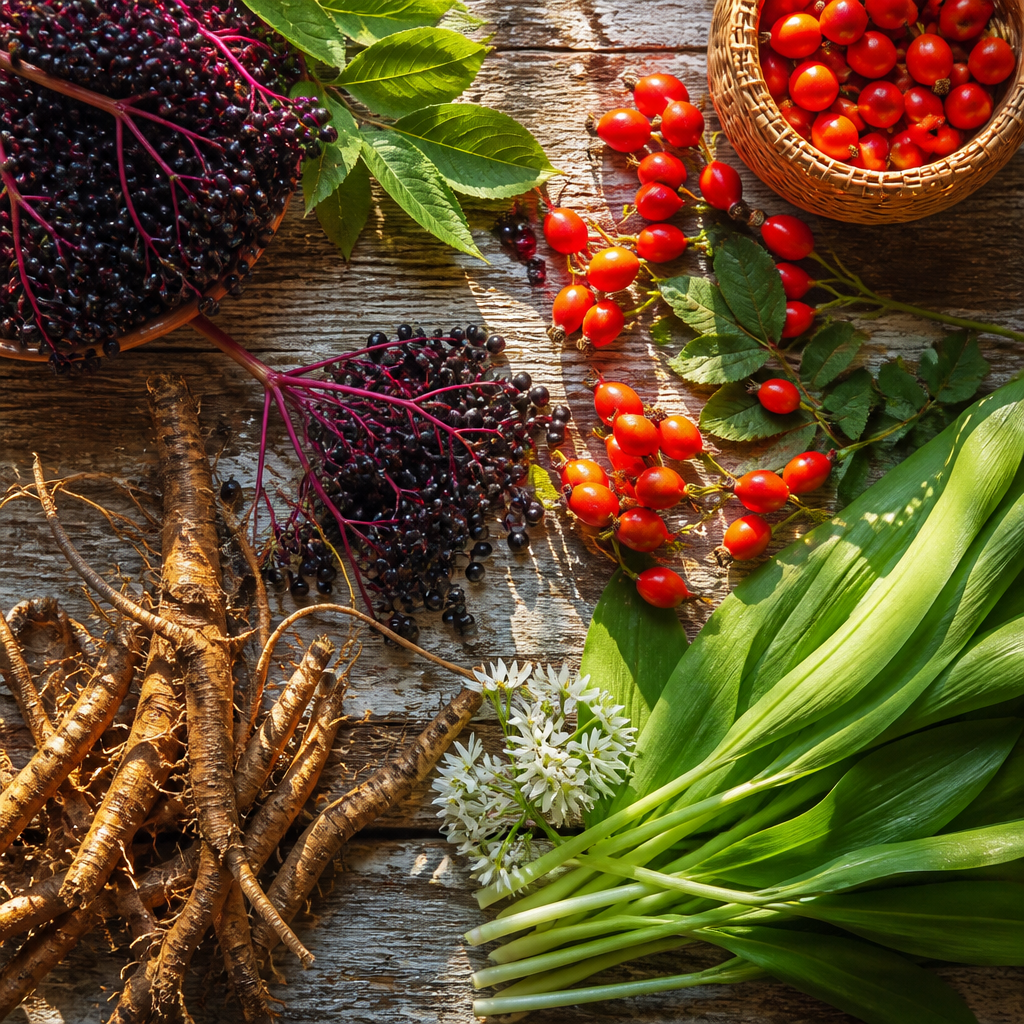
Most homesteaders lose a solid two to three weeks of foraging opportunity every year simply by waiting too long. By the time the first hard frost locks down the soil and strips the canes bare, elderberries have fermented on the branch, rosehips have gone mushy, and burdock root has turned woody. Late summer foraging is a race you can absolutely win, but only if you know exactly which plants to prioritize and in what order. This guide covers 12 wild plants that are at their peak between late July and the first frost, with practical identification tips, harvest windows, and preservation notes built for off-grid homesteaders working across Canada’s diverse growing zones.
Table of Contents
- Quick Takeaways
- Why Late Summer Foraging Matters for Off-Grid Self-Sufficiency
- The 12 Wild Plants to Harvest Before the First Frost
- Foraging Method Comparison: Fresh Use vs. Preservation vs. Medicinal Use
- Sustainable Harvesting Rules Every Forager Must Follow
- Safety and Identification: Avoiding Costly Mistakes
- Frequently Asked Questions
- References
Quick Takeaways
| Key Insight | Explanation |
|---|---|
| Timing beats quantity | Harvesting the right plant at peak ripeness yields far more nutrition and flavor than gathering large volumes at the wrong time. |
| Northern zones peak earlier | In northern Canada, late-summer foraging windows open 2-4 weeks ahead of southern regions, so adjust your calendar to your zone, not a generic guide. |
| Sustainable harvest means leaving enough | Ontario Nature recommends harvesting no more than 5% of any single patch, and collecting from no more than 25% of a total area, to protect plant populations. |
| Berries before roots, roots before frost | Harvest berries and seeds first in late summer, then shift to roots in early fall once foliage dies back and starches concentrate underground. |
| Positive identification is non-negotiable | Several highly toxic plants closely resemble edible species. Never eat a plant you cannot identify with 100% certainty using a field guide and multiple characteristics. |
| Avoid polluted collection sites | Roadsides, industrial zones, and chemically sprayed fields contaminate foraged plants. Always harvest from clean, unpolluted areas well away from agricultural spray zones. |
| Try a small amount first | Even correctly identified edible plants can trigger individual allergic reactions. Eat a small portion of any new foraged food and wait before consuming more. |
Why Late Summer Foraging Matters for Off-Grid Self-Sufficiency
Late summer is the most productive foraging window of the entire year for calorie-dense, storable wild foods. The spring greens boom is over, but berries, seeds, and roots are hitting their nutritional peak simultaneously. For off-grid homesteaders and remote property owners in Canada, this window directly feeds the root cellar, the dehydrator, and the fermentation crock before winter shuts things down.
Across Canada, what counts as “late summer” shifts dramatically by region. In northern Ontario and the boreal belt, the window may open in mid-July and close by mid-September. In more southerly zones, you may have until October before the first hard frost arrives. Knowing your specific frost date is the single most important piece of planning you can do, because every plant on this list has a harvest window measured in weeks, not months.
Wild plant harvesting also fills gaps that even a well-stocked garden cannot cover. Vitamin C from rosehips, immune-supporting compounds from elderberries, and concentrated minerals from lamb’s quarters add genuine nutritional diversity to a homestead diet that becomes increasingly monotonous through winter. This is not a hobby. For serious off-grid households, it is a real component of food security.


The 12 Wild Plants to Harvest Before the First Frost
The plants below are grouped by harvest priority, moving from those that must be picked earliest in late summer to those that hold well into early fall. For each, the most common Canadian habitat is noted so you know where to look on your own property or surrounding crown land.
1. Elderberry (Sambucus canadensis / Sambucus racemosa)
Elderberries ripen in late August across much of Canada and do not wait. Once ripe, they ferment rapidly on the branch, especially after rain. Harvest the flat-topped clusters of deep purple-black berries and strip them with a fork. Red elderberries (S. racemosa) are mildly toxic raw and should not be confused with the black-fruited common elderberry. Use elderberries for syrups, fermented tonics, and dehydrated immune-support preparations. They are one of the most well-documented wild medicinal foods in North America and worth dedicating specific freezer space to.
2. Rosehips (Rosa spp.)
Rosehips sweeten after the first light frost but are fully usable from late August onward. They are extraordinarily high in vitamin C, making them one of the most nutritionally valuable late-season forage finds for off-grid households trying to maintain immune function through winter. Look for them along fencerows, coastal paths, and forest edges. Harvest when they turn deep orange-red and firm. Dry them whole for tea or process into syrup. Remove the seeds and inner hairs before consuming, as the hairs are irritating.
3. Chokecherry (Prunus virginiana)
Chokecherries are one of the most reliable late-summer wild fruits across the Canadian Prairies and boreal regions, ripening in dusty clusters along fencelines, roadsides, and forest margins. They are intensely astringent raw but excellent in jellies, wines, and syrups once cooked and sweetened. The seeds contain amygdalin, a cyanogenic compound, so do not crack or consume the pits. Harvest the clusters into a bucket and process promptly, as they deteriorate quickly once picked.
4. Cattail (Typha latifolia)
Cattails are one of the most versatile wild plants in the Canadian landscape and are harvestable across multiple seasons. By late summer, the pollen phase is over, but you can collect the green female flower heads for roasting, gather the starchy rhizomes for flour, and harvest the young lateral shoots. Avoid cattails growing in stagnant or heavily polluted water, as they readily absorb contaminants. Use a reliable field guide to confirm identification because young cattails can be mistaken for iris species, which are toxic.
5. Lamb’s Quarters (Chenopodium album)
Lamb’s quarters grow abundantly in disturbed soils, garden edges, and cleared land across Canada. By late summer the plant is mature but still useful. The young upper leaves remain edible and nutritious, comparing favorably to spinach with notably high calcium and protein content. The plant also produces small seeds similar in appearance to quinoa, which can be shaken off the stalks and used as a grain. This dual harvest, greens early and seeds late, makes lamb’s quarters one of the highest-value foraging plants of the season.
6. Hawthorn Berries (Crataegus spp.)
Hawthorn berries ripen from late August through October depending on the species and location, making them a valuable late-season find. They are common along forest edges, old pastures, and hedgerows throughout Canada. The berries are mealy and mild, best used in jellies, herbal infusions, or dried for long-term storage. Hawthorn has a long history of use as a cardiovascular tonic in traditional herbalism, though consult a qualified practitioner before using it therapeutically. Watch for the sharp thorns on branches when harvesting.
7. Wild Blackberries and Raspberries (Rubus spp.)
Wild blackberries begin ripening in mid to late summer and are found along trail edges, forest clearings, and fencelines in concentrated patches. Wild raspberries, both red and black types, grow on arching canes with fine prickles and are often found along woodland edges and sunny trails. Wild varieties are smaller than cultivated berries but carry concentrated flavor. Eat fresh, dry for winter use, or ferment. Mark productive patches for the following year, as bramble populations are stable and reliable season to season.
8. Staghorn Sumac (Rhus typhina)
Staghorn sumac is often misunderstood because of its association with poison sumac, which is an entirely different plant found in wetlands with white berries. Any sumac with red berry clusters is safe and edible. Staghorn sumac’s fuzzy red clusters are ready in late summer and are best harvested before heavy rainfall washes off the tart, lemon-flavored acids on the berry surface. Steep the clusters in cold water for a few hours to make a refreshing drink similar to lemonade. The active flavor compounds dissolve better in cold water than hot.
9. Goldenrod (Solidago spp.)
Goldenrod blooms in late summer through early fall and is commonly misidentified as the cause of hay fever, when ragweed, which blooms simultaneously, is usually the actual culprit. Goldenrod’s pollen is too heavy for airborne dispersal. The flowers are edible and used to make herbal honey, tinctures, and infused oils. Harvest the flower heads when they are fully open but before they go to seed. Goldenrod grows in open meadows, roadsides, and old fields across virtually every Canadian province.
10. Purslane (Portulaca oleracea)
Purslane is a succulent ground-covering plant that thrives in late summer heat, often growing right in or alongside vegetable gardens and in disturbed soils. It is one of the few wild plants with a meaningful concentration of omega-3 fatty acids, which makes it genuinely valuable nutritionally, not just as a salad curiosity. The stems and leaves are crisp and slightly tangy. Use it fresh in salads, on sandwiches, in omelets, or pickled. Harvest before the first frost kills the plant entirely, as it does not tolerate cold.
11. Wild Grape (Vitis riparia)
Wild grapes climb along riverbanks, forest margins, and fence structures across much of Canada and ripen in late summer to early fall. The fruits are smaller and more tart than cultivated grapes, but fully edible and excellent for jellies, juices, and wine. Leaves can also be harvested earlier in the season for wrapping foods. Confirm identification by the forked tendrils, distinctive leaf shape, and the characteristic grape smell of the crushed berries. Some unrelated vines with similar growth habit produce toxic berries, so take the time to confirm the ID properly.
12. Burdock Root (Arctium lappa / Arctium minus)
Burdock root is best harvested in the fall from first-year plants before the plant has flowered and sent energy into seed production. Late summer is the time to identify and mark your first-year burdock plants, which appear as large basal rosettes without a tall central stalk. By early fall, dig the roots before the ground freezes. The root is long and deep, requiring a digging fork and real effort, but the reward is a starchy, earthy root that can be eaten roasted, pickled, or stir-fried. It is a staple in Japanese cooking and underused in North American homesteading.
The best foragers are not the ones who know the most plants. They are the ones who have learned to read the land’s seasonal rhythms and show up at exactly the right time, with the right tools, and with enough patience to leave the patch better than they found it.
Foraging Method Comparison: Fresh Use vs. Preservation vs. Medicinal Use
How you intend to use a foraged plant should directly determine how you harvest it and what volume you collect. The table below helps off-grid homesteaders match harvest approach to intended use, so nothing is wasted and processing time is planned in advance.

| Approach | Best Plants for This Use | Key Considerations |
|---|---|---|
| Fresh consumption within 1-3 days | Purslane, lamb’s quarters, wild raspberries, goldenrod flowers | Harvest small volumes frequently. Refrigerate immediately. Do not wash until ready to eat. Prioritize nutritional freshness over volume. |
| Preservation (drying, freezing, canning) | Elderberries, rosehips, hawthorn berries, chokecherries, wild blackberries, staghorn sumac | Harvest at peak ripeness in larger volumes. Process within 24 hours. Dehydrating and freezing are the fastest off-grid-compatible methods. Canning requires proper pressure or water-bath technique depending on acidity. |
| Medicinal preparations (tinctures, syrups, infusions) | Elderberries, rosehips, hawthorn berries, goldenrod | Harvest in clean areas well away from roads. Use only positively identified mature material. Research preparation methods from reputable herbalism sources. Consult a qualified practitioner for therapeutic use. |
Pro tip: If you are on an off-grid property with no refrigeration beyond a root cellar, prioritize plants that dry well over those that require freezing. Rosehips, staghorn sumac clusters, goldenrod flowers, and burdock root slices all dehydrate reliably with a solar or wood-fired dehydrator.
Sustainable Harvesting Rules Every Forager Must Follow
Sustainable wild plant harvesting is not optional ethics, it is practical self-interest. Foragers who strip patches clean return the following year to nothing. Building a multi-year relationship with productive patches on your land or on surrounding crown land requires discipline from the very first harvest.
A widely cited guideline from Ontario Nature recommends harvesting no more than 5% of any individual patch of a species, and collecting from no more than 25% of a total area. In practice, this means picking a small handful of berries from every fourth plant rather than emptying one plant completely. This approach leaves enough for wildlife, which depends on the same food sources, and ensures the plant can regenerate and set seed successfully.
Pro tip: Keep a foraging journal with GPS coordinates or property map references for productive patches. Note the date of peak ripeness each year. Over two to three seasons, you will have a reliable harvest calendar specific to your land that no generic guide can replicate.
Only forage on land where you have legal access. In Canada, foraging on crown land is generally permitted without a permit for personal use, but regulations vary by province. Private land requires landowner permission. Certain protected areas and parks prohibit plant collection entirely, so check local regulations before harvesting.
Respect wildlife competition. In late summer and early fall, bears, birds, and small mammals are also loading up on berries and nuts before winter. Taking more than you can realistically use and preserve is both wasteful and ecologically irresponsible.
Safety and Identification: Avoiding Costly Mistakes
Misidentification is the single greatest risk in foraging and it is entirely preventable with the right preparation. Several of the plants on this list have toxic look-alikes that can cause serious illness or death. Confidence from a quick internet image search is not the same as certainty from cross-referencing multiple characteristics in a physical field guide with local plant coverage.
The Most Common Dangerous Confusions in Late Summer
Elderberry clusters can be confused with water hemlock berries and other toxic Apiaceae family species, particularly when plants are growing in similar moist habitats. Always confirm the characteristic elder leaflet shape, opposite branching, and the distinctive pithy stem before harvesting. Red elderberry (S. racemosa) should not be eaten raw and is distinct from the black-fruited common elderberry.
Young cattail shoots can be mistaken for iris shoots in early season, and iris is toxic. By late summer this confusion is less likely, but always confirm the distinctive cattail flower structure. Wild grape must be distinguished from moonseed (Menispermum canadense), a toxic vine with similar leaf shape but different fruit arrangement and no grape-like smell when berries are crushed.
Building Your Identification Protocol
A reliable identification protocol for every new plant you harvest involves confirming at least three independent characteristics: leaf shape and arrangement, stem structure and texture, and fruit or flower structure. One characteristic is never enough. Use a regional field guide written for your specific province or growing zone, not a generic North American or American reference, because species ranges and look-alikes differ significantly by region.
When trying a foraged food for the first time, prepare a small portion and eat only a small amount. Wait and observe before consuming more. Even correctly identified edible plants can cause reactions in individuals with specific allergies. This rule applies regardless of how confident you are in the identification.
Pro tip: Attend at least one in-person foraging walk with an experienced local guide before harvesting in earnest. Field recognition built in person with an expert transfers far more reliably to real-world conditions than identification learned only from photographs.
Frequently Asked Questions
When exactly does late summer foraging season start in Canada?
It varies significantly by region. In northern Ontario and the boreal zone, late-summer forage plants like elderberries and chokecherries can be ready by late July. In southern Ontario, British Columbia’s interior, and the Maritimes, peak late-summer foraging typically runs from mid-August through September. Your local first-frost date is the best anchor for planning, as most late-summer plants need to be harvested at least two to three weeks before a hard frost.
Can I forage on crown land in Canada without a permit?
In most Canadian provinces, foraging for personal use on crown land is permitted without a permit, but this is not universal. Regulations vary by province and by the specific type of protected or managed land. Provincial parks and national parks often prohibit all plant collection. Always check the specific land use rules for your area before harvesting, and never assume crown land access means unrestricted foraging rights.
How do I store foraged plants without refrigeration or freezing?
Dehydrating is the most reliable off-grid preservation method for most late-summer forage plants. Berries, rosehips, goldenrod flowers, and sliced burdock root all dehydrate well in a solar or wood-fired dehydrator. Staghorn sumac clusters can be dried whole and stored in a cool, dry space. Chokecherries and elderberries can be made into shelf-stable syrups or fermented beverages. Burdock and other roots can be stored in a root cellar in damp sand, similar to carrots.
What is the biggest mistake new foragers make in late summer?
Waiting too long. New foragers often plan to “get out next weekend” and miss the peak window entirely. Elderberries, wild raspberries, and purslane all have narrow optimal harvest periods. The second most common mistake is harvesting near roadsides or sprayed agricultural areas where plants absorb chemical contaminants. Site selection matters as much as plant identification.
Are there foraging regulations I need to know about in Canada?
Yes, and they vary considerably. Beyond the crown land rules mentioned above, some provinces have specific restrictions on certain species, particularly plants with medicinal or commercial value. First Nations traditional territories may have cultural protocols around harvesting that non-Indigenous foragers should respect. The legal framework for wild plant harvesting in Canada is not unified nationally, so do your research at the provincial and local level before heading out.
Is staghorn sumac really safe to eat? I thought sumac was poisonous.
The confusion is understandable but the distinction is clear. Poison sumac (Toxicodendron vernix) grows in wetlands and bogs and has white or pale yellow berry clusters. It is entirely different from staghorn sumac (Rhus typhina) and smooth sumac (Rhus glabra), both of which have distinctive upright red fuzzy berry clusters and are edible. Any sumac with red berries is safe. Any sumac with white or greenish berries should be avoided. The two plants do not grow in the same habitats, which is an additional aid to correct identification.
What wild plants have you been harvesting on your property this late summer? Share your most productive finds or any identification challenges you have run into below.
References
- Ontario Nature’s Northern Forest Foraging Guide: sustainable harvesting rules and plant identification for boreal species including cattails, lamb’s quarters, and burdock
- Recipes and Roots: what to forage in August across Canada, covering rosehips, goldenrod, lamb’s quarters, and regional harvest timing
- Imagin Acres: identification and harvesting guide for wild edible berries including blackberries, raspberries, and chokecherries
- Grow Forage Cook Ferment: fall foraging guide covering goldenrod, sumac berries, chanterelles, and other late-season edibles
- Discover Northern Ontario: wild foraging guide for edible plants in Northern Ontario including habitat descriptions and safety guidance
Leave a Reply