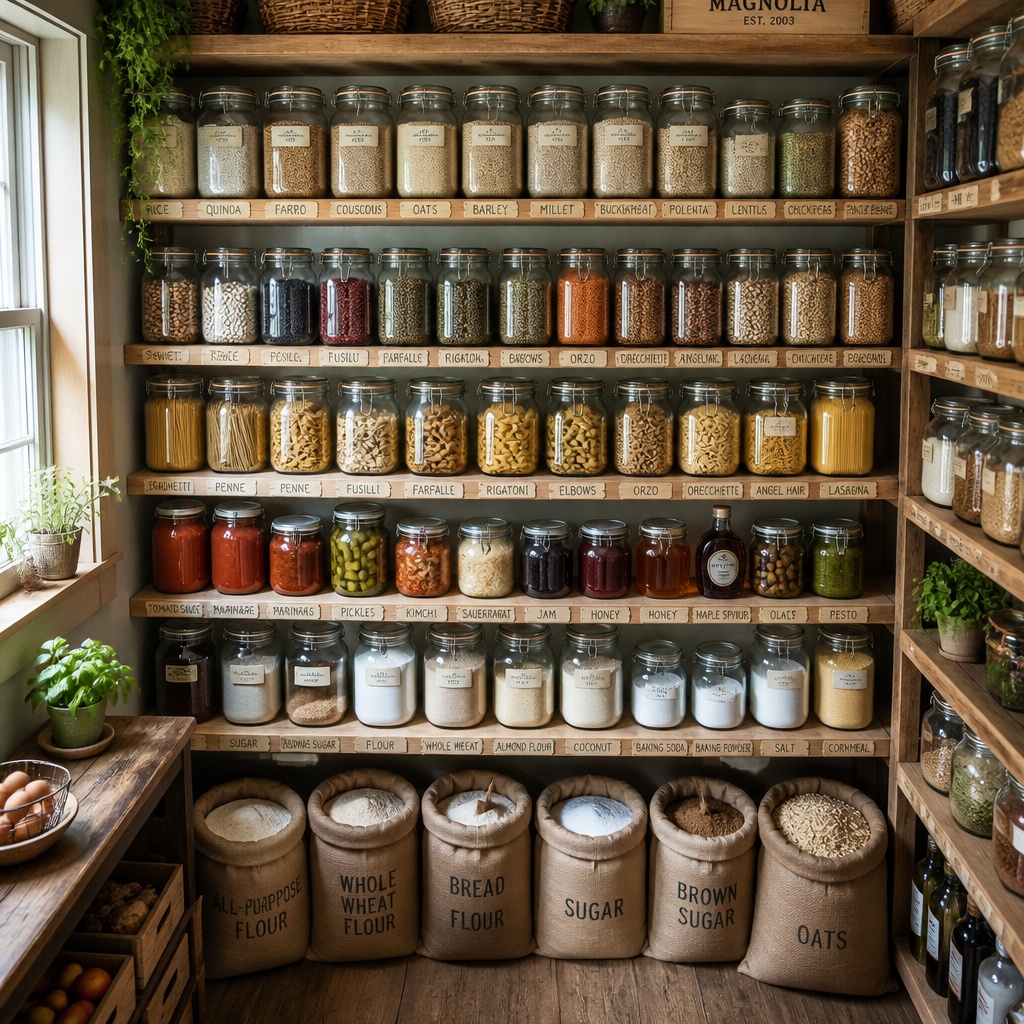
When the first hard freeze hits and your road turns to ice, your pantry is no longer just a convenience – it is your lifeline. Most homesteaders wait too long to build a serious winter food reserve, scrambling in October when they should have been stocking shelves in August. A well-built off-grid pantry does not happen by accident. It is the product of deliberate, category-by-category decisions made before winter shuts every option down. This guide gives you a concrete list of 20 foods worth stockpiling, explains why each one earns its place, and tells you exactly how to store it right so nothing goes to waste.
Table of Contents
- Why Your Off-Grid Pantry Needs a Real System
- Quick Takeaways
- Calorie-Dense Grains: The Foundation of Any Homestead Stockpile
- Protein Powerhouses: Legumes and Preserved Meats
- Fats and Oils: The Most Overlooked Category
- Root Vegetables and Winter Squash: Your Fresh Food Through the Cold Months
- Fermented and Pickled Foods: Flavor, Probiotics, and Preservation
- Sweeteners and Baking Essentials
- Storage Method Comparison
- Common Mistakes Homesteaders Make When Building a Winter Pantry
- Frequently Asked Questions
- References
Why Your Off-Grid Pantry Needs a Real System
Random stockpiling is not a food storage strategy. It is panic buying with extra steps. The homesteaders who make it through hard winters without resupply runs are the ones who track inventory, rotate stock on a first-in-first-out basis, and store every food type under the conditions it actually requires – not just in whatever cool corner of the basement happens to be open. Without a system, you will find sprouted potatoes next to forgotten canned goods that expired two years ago, and a 50-pound bag of flour that turned into a weevil habitat.
Living off-grid removes the safety net of a quick grocery run when supplies run low. Without the convenience of freezers or reliable electricity, preserving your harvest and pantry staples requires careful planning, traditional techniques, and a solid understanding of food safety. The 20 foods below are chosen on three criteria: long verified shelf life, genuine caloric and nutritional value, and practical versatility in off-grid cooking.
Quick Takeaways
| Key Insight | Explanation |
|---|---|
| White rice outlasts brown rice by decades | Brown rice contains natural oils that drastically shorten its shelf life. White rice stored in sealed Mylar bags with oxygen absorbers can last 25 to 30 years. |
| Honey never truly expires | Honey’s low moisture content and naturally acidic environment prevent microbial growth. Crystallization is not spoilage – gentle warming in warm water restores its consistency. |
| Salt and white sugar have indefinite shelf lives | When kept dry and sealed, both are essentially permanent pantry staples. They also serve as preservation agents for other foods. |
| Cooking oils are the weakest link in long-term storage | Even well-stored oils go rancid within 2 to 4 years. Rotate them aggressively and prioritize coconut oil or ghee, which resist rancidity longer than vegetable oils. |
| Potatoes and apples cannot be stored together | Apples emit ethylene gas that causes potatoes to sprout prematurely. Keep them in separate areas of your root cellar or cold storage space. |
| Dried beans harden with extreme age | Dried beans stored 10 to 30 years will still be safe but may become very hard to rehydrate. A pressure cooker solves this problem completely – keep one on every off-grid homestead. |
| A rotation system prevents waste | Place new stock at the back, move older stock to the front, and keep a written inventory. Without this discipline, food expires unnoticed and your stockpile is not what you think it is. |
Calorie-Dense Grains: The Foundation of Any Homestead Stockpile
Grains form the caloric backbone of any serious off-grid pantry. They are compact, versatile, and when stored correctly, they outlast almost every other food in your house. The four grains every homesteader should prioritize are white rice, rolled oats, wheat berries, and pasta.
1. White Rice
White rice stored in airtight containers with oxygen absorbers can last 25 to 30 years. It is calorie-dense, cooks simply with just water and heat, and pairs with nearly every other food in this list. Store it in Mylar bags inside food-grade 5-gallon buckets with gamma-seal lids for the best protection against moisture, rodents, and oxygen.
2. Rolled Oats
Oats are inexpensive, filling, and far more versatile than most people give them credit for. Beyond breakfast porridge, they go into baked goods, energy bars, and grain-extended meat dishes. For longer storage, keep oats in an airtight container in a cool, dry place. Whole oats generally hold up better than products with added ingredients such as flavored instant packets.
3. Wheat Berries
Wheat berries are the whole, unprocessed grain and can last 25 years or more when sealed properly. The major advantage over flour is that unprocessed grain retains its nutrients longer and does not go rancid the way milled flour does. You will need a hand-cranked grain mill to make flour from them off-grid – this is not optional equipment if wheat berries are in your stockpile.
4. Pasta
Dried pasta stores for 20 to 30 years in sealed conditions and provides quick, calorie-dense meals with minimal fuel. It pairs with home-canned tomatoes, dried legumes, and preserved meats to stretch a small amount of protein into a full meal. Store pasta in glass mason jars or Mylar bags – not in its original cardboard box, which offers no real protection beyond six months.


5. Cornmeal
Cornmeal is a staple that stretches any meal plan and forms the basis of cornbread, polenta, porridge, and more. Whole-grain cornmeal has a shorter shelf life than degerminated cornmeal because of the oil content in the germ. For long-term storage beyond a year, choose degerminated cornmeal and keep it sealed in an airtight container away from heat and light.
Pro tip: When choosing a container size for grains, think about how quickly you will go through a container after opening. A smaller sealed container opened more often is better than a large one that sits half-exposed to air for months.
Protein Powerhouses: Legumes and Preserved Meats
Protein is the category most homesteaders understock. Grains fill bellies but do not sustain muscle mass, immune function, or sustained physical work through a Canadian winter. A balanced homestead food stockpile needs serious protein sources that hold up without refrigeration.
6. Dried Beans
Dried beans are inexpensive, filling, and packed with protein and fiber. Vacuum-seal dry beans in mason jars with an oxygen absorber to extend their shelf life significantly. Varieties worth stocking include black beans, pinto beans, navy beans, and kidney beans – different varieties add menu diversity and prevent the palate fatigue that hits hard in month three of winter.
7. Lentils
Lentils deserve a separate mention from beans because they cook faster (no pre-soaking needed), have a shelf life of 10 to 30 years when stored properly, and are nutritionally dense. Red lentils cook into soups and stews in under 20 minutes, which means less fuel use – a real consideration for wood stove or propane cooking.
8. Canned or Home-Canned Meats
Commercially canned meats such as sardines, salmon, tuna, and chicken have a shelf life of roughly 3 to 5 years. Home-pressure-canned meats from your own harvest can be stored for a year or more with proper technique. Meat can also be cured and smoked for long-term storage – this method not only preserves the protein but adds concentrated flavor to otherwise simple winter meals.
9. Powdered Milk
Nonfat powdered milk stored in sealed containers can last 20 to 30 years. It provides protein, calcium, and versatility in cooking – from soups and sauces to baked goods. On a remote homestead where fresh dairy is not always available, powdered milk fills a critical gap. Look for nonfat varieties for the longest shelf life, as the fat content in whole milk powder degrades faster.
10. Peanut Butter
Peanut butter delivers protein and fat in a calorie-dense, no-cook format. Commercially sealed peanut butter has a shelf life of roughly 1 to 2 years. Natural peanut butter separates and goes rancid faster – if you store it, do so in smaller quantities and plan to rotate it within the season. It is also one of the few comfort foods in a hard winter pantry, and that psychological value is not trivial.
The most common failure in a winter food stockpile is not running out of food – it is running out of variety. A pantry with 200 pounds of rice and beans but nothing else becomes demoralizing by week six. Build protein and fat diversity into your stockpile from the start.
Fats and Oils: The Most Overlooked Category
Fat is the most calorie-dense macronutrient and the hardest to store long-term. Most homesteaders stockpile plenty of carbohydrates and some protein but leave themselves critically short on dietary fat, which matters enormously when physical labor demands increase in winter.
11. Coconut Oil
Coconut oil is the most shelf-stable cooking fat for off-grid storage. Its high saturated fat content makes it resistant to rancidity compared to polyunsaturated vegetable oils. Stored in a sealed container away from heat and light, it remains usable for 2 to 4 years. It also serves as a skin moisturizer and wood seasoning agent, adding non-food utility to a multi-purpose homestead pantry.
12. Ghee
Ghee (clarified butter) has most of the milk solids removed, which dramatically extends its shelf life compared to regular butter. Commercially sealed ghee can last up to a year at room temperature and much longer when refrigerated or kept in a cool cellar. It tolerates high-heat cooking and adds a richness to grain and legume dishes that plain oil cannot replicate.

13. Apple Cider Vinegar
Apple cider vinegar, whether homemade or store-bought, has an indefinite shelf life when stored in an airtight container. It functions as a cooking acid, a food preservative for pickling, a cleaning agent, and a health tonic. For a homestead that ferments or pickles its own produce, keeping several gallons of ACV in stock through winter is simply practical.
Pro tip: Cooking oils with higher saturated fat content (coconut oil, ghee, lard) resist rancidity far longer than vegetable oils high in polyunsaturated fats (sunflower, canola, corn oil). If you are stocking for 12 months or more, prioritize fats in that order.
Root Vegetables and Winter Squash: Your Fresh Food Through the Cold Months
Fresh food through a long winter is not a luxury – it is a nutritional necessity. Vitamins and minerals found in fresh produce cannot be fully replicated by shelf-stable alternatives. The good news is that several crops, when properly harvested and stored, will remain genuinely fresh for months without any electricity.
14. Potatoes
Stored at around 40 degrees Fahrenheit with 95 percent humidity and kept in darkness, potatoes will last throughout the winter. Leave tubers in the ground for about two weeks after the vines die – as long as the weather is dry – to let the skins toughen before harvest. A critical storage rule: never store potatoes near apples. Apples give off ethylene gas that causes potatoes to sprout, shortening their storage life significantly.
15. Winter Squash
Winter squash, when harvested very mature before frost and stored with the stem attached, keeps for months in cool, dry conditions. Cure squash for several weeks before storage to allow the skin to toughen fully. Do not store squash near ripening fruit – the ethylene gas released by ripening apples and pears shortens squash shelf life just as it affects potatoes.
16. Onions and Garlic
Properly cured onions stored at 33 to 45 degrees Fahrenheit with moderate humidity will keep for months. Garlic, similarly cured, holds well in a cool, dry location with good airflow. Both are indispensable flavor foundations that make a simple grain-and-bean diet far more tolerable through the long winter stretch. Braid garlic and hang it in a well-ventilated spot – this is not just aesthetics, it is functional storage.
17. Carrots and Beets
Root vegetables like carrots and beets store well at cold temperatures with high humidity. In a proper root cellar or cold room, they can last well into spring. Pack them in slightly damp sand or sawdust to maintain humidity without causing rot. Check them regularly – one rotting root can spread quickly to its neighbors.
Fermented and Pickled Foods: Flavor, Probiotics, and Preservation
Fermented and pickled foods are not just a preservation method – they are the nutritional bridge between a monotonous winter diet and a genuinely nourishing one. The beneficial bacteria produced during lacto-fermentation support gut health, which is foundational to immune function during the months when you have least access to outside medical care.
18. Lacto-Fermented Vegetables and Home-Canned Tomatoes
Green beans, cabbage (as sauerkraut), cucumbers, and peppers are all excellent candidates for lacto-fermentation. The fermentation process itself is the preservation method – no canning equipment or electricity needed, just salt, water, and time. Home-pressure-canned tomatoes, on the other hand, open up an enormous range of winter cooking options: soups, stews, pasta sauces, and braised meats all benefit from the acidity and body that tomatoes provide.
Sweeteners and Baking Essentials
A winter pantry without baking capacity becomes a serious morale problem. Bread, biscuits, pancakes, and simple desserts are not luxuries when you are living on a remote homestead in February – they are the difference between a functioning household and a miserable one.
19. Salt
Salt has been used to preserve food for thousands of years and has an extremely long storage life when kept dry. It takes up little space and has far more uses than seasoning: it is essential for curing meats, fermenting vegetables, and preserving fish. Iodized salt also contributes to thyroid health, which matters on a diet that may be lower in seafood. A homestead pantry should never run low on salt – store it in bulk and treat it as seriously as any other staple.
20. Honey, White Sugar, and Baking Staples (Flour, Baking Powder, Yeast)
Honey has one of the longest shelf lives of any food in your pantry. Its low moisture content and naturally acidic environment make it difficult for many microorganisms to grow. When kept tightly sealed and stored somewhere cool and dry, it remains usable indefinitely. White sugar, similarly, has an indefinite shelf life when kept dry. Both function as sweeteners, preservatives for home-canned fruits, and fermentation starters. All-purpose flour, baking powder, and active dry yeast round out the baking essentials – store flour in sealed Mylar bags or airtight containers rather than the paper bags it comes in, and rotate it within 12 months for best quality.
Pro tip: Active dry yeast stored in the freezer in an airtight container will remain viable for years. On an off-grid homestead, yeast is a high-value item – do not leave it in an open packet on the shelf.
Storage Method Comparison
Not every storage method is equal, and choosing the wrong one for a given food type is one of the most common and costly mistakes homesteaders make. The table below compares the three primary methods used for long-term off-grid pantry storage.
| Storage Method | Best For | Key Limitations |
|---|---|---|
| Mylar bags with oxygen absorbers inside food-grade buckets | Grains (rice, oats, wheat berries), dried beans, pasta, powdered milk. Achieves 25+ year shelf life for most grains. | Requires initial investment in bags, buckets, and oxygen absorbers. Not suitable for high-moisture foods. |
| Glass Mason jars with vacuum sealing | Salt, sugar, honey, dried herbs, small quantities of beans, dehydrated vegetables. Best for items used frequently. | Breakable, heavier than buckets, not ideal for very large quantities. Vacuum sealing requires a pump or attachment. |
| Root cellar or cold room storage | Root vegetables (potatoes, carrots, beets), winter squash, onions, garlic, apples, cured meats, fermented foods. | Requires maintaining correct temperature and humidity for each crop. Some crops cannot be stored together (ethylene producers vs. sensitive crops). |
Common Mistakes Homesteaders Make When Building a Winter Pantry
The most dangerous mistake is building a pantry that looks full but is nutritionally hollow. A basement loaded with white rice and pasta but lacking adequate protein, fat, or vitamins will leave you physically depleted well before spring arrives. Calories alone are not nutrition, and hard physical work in cold conditions demands all three macronutrients in serious quantities.
The second common mistake is ignoring the need for fuel alongside food. Every grain in your off-grid pantry requires cooking water and a heat source. A 50-pound bag of dried beans is useless if you cannot boil them. Build your wood, propane, or other cooking fuel reserves in parallel with your food stores, not as an afterthought.
A third mistake is storing foods in their original retail packaging and calling it done. Cardboard, paper bags, and thin plastic are not long-term storage solutions. Rodents, moisture, and oxygen degrade these foods far faster than most people expect. Transferring everything into appropriate sealed containers – food-grade buckets, Mylar bags, or glass mason jars depending on the food type – is non-negotiable for a genuine off-grid pantry.
Finally, many homesteaders stockpile foods their family does not actually eat, reasoning that “in an emergency, we will eat anything.” This is partly true, but cooking with unfamiliar staples under stressful conditions produces poor results and wastes food. Start your pantry with foods your household already uses regularly, then scale quantity. A 25-pound bag of a grain your family genuinely likes will be eaten and rotated properly; an exotic staple nobody knows how to cook will sit untouched until it eventually goes bad.
Frequently Asked Questions
How much food should a homesteader stockpile for one winter?
A reasonable starting target for one adult is roughly 300 pounds of mixed grains (rice, oats, wheat berries), 60 pounds of legumes, 30 pounds of fats and oils, and 20 pounds of combined sweeteners, supplemented by home-preserved and root-cellared produce. Multiply proportionally for your household size. These are baseline figures for survival-level nutrition – add more variety if you want to eat well rather than just survive.
What is the best container for storing dried grains and beans long term?
Mylar bags combined with oxygen absorbers, sealed inside food-grade 5-gallon buckets with gamma-seal lids, are the most reliable option for bulk grains and beans. This combination blocks oxygen, moisture, and rodents and can maintain shelf life for 25 years or more on grains. Glass mason jars with vacuum sealing work well for smaller quantities and items that you access frequently.
Can you store potatoes in the same space as other root vegetables?
Most root vegetables store well together in a cold, humid root cellar, but potatoes should never be stored near apples. Apples emit ethylene gas that causes potatoes to sprout prematurely, significantly shortening their storage life. Keep apples segregated from most other vegetables in storage. Similarly, avoid storing squash near ripening fruit for the same reason.
Does honey really last forever?
Honey stored in a properly sealed container has a remarkably long shelf life and does not spoil in the conventional sense. If your honey crystallizes or becomes thick, it has not gone bad – a gentle warming in warm water returns it to a liquid consistency. The key storage requirements are a tightly sealed container and protection from excessive heat and moisture.
What foods should every off-grid homesteader prioritize if they can only store a few items?
If you are forced to prioritize, start with white rice, dried beans, rolled oats, salt, cooking fat, and honey. This combination covers your primary caloric needs across carbohydrates, protein, and fat, and gives you the basic ingredients to produce genuinely edible meals rather than bare survival rations. Add powdered milk and a variety of canned or home-preserved proteins as budget and space allow.
How do you prevent weevils and pests in a stored grain pantry?
The primary defense against weevil infestation is oxygen removal. Weevils cannot survive in an oxygen-free environment, which is exactly what a Mylar bag with oxygen absorbers provides. For items stored in glass jars, using oxygen absorbers there too is effective. Freezing grain for 72 hours before sealing it for long-term storage also kills any eggs already present. Storing all grain off the ground and away from walls reduces rodent access.
What does your off-grid pantry look like heading into winter – are there any stockpile staples that have saved you, or any gaps you only discovered when it was too late?
References
- Long-term off-grid food storage strategies and best practices for homesteaders
- How to stock a homestead pantry for winter with essential staples
- Foods with exceptionally long shelf lives for serious pantry stockpiling
- Root cellar storage guide covering temperature and humidity requirements by crop
- Comprehensive long-term food storage guide with container types and shelf life estimates
Leave a Reply