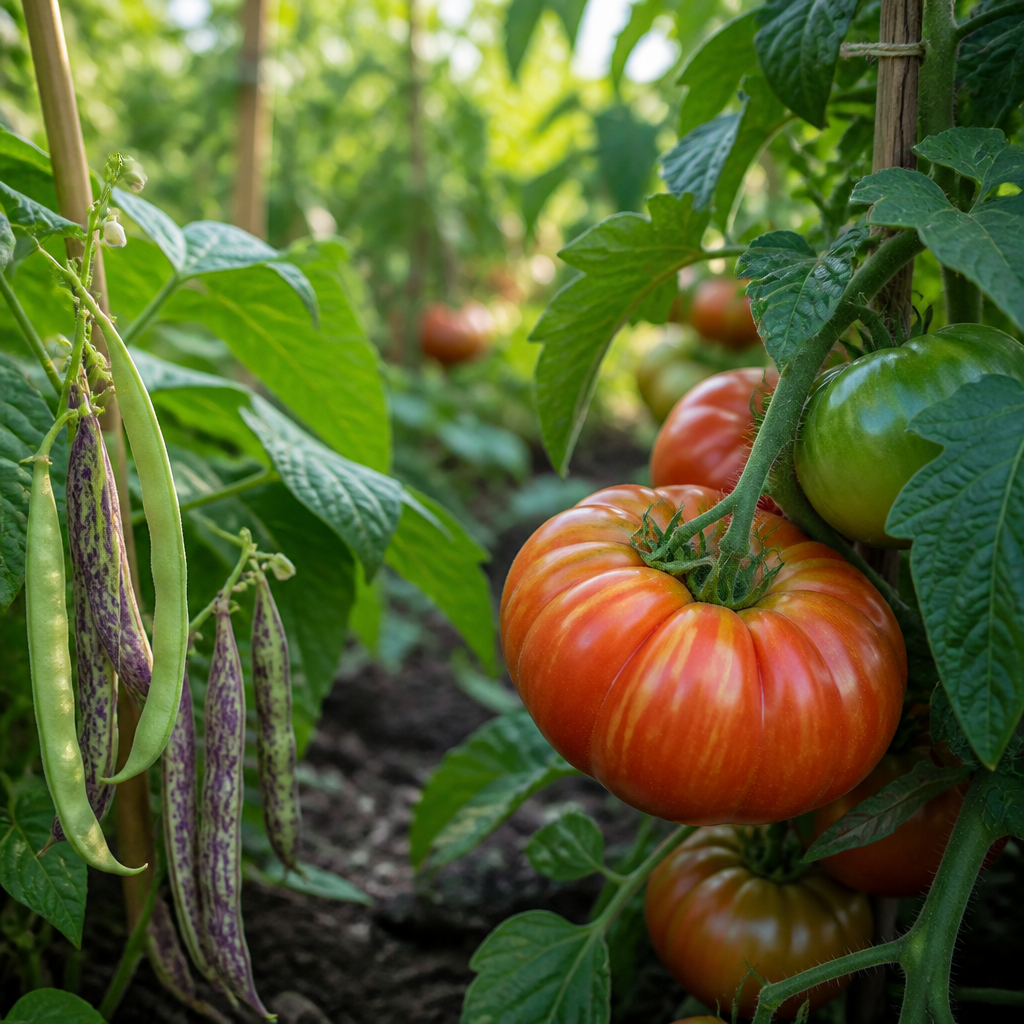
Most homesteaders spend money every spring buying the same varieties they already grew the year before. If you are saving seeds from last season’s garden and half of them fail to germinate, or the plants look nothing like the parents, something went wrong before the seed ever touched the envelope. A proper seed saving guide does not start at harvest time – it starts at planting time, with variety selection and pollination management. Get those two decisions right and building a deep, self-sufficient homestead seed bank becomes straightforward. Get them wrong and you are back ordering from a catalog.
Table of Contents
- Why True-to-Type Matters for Your Homestead
- Quick Takeaways
- Open-Pollinated vs. Hybrid Seeds: What You Can and Cannot Save
- Selecting the Best Parent Plants
- Controlling Cross-Pollination for Heirloom Seed Saving
- Harvesting and Processing Seeds: Wet vs. Dry Methods
- Drying and Testing Seed Viability
- Building a Homestead Seed Bank That Lasts
- Seed Saving Approach Comparison
- Frequently Asked Questions
- References
Why True-to-Type Matters for Your Homestead
A seed that grows true to type produces offspring that match the parent plant in flavor, yield, disease resistance, and days to maturity. For off-grid and remote property owners, this is not a gardening hobby point – it is a food security issue. If your saved tomato seeds produce a plant with inferior flavor or poor set, you have wasted a full growing season on that bed.
Heirloom seed saving works because heirlooms are open-pollinated varieties with stable genetics. When you save seeds from an heirloom plant under proper conditions, those seeds reliably reproduce the parent plant’s traits. That stability is exactly what a homestead seed bank depends on. Commercial hybrid seeds, by contrast, are designed to be purchased fresh each season – their offspring segregate unpredictably in the second generation.
The deeper benefit is local adaptation. After a few generations of selecting the best-performing plants from your specific soil, microclimate, and water conditions, your saved seed stock outperforms anything you can buy, because it has been shaped by your land.
Quick Takeaways
| Key Insight | Explanation |
|---|---|
| Only save open-pollinated or heirloom varieties | Hybrid (F1) seeds do not breed true in the second generation. Save only open-pollinated or heirloom seeds for reliable results year after year. |
| Start with self-pollinators | Tomatoes, beans, peas, and lettuce self-pollinate before the flower opens, making them the lowest-risk crops for beginners building a homestead seed bank. |
| Isolation distance is non-negotiable for cross-pollinators | Squash, cucumbers, peppers, and corn need physical distance or hand-pollination barriers to stay true to type. Skipping this step contaminates your seed stock silently. |
| Ferment tomato seeds before drying | The gelatinous coating around tomato seeds contains anti-germination compounds. A 2 to 3 day fermentation removes this coating and can kill seed-borne pathogens. |
| Seeds must reach 5 to 7 percent moisture before storage | A seed that bends rather than snaps is not dry enough. Mold and early germination in storage are almost always caused by insufficient drying before sealing. |
| Cool, dark, and dry storage dramatically extends viability | Onion seed lasts about one year under ideal conditions; tomatoes and peppers can hold four to five years. Temperature and humidity are the two biggest variables. |
| Label every packet with variety, harvest year, and isolation method used | Without this information, a seed bank becomes a collection of mystery packets. Include notes on any steps taken to prevent cross-pollination. |
Open-Pollinated vs. Hybrid Seeds: What You Can and Cannot Save
The single most important decision in any seed saving guide happens at the seed catalog, not in the garden. If you plant hybrid varieties – labeled F1 on the packet – saving seed from them is largely a waste of effort. The traits that made the F1 plant vigorous and productive are the result of a specific cross between two inbred parent lines, and those traits break apart in the second generation. You may get plants that perform well, but you cannot predict which ones.
Open-pollinated varieties reproduce consistently from saved seed. Heirloom varieties are a subset of open-pollinated plants with documented histories, often passed down through farming communities for decades. Both categories are valid for seed saving. The distinction between “heirloom” and “open-pollinated” matters less than confirming that neither is a hybrid.
A common mistake is assuming that any seed from a good-looking fruit is worth saving. The plant quality matters, but so does the seed origin. If you bought a packet labeled “hybrid” and grew excellent plants, the seeds from those fruits will not reliably reproduce those excellent plants. Choose your open-pollinated or heirloom varieties intentionally before planting, and mark them at the start of the season so you remember which plants are your seed stock.
Pro tip: When ordering seeds for your homestead, look for the phrase “open-pollinated” or the abbreviation OP explicitly on the packet. “Heirloom” alone is not always sufficient – verify that the variety is not a trademarked modern heirloom-labeled hybrid before building your seed stock around it.


Selecting the Best Parent Plants
Seed saving is also plant breeding, and every selection decision you make shapes the next generation. This is where off-grid homesteaders have an advantage over someone saving seeds casually: you are observing your plants over a full season and you have strong practical criteria – yield, flavor, pest resistance, drought tolerance, and early maturity in short-season climates.
Criteria for Choosing Seed Stock Plants
Select plants that are the best representatives of the variety, not just the largest or most productive individual specimens. For tomatoes and peppers, choose fruit from plants that showed disease resistance, set fruit in the conditions specific to your location, and produced consistently through the season. Avoid saving from the very first or very last fruit of the season – mid-season fruit from mid-season plants represents the genetic core of your population most accurately.
For beans and peas, let the pods dry fully on the plant before harvesting. The seeds inside will be mature and viable. Do not harvest when the pods are still green, even if the seeds feel plump. Immature seeds have lower germination rates and shorter storage life.
How Many Plants to Save From
For self-pollinating crops like tomatoes and beans, saving from three to six plants of the same variety maintains enough genetic diversity without risk. For cross-pollinating crops like squash or corn, a minimum of six plants is generally recommended to avoid the genetic bottleneck that happens when you save from only one or two individuals. A seed bank built from too narrow a population becomes progressively weaker over generations.
Pro tip: Tag your seed stock plants at the start of the season with a piece of colored twine or a stake marker. This sounds obvious, but by August, a garden full of similar tomato plants looks identical and you will not remember which specific individuals you chose in June.
Controlling Cross-Pollination for Heirloom Seed Saving
Cross-pollination is the mechanism that ruins an otherwise careful seed saving effort. Two varieties of the same species grown near each other can exchange pollen, and the seeds from that cross will produce offspring with unpredictable mixed traits. The problem is invisible at harvest – your saved tomato seeds look identical whether they were crossed or not. You only discover the contamination the following spring when plants emerge.
Self-Pollinating Crops: Lower Risk, Not Zero Risk
Tomatoes, peas, and beans are self-pollinating – they transfer pollen from the stamens to the pistil within the same flower, often before the flower even opens. This makes them excellent candidates for beginner seed saving. To prevent accidental crossing, tomatoes should be kept at least 10 feet away from other tomato varieties. Beans, peas, soybeans, and lettuce typically need 10 to 20 feet of separation between varieties.
Peppers are technically self-pollinating but are also readily cross-pollinated by insects. Recommendations for isolation distance between pepper varieties range from 100 feet upward, and growing only one pepper variety per season is the simplest solution for a homestead seed bank.
Cross-Pollinating Crops: Distance and Hand-Pollination
Squash, cucumbers, melons, and corn are insect or wind-pollinated and cross readily. Squash presents a particular challenge because multiple species are commonly grown together, and cucurbita species cross within species but generally not across them. Cucurbita pepo covers zucchini, acorn squash, most pumpkins, and summer squash – so those will cross with each other freely. Butternut squash is Cucurbita moschata and will not cross with your zucchini, making it a relatively safe companion in the garden.
For corn, which is wind-pollinated, isolation distances of at least 1,000 feet are sometimes cited for pure seed, which is impractical on most homesteads. The realistic solution is to grow only one variety of corn in a given season, or to use tasseling bags to hand-pollinate individual ears.
Isolation by distance is the most reliable method for keeping seeds true to type – and for specific species, those distances can range from 10 feet to several miles. When distance is not possible, physical barriers like blossom bags or hand-pollination become necessary tools.
Blossom bags made from organza fabric can be placed over individual squash or cucumber flowers before they open. Hand-pollinate by transferring pollen from a male flower to the covered female flower, then re-bag the female until the fruit begins to set. Tag that fruit and save its seeds. This is the most labor-intensive approach but the most reliable when you are growing multiple varieties in a small space.

Harvesting and Processing Seeds: Wet vs. Dry Methods
The processing method depends on the crop type, and using the wrong method degrades seed quality. There are two categories: seeds from fleshy fruits that require a wet process, and seeds from dry pods or heads that use a dry process.
Wet Processing: Tomatoes, Cucumbers, Squash, and Melons
Tomatoes require fermentation. Scoop seeds and gel into a jar, add a small amount of water, and leave at room temperature for two to three days, swirling once daily. The mixture will develop a mold layer on top – this is expected. Viable seeds sink to the bottom; non-viable seeds and debris float. After fermentation, pour off the floating material, rinse the sinking seeds in a colander, and spread them on a non-stick surface like a paper plate or coffee filter to dry.
The fermentation step is not optional for good germination rates. The clear gelatinous coating surrounding each tomato seed contains anti-germination compounds. Skipping fermentation leaves this coating intact, and germination rates drop significantly compared to properly fermented seed.
Squash and cucumber seeds are scooped from fully ripe or overripe fruit, rinsed to remove pulp, and dried without fermentation. For squash, allow the fruit to remain on the vine well past eating maturity – the seeds continue to develop and gain viability after the flesh would normally be harvested for the table.
Dry Processing: Beans, Peas, Corn, and Lettuce
For dry-processed crops, let the seed mature and dry on the plant as long as possible before harvest. Bean pods should be completely brown and papery. Corn cobs should remain on the stalk until the husks are dry. Lettuce heads should be allowed to bolt and the seed heads allowed to turn brown.
Once harvested, shell or thresh the seeds and spread them in a single layer to continue drying indoors for two to four weeks before storage. The goal is the same as with wet-processed seeds: get moisture content down to the range where the seed is shelf-stable. A simple moisture test is to place a small sample in a sealed glass jar and leave it in a warm spot for a few hours. If condensation appears on the inside of the jar, the seeds need more drying time.
Drying and Testing Seed Viability
Insufficient drying is the leading cause of seed bank failure on homesteads. Seeds that go into storage with too much moisture will mold, heat, or begin germinating inside their containers. The target moisture content is between 5 and 7 percent by weight, which is difficult to measure without equipment, but there is a practical test: a properly dry corn kernel or bean will shatter when struck with a hammer. Squash seeds will snap cleanly rather than bend. Small seeds like tomatoes will snap when bent between your fingers. If a seed bends rather than breaks, it needs more drying time.
For homesteads in humid climates – a real challenge in many parts of Canada and the Pacific Northwest – add a small packet of silica gel to storage containers to absorb residual moisture. Silica drying beads can be recharged in a low-temperature oven and reused indefinitely, making them a practical long-term tool for a serious seed bank.
Germination Testing Before Committing to Storage
Before committing a large seed lot to long-term storage, run a germination test. Place ten seeds on a moist paper towel, fold it over, and keep it at room temperature. Check after the minimum days-to-germination for the species. A result of seven or more germinating seeds out of ten indicates acceptable viability for storage. A result below five out of ten means you should plant that seed lot promptly rather than storing it, and source fresh seed to build your bank back up.
Germination testing is also the right move when you pull a multi-year-old packet from your seed bank in spring. Rather than direct-seeding an entire bed with seeds that may be past their prime, test a sample on the towel first. Onion and parsnip seed typically lasts only one year; tomatoes and peppers hold viability for four to five years under cool, dry conditions; cucumbers and squash can last five or more years in ideal storage.
Building a Homestead Seed Bank That Lasts
A homestead seed bank is a working collection, not an archive. The goal is to have viable seed of every variety you depend on, rotated and refreshed on a schedule that matches the viability window of each species. Treat it like any other off-grid inventory: know what you have, know when it was put in, and know when it needs to be replaced or tested.
Container and Storage Conditions
Glass Mason jars with tight-fitting lids are the standard for home seed banks. Store labeled paper seed envelopes inside the jar to keep varieties separate, then seal the jar. Keep jars in a refrigerator set to 35 to 40 degrees Fahrenheit with low humidity, or in the coldest, darkest, driest location on your property. Temperature stability matters as much as the temperature itself – seeds stored in a consistently cool cellar fare better than seeds stored in a shed that freezes and thaws through a Canadian winter.
Label every packet with the variety name, the year of harvest, the number of seeds, and a note on any isolation steps taken. In five years, you will not remember whether those pepper seeds came from plants that were bagged for isolation or not, and that information is worth having when you are deciding whether to trust the lot for another generation.
Rotating Your Seed Stock
Short-lived seeds – onions, leeks, parsnips – should be resaved or replaced annually. Medium-lived seeds – beans, peas, corn – should be refreshed every two to three years. Long-lived seeds – tomatoes, peppers, cucumbers, squash, most brassicas – can anchor a multi-year seed bank, but should still be germination-tested before each planting season once they are more than three years old.
Growing out a variety specifically to refresh your seed stock, rather than just eating the harvest, is worth dedicating garden space to each year. On a well-managed homestead, seed saving is part of the annual production plan, not an afterthought at the end of the season.
Seed Saving Approach Comparison
| Crop Type | Isolation Method | Processing Method and Notes |
|---|---|---|
| Tomatoes (self-pollinating) | 10 feet between varieties; minimal intervention needed | Wet fermentation method, 2 to 3 days; removes anti-germination coating and seed-borne pathogens; viable for 4 to 5 years in storage |
| Beans and Peas (self-pollinating) | 10 to 20 feet between varieties; occasional insect crossing possible | Dry method; leave pods on plant until fully brown and papery; shell and dry indoors before storage; viable for 2 to 3 years |
| Squash and Cucumbers (insect-pollinated) | Isolation by distance or hand-pollination with blossom bags required; cucurbits only cross within the same species | Wet method without fermentation; allow fruit to over-ripen beyond eating stage; rinse seeds and dry thoroughly; viable for 5 or more years in ideal conditions |
Frequently Asked Questions
Can I save seeds from store-bought vegetables?
Sometimes, but results are unreliable. Most commercially grown vegetables are hybrid varieties, meaning the seeds will not produce plants that resemble the fruit you bought. Even open-pollinated produce from a grocery store may have been harvested before the seeds were fully mature, which reduces viability. Your best source of saveable seed is open-pollinated plants you grew yourself from a known variety, or produce from a local grower who can confirm the variety and maturity level.
What is the difference between heirloom and open-pollinated seeds?
All heirloom seeds are open-pollinated, but not all open-pollinated seeds are heirlooms. Open-pollinated simply means the variety reproduces true to type from saved seed. Heirloom is a subset describing varieties with a long documented history, often defined as being in cultivation for 50 years or more. Both are fully suitable for seed saving. The practical distinction for homesteaders is flavor, regional adaptation, and availability – heirlooms often carry traits bred out of modern commercial varieties.
How many plants do I need to save seed from to maintain genetic diversity?
For self-pollinating crops like tomatoes and beans, saving from three to six healthy plants of the same variety is sufficient for a home seed bank. For cross-pollinating crops like squash, corn, or brassicas, save from a minimum of six plants to prevent genetic narrowing over successive generations. Saving from only one or two individuals creates an inbred population that can lose vigor and disease resistance within a few generations.
Why are my saved tomato seeds not germinating well?
The two most common causes are skipping fermentation and insufficient drying before storage. If you stored tomato seeds without fermenting them first, the anti-germination compounds in the gelatinous seed coating are likely suppressing sprouting. If seeds were sealed before they were fully dry, mold or premature germination inside the container may have destroyed viability. Run a paper towel germination test on your remaining seed to check the rate, and start fresh with properly fermented and dried seed for the next season.
How should I store seeds on an off-grid homestead without refrigeration?
Prioritize cool, dark, and dry conditions. A root cellar that maintains a stable cool temperature year-round is excellent. Avoid any location that experiences significant temperature swings between seasons, as repeated heating and cooling degrades seed viability faster than a consistently warmer temperature. Sealed glass Mason jars with silica gel packets inside give you the best control over humidity without requiring electricity. Keep short-lived seeds like onions and parsnips in the coolest spot available and plan to resave them annually.
Can I save seed from a plant that had a disease problem this season?
It depends on the disease. Fungal diseases on the foliage generally do not contaminate the seed inside the fruit, and seeds from otherwise healthy fruit on a diseased plant can be saved normally. Bacterial or viral diseases, however, can be seed-borne. Tomato mosaic virus, for example, can be carried on seed. The fermentation process for tomato seeds does help reduce some seed-borne pathogens, but it is not a guarantee. When in doubt, do not save from visibly sick plants, and source clean seed from a reputable supplier to rebuild that variety in your seed bank.
Have you been saving seeds from your homestead garden? Share which varieties have worked best for you and any isolation tricks that have kept your seed stock true to type – your experience could help other homesteaders solve the same problem.
References
- Seed Savers Exchange guide to pollination types, isolation methods, and seed saving principles
- Old Farmer’s Almanac article on isolation distances for different vegetable crops
- UC Master Gardeners guide to seed saving basics, storage conditions, and viability timelines
- Green Harvest guide to wet and dry seed processing methods and moisture testing for storage
- Fruition Seeds step-by-step guide to fermenting and saving tomato seeds
Leave a Reply