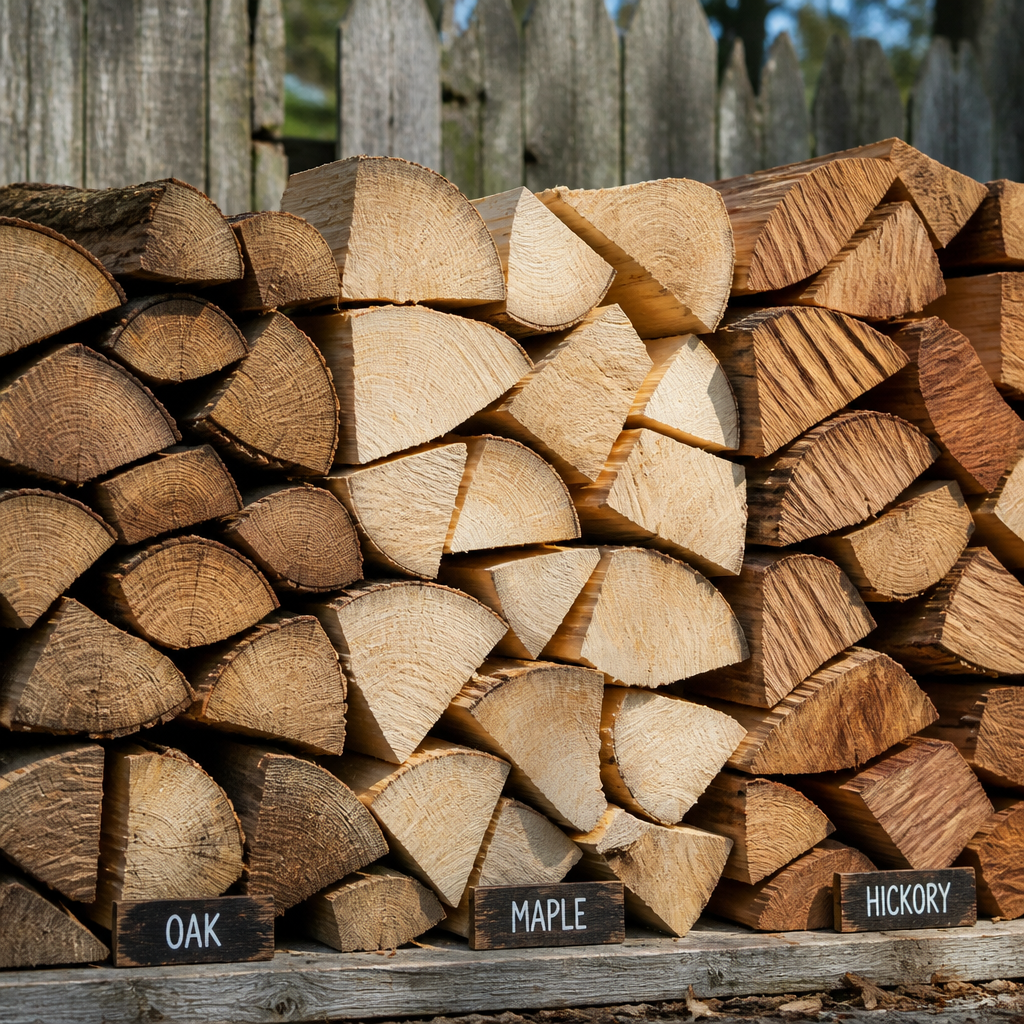
Most homesteaders learn about wood selection the hard way: they burn through a cord of green ash expecting warmth and get a smoky, lukewarm mess, or they frame a shed with pine and watch it rot at the sill plate within three seasons. Choosing the wrong species for the wrong job costs you time, money, and heat. Getting it right, however, is one of the highest-return decisions you can make on a self-sufficient property. The best firewood species for your woodstove are not necessarily the best species for your barn, and neither of those are what you want on your workbench. This guide breaks down the real differences, with BTU figures, structural ratings, and crafting properties laid out clearly so you can match wood to purpose from the first cut.
Table of Contents
- Quick Takeaways
- Hardwood vs. Softwood: What Actually Matters on a Homestead
- Best Firewood Species by BTU and Burn Quality
- Off-Grid Building Wood: Species That Earn Their Place in the Frame
- Homestead Crafting and Woodworking: Choosing for the Workbench
- Full Comparison: Firewood, Building, and Crafting Side by Side
- Seasoning and Drying: The Step Most Homesteaders Skip
- Frequently Asked Questions
- References
Quick Takeaways
| Key Insight | Explanation |
|---|---|
| BTU output determines real heating value | Dense hardwoods like black locust (29.3M BTU/cord) and shagbark hickory (27.7M BTU/cord) outperform most species. Osage orange tops the chart at 32.9M BTU/cord where available. |
| Oak needs 18 to 24 months to season properly | Burning green oak produces creosote buildup and poor heat. Ash seasons faster (6 to 12 months) and is a practical choice for homesteaders who cannot wait two years per batch. |
| Cedar and Douglas fir are the off-grid builder’s workhorses | Cedar resists decay naturally without treatment, making it ideal for sill plates, outdoor siding, and raised bed frames. Douglas fir offers superior structural strength for spans and posts. |
| Softwood is not always the wrong choice for firewood | Douglas fir delivers around 26.5M BTU/cord, comparable to many hardwoods. It burns faster but lights easily, making it useful for shoulder-season fires and kindling. |
| Walnut and cherry are your best crafting investments on-property | Both species work cleanly, finish beautifully, and hold value. Walnut in particular is easy on tools and produces furniture-grade results from a basic set of hand tools. |
| White oak outperforms red oak in almost every structural and fuel role | White oak has higher BTU output, tighter grain, and better rot resistance. If you are harvesting from your land, prioritize white oak over red oak for both heating and building. |
| Match species to purpose before you fell a single tree | A black locust tree felled for firewood is a missed structural opportunity. It is one of the most rot-resistant woods in North America and an excellent fence post species. |
Hardwood vs. Softwood: What Actually Matters on a Homestead
The hardwood versus softwood distinction is botanical, not a direct measure of hardness or quality. Hardwoods come from deciduous trees (oak, maple, ash, walnut), while softwoods come from conifers (pine, fir, cedar, spruce). In practice, density is what drives every meaningful difference you will experience on your homestead: heat output, structural load capacity, tool wear, and finish quality.
Hardwoods are generally denser, slower to season, harder to split by hand, and more expensive if you are buying rather than harvesting. They burn longer and hotter, making them the right call for overnight burns in a woodstove or rocket mass heater. They also hold nails and screws better, which matters in framing joints exposed to stress. For crafting, their grain patterns and working properties make them preferable for anything that needs to last decades.
Softwoods grow faster, dry faster, are easier to work with hand tools, and are far more abundant across most of Canada and the northern United States. While most softwoods are vulnerable to moisture and insect damage, cedar and redwood are naturally decay-resistant and do not require chemical treatment for ground-contact or outdoor applications. Douglas fir, despite being a softwood, has structural strength that rivals many hardwoods, which is why it accounts for a significant share of lumber produced in North America.
The tree on your property is not automatically the right species for the job you have in mind. Knowing what each species is best at will often save you a second trip to the sawmill or wood lot.
Pro tip: If you are managing your own woodlot, identify every standing tree by species before you start felling. A single black locust, which is one of the most rot-resistant woods on the continent, is worth far more as fence posts or outdoor structural timber than as firewood, even though it also burns exceptionally hot.


Best Firewood Species by BTU and Burn Quality
BTU (British Thermal Unit) output per cord is the most honest way to compare firewood species. Heat output from a cord of well-seasoned wood is a fixed physical property, and the ranking is consistent across multiple laboratory sources. The differences are large enough to matter over a full heating season.
Top-Tier Firewood Species (Above 25 Million BTU per Cord)
Osage orange tops the chart at roughly 32.9 million BTU per cord, but it grows in limited regions of central North America and is more of a specialty find than a reliable supply for most homesteaders. Black locust is the more practical pick at 29.3 million BTU per cord. It splits reasonably well, resists decay so it stacks without rotting during seasoning, and grows relatively quickly compared to oaks. Shagbark hickory comes in at 27.7 million BTU per cord and produces excellent coals for overnight burns, though it takes 18 to 24 months to season fully because of its high initial moisture content.
White oak at roughly 25.7 million BTU per cord is the everyday standard for wood-heated homesteads across the eastern half of the continent. It seasons slowly (18 to 24 months for split wood) but burns clean, holds coals well, and is widely available. Apple wood, at approximately 26.5 million BTU per cord, is worth noting for homesteaders who prune or cull an orchard. It burns with a mild, pleasant scent and is dense enough for a quality fire.
Mid-Range Species Worth Keeping (18 to 25 Million BTU per Cord)
Ash is the most practical firewood on most Canadian and northern U.S. properties. It seasons faster than oak (6 to 12 months for split wood in most conditions), produces good heat, and splits cleanly with minimal effort. Birch, at around 23 to 26 million BTU per cord depending on species, is another fast-seasoning option. Black birch ranks higher than white or paper birch, both in BTU and density. Maple (hard maple specifically) is dense and slow to season, similar to oak, but produces excellent long-lasting coals.
Softwoods as Firewood: When They Make Sense
Douglas fir tops the western softwood list at around 26 to 26.5 million BTU per cord, which puts it on par with many eastern hardwoods. For homesteaders in the Pacific Northwest or western Canada, Douglas fir is a legitimate primary heating wood, not just kindling. Balsam fir and spruce are lower-output options (in the 14 to 15 million BTU per cord range) but serve well as kindling or for short, quick fires. Pine burns fast and hot but leaves more creosote in flue systems if burned green, so season it fully before use.
Pro tip: Never use BTU charts to compare green wood. All BTU ratings assume properly seasoned wood at or below 20 percent moisture content. A cord of green oak will underperform a cord of seasoned ash by a wide margin, regardless of the species ranking on paper.
Off-Grid Building Wood: Species That Earn Their Place in the Frame
Off-grid building prioritizes durability, local availability, and resistance to the conditions your structure will actually face: moisture, freeze-thaw cycles, insects, and long exposure without the maintenance schedule a suburban homeowner might keep. Choosing the wrong species for structural applications can mean watching a wall rot from the inside within a decade.
Douglas Fir: The Structural Workhorse
Douglas fir is the most widely used timber for structural framing in North America, and its reputation is earned. It offers excellent strength-to-weight ratio, holds fasteners reliably, and is available in long straight lengths from most mills. It is a natural first choice for load-bearing posts, beams, and rafters. For off-grid builds where you are milling your own lumber with a portable sawmill, Douglas fir is consistent and predictable to work with.
Cedar: The Rot-Resistant Choice for Exposed Applications
Cedar is the correct answer for any application that involves ground contact, exterior exposure, or persistent moisture. It is lightweight (around 23 pounds per cubic foot), naturally resistant to decay and insects without any chemical treatment, and dimensionally stable under moisture changes. Use cedar for sill plates, exterior siding, raised garden bed frames, fence posts, and any structural element within six inches of soil. The one trade-off is cost: cedar is more expensive per board foot than pine in most markets.
White Oak: When Strength and Longevity Both Matter
White oak has been used for centuries in post-and-beam and timber frame construction, and for good reason. It is dense, strong, and naturally rot-resistant due to its closed pore structure. It is heavier to handle and harder to notch and mortise than pine or fir, but the resulting structure can outlast multiple generations. White oak is the preferred species for exposed timbers in traditional timber frame homestead buildings where appearance and longevity both matter.
Eastern White Pine: The Budget-Friendly All-Rounder
Eastern white pine is the most affordable structural timber option across much of Canada and the northeastern U.S. It is light, easy to work with by hand, and readily available. It is not as strong as fir or as rot-resistant as cedar, but for interior framing, floors, and interior paneling, it is a very practical choice. Pine is susceptible to checking (grain separation as it dries), which affects appearance more than structural integrity in most applications.

Homestead Crafting and Woodworking: Choosing for the Workbench
Crafting on a homestead covers a wide range: cutting boards, tool handles, furniture, kitchen utensils, storage crates, and decorative work. The species you choose determines how your tools behave, how the piece finishes, and how long it lasts in daily use. Not every beautiful wood is practical for hand-tool work, and not every practical wood is worth looking at on a shelf.
Walnut: The Easiest High-Quality Option
Walnut has a Janka hardness of around 1,010 lbf and works smoothly with both hand tools and power tools. It does not burn easily from friction, holds an edge well when shaped, and finishes to a deep chocolate-brown color that requires little or no stain. For homestead furniture, cutting boards, charcuterie boards, and shelving, walnut is an excellent starting point. It is particularly forgiving for intermediate woodworkers who have not yet developed perfect technique.
Cherry: The Long-Term Investment Piece
Cherry is one of the most rewarding species to work with on a homestead workbench. It machines cleanly, finishes beautifully, and deepens in color over years of light exposure, developing a rich reddish-brown patina that no stain can replicate. It has moderate hardness and is easy on hand tools. Cherry is ideal for furniture, boxes, kitchen items, and any piece where appearance over time matters. The main limitation is that cherry is harder to source in large, clear boards outside dedicated hardwood dealers.
Hard Maple: When Durability Is the Priority
Hard maple (Janka hardness around 1,450 lbf) is the right choice for anything that will take heavy daily wear: tool handles, workbench tops, cutting boards, and utility shelving. It has a fine, consistent grain and finishes to a very light, almost white color. The trade-off is that it is hard on tools and requires sharp edges and controlled cuts to avoid tear-out. Maple can be difficult to stain evenly because of its tight grain, so it works best with clear or oil finishes.
Basswood and Poplar: For Carving and Painted Pieces
Basswood is the traditional choice for hand carving: it is soft enough to cut cleanly with chisels and knives, holds fine detail, and has an almost featureless grain that does not compete with carved shapes. If you are making decorative pieces, small carved items, or anything that will be painted rather than finished natural, basswood is the practical answer. Poplar is a step up in density, works well with both hand and power tools, and is a common choice for painted furniture and interior utility shelving on homesteads where budget matters.
Full Comparison: Firewood, Building, and Crafting Side by Side
The table below summarizes the primary species covered in this guide across all three homestead uses. Use it as a quick reference when you are standing at a woodlot or making milling decisions on your property.
| Wood Species | Best Homestead Use | Key Strengths and Limitations |
|---|---|---|
| Black Locust | Firewood (primary), fence posts, outdoor structural timber | 29.3M BTU/cord, exceptional rot resistance, slow growth. Do not burn it as firewood if you need posts. |
| Shagbark Hickory | Firewood (overnight burns), tool handles | 27.7M BTU/cord, outstanding coals, needs 18 to 24 months to season. Excellent handle stock. |
| White Oak | Firewood (primary), timber framing, furniture | 25.7M BTU/cord, natural rot resistance, rot-resistant closed pores. Slow to season and heavy to handle. |
| Ash | Firewood (fast-season), tool handles, furniture | Good heat output, seasons in 6 to 12 months. Strong, straight grain ideal for handles and bending work. |
| Douglas Fir | Structural framing, beams, posts; firewood (western properties) | 26 to 26.5M BTU/cord (softwood leader), superior structural strength, widely available. Not decay-resistant without treatment. |
| Cedar | Exterior siding, sill plates, raised beds, fence posts | Naturally decay-resistant, lightweight, dimensionally stable. Too soft and low-BTU for primary firewood use. |
| Eastern White Pine | Interior framing, flooring, paneling | Affordable, easy to work, widely available. Prone to checking and not rot-resistant. Avoid for ground contact. |
| Walnut | Furniture, cutting boards, crafting | 1,010 lbf Janka, easy on tools, beautiful natural finish. Too valuable to burn. Limited availability on most properties. |
| Hard Maple | Tool handles, workbench tops, cutting boards | Extremely durable, fine grain, difficult to stain evenly. Hard on tools. Best with oil or clear finishes. |
| Basswood | Hand carving, painted pieces, decorative work | Soft, consistent grain, ideal for carving detail. Not suitable for structural or high-wear applications. |
Seasoning and Drying: The Step Most Homesteaders Skip
No BTU chart in the world helps you if you burn green wood. Properly seasoned firewood means moisture content at or below 20 percent. Getting there requires time, the right stacking conditions, and an honest understanding of what each species needs. This is where most homesteaders shortchange themselves by rushing the process.
Realistic Seasoning Times by Species
Oak and hickory start at roughly 45 to 50 percent moisture content when freshly split. Even in a good drying climate with covered storage and strong airflow, they need 18 to 24 months to reach burnable moisture levels reliably. In humid climates, oak may not get below 20 percent in a single season no matter how well it is stacked. Ash is the exception: it starts at 35 to 40 percent moisture and can be ready in 6 to 12 months in most conditions. Birch similarly seasons in 9 to 12 months, making it a practical choice for homesteaders who do not have two-year lead times on their wood supply.
Stacking for Maximum Drying
Stack split wood bark-side up to shed rain, elevate it off the ground on rails or pallets, and leave the sides open for airflow. A roof over the stack matters, but solid side walls trap moisture and slow drying significantly. The smaller you split the wood, the faster it dries. Rounds dry much more slowly than split pieces because the center stays wet and the bark prevents moisture from escaping. For species like oak that are already slow to season, splitting to 4 to 6-inch faces rather than 8-inch pieces can shave months off your waiting time.
Pro tip: Buy or harvest next year’s firewood this year. The most common firewood mistake on off-grid properties is cutting wood in the fall and burning it by winter. Run a two-year inventory if your property allows it: one pile seasoning, one pile ready to burn.
Testing Moisture Before You Burn
A wood moisture meter is a genuine tool investment for any wood-heated homestead. A basic pin-type meter costs very little and removes all the guesswork. Insert the pins into a freshly split face (not the outer surface) for an accurate reading. Below 20 percent, the wood is ready. Between 20 and 25 percent, it is borderline and will produce some smoke. Above 25 percent, you are depositing creosote in your flue and losing efficiency. If you heat primarily with wood, this tool pays for itself in avoided chimney cleanings within the first season.
Frequently Asked Questions
What is the best firewood species for an overnight burn in a woodstove?
For a long, hot overnight burn, shagbark hickory, black locust, and white oak are the top choices. All three produce dense coals that hold heat through the night. Of these, ash is the best practical alternative if you cannot wait 18 to 24 months to season oak or hickory, since it seasons in 6 to 12 months and still delivers good heat output.
Can I use softwood as my primary firewood on a homestead?
Yes, if you are in the Pacific Northwest or western Canada where Douglas fir is abundant. It delivers roughly 26 to 26.5 million BTU per cord when fully seasoned, which is competitive with many eastern hardwoods. The trade-off is that it burns faster and requires more frequent reloading. In eastern regions, stick with hardwoods as your primary heating wood and use softwood for kindling and shoulder-season fires.
What wood should I use for sill plates and ground-contact structural applications off-grid?
Cedar is the first choice for any ground-contact or moisture-exposed structural application because it resists decay naturally without chemical treatment. Black locust is an outstanding alternative if it grows on your property. Avoid using pine or standard construction-grade fir directly on or near soil without a proper moisture barrier, as they will rot within a few years in most climates.
Is black locust better used for firewood or fence posts?
Almost always fence posts. Black locust is one of the most naturally rot-resistant woods in North America, and that resistance makes it ideal for fence posts, outdoor structural timber, and any application where the wood is exposed to ground moisture or weather. Yes, it burns hot at 29.3 million BTU per cord, but that BTU value does not offset the structural value of a species that will last 25 or more years in the ground. Burn ash or oak first, and save your locust for the jobs nothing else handles as well.
What is the easiest hardwood for hand-tool woodworking on a homestead?
Walnut is widely considered the most workable domestic hardwood for hand tools. It cuts cleanly, holds detail well, does not burn from friction during shaping, and finishes beautifully with simple oil finishes. Cherry is a close second and rewards patience with a finish that deepens over time. Both are preferable to hard maple for hand-tool work because maple’s density and tight grain make it significantly harder on chisels and hand planes.
How do I know if my firewood is seasoned enough to burn?
The most reliable method is a pin-type wood moisture meter inserted into a freshly split face. You are looking for a reading at or below 20 percent. Without a meter, visual and physical signs include cracks radiating from the ends of the log, a grey or darkened surface, a hollow sound when two pieces are knocked together, and noticeably lighter weight compared to a freshly cut piece of the same size. These signs are useful but less accurate than a meter, particularly for dense species like oak that can appear dry on the surface while still holding moisture at the core.
What wood works best for homestead furniture that will last generations?
White oak and walnut are the most reliable choices for furniture built to last on a working homestead. White oak offers strength, rot resistance, and a distinctive grain. Walnut is easier to work and finishes more easily. Cherry is excellent for fine pieces where long-term appearance matters most. Avoid pine for furniture that will take hard daily use, as it dents and scratches too easily for kitchen tables, workbenches, or chairs with real daily wear.
Have you found a species on your own property that punched above its weight for heating, building, or crafting? Share what you are working with in the comments below.
References
- Firewood BTU chart ranked by wood species from highest to lowest heat output per cord
- Timber species comparison guide covering strength, decay resistance, and best structural uses
- Common hardwood and softwood species guide for woodworking projects, furniture, and cabinetry
- Firewood BTU chart covering heat output, seasoning times, and species burn characteristics
- Firewood drying time chart by species showing air seasoning and moisture targets by wood type
Leave a Reply