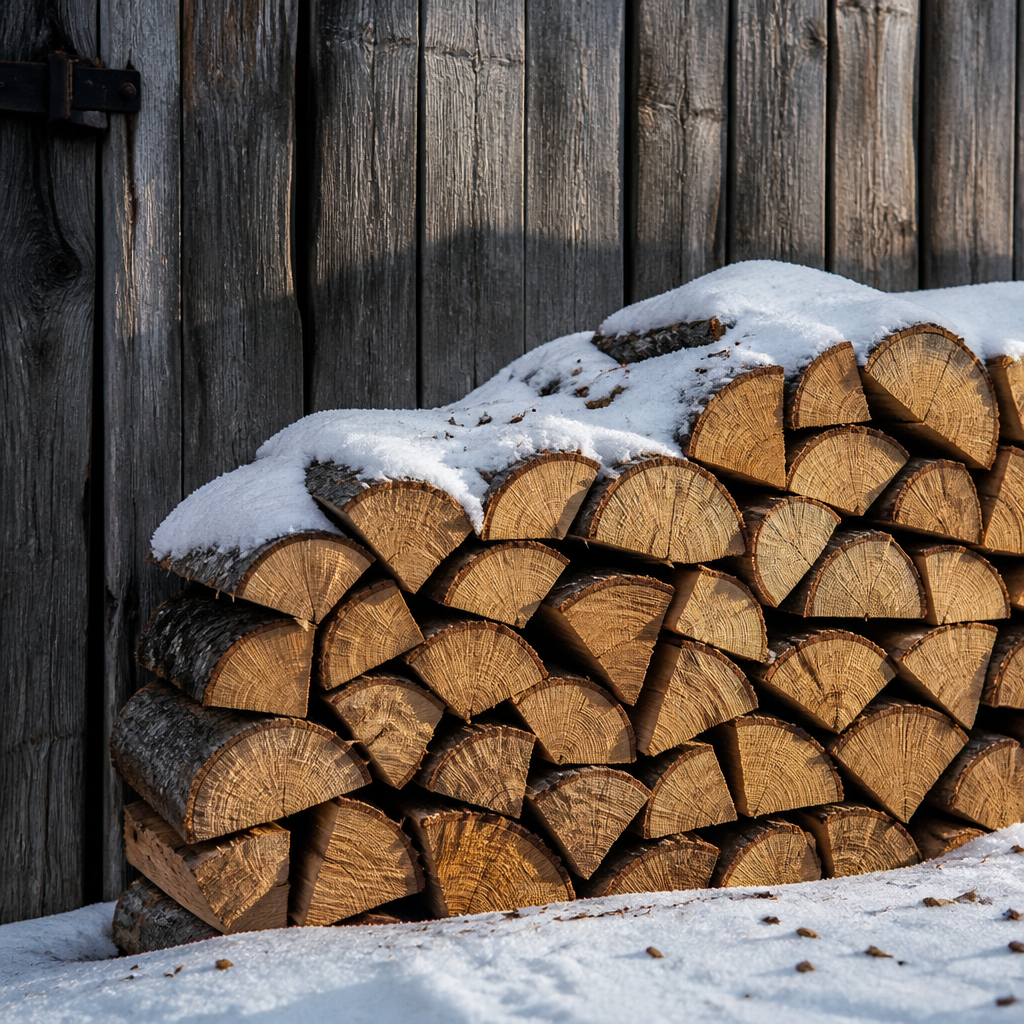
Canadian winters do not negotiate. When temperatures drop to -30°C and the grid goes down, your heating system either works or it doesn’t. For homesteaders and remote property owners pursuing off grid heating Canada solutions, the choice almost always narrows to two contenders: a wood stove or a propane system. Both work. Both have serious trade-offs. What separates good decisions from bad ones is understanding exactly which trade-offs you can live with, on your land, with your budget, and through your worst-case winter scenario.
Table of Contents
- Why This Decision Matters More Than You Think
- The Real Cost Breakdown: Wood vs. Propane
- Heat Output and Efficiency: What the Numbers Actually Mean
- Fuel Supply and Reliability in Remote Canadian Conditions
- Installation, Safety, and Maintenance Requirements
- Side-by-Side Comparison: Wood Stove vs. Propane Heater vs. Dual-Fuel Setup
- Which System Actually Fits Your Homestead?
- Frequently Asked Questions
- References
Why This Decision Matters More Than You Think
Most heating comparisons are written for suburban homeowners with a backup furnace, a hardware store nearby, and a delivery truck that shows up on schedule. That is not your situation. On an off-grid homestead in Canada, a heating failure in January is not an inconvenience, it is a safety emergency. The right system needs to perform when roads are impassable, when your propane supplier is backed up for a week, or when a chimney fire wakes you at 3 a.m.
The decision between wood and propane also shapes your daily life in ways the average heating guide ignores. Wood heat demands physical labour, forward planning, and hands-on management. Propane is passive and convenient until the tank runs dry or a fitting fails at -25°C. Neither option is wrong; they suit fundamentally different homestead lifestyles and site conditions.
Before looking at costs, consider your land. If you have access to timber, either on your property or through low-cost local sources, wood heat is almost always the economically dominant choice over a ten-year horizon. If you are on a small lot with no firewood access, or if the homestead is a seasonal-to-permanent transition where you cannot yet manage a wood supply, propane earns its place as a serious primary system.


The Real Cost Breakdown: Wood vs. Propane
Cost comparisons for heating fall apart when people compare fuel prices without accounting for equipment efficiency, annual fuel volume, and the full cost of supply. Here is how the numbers actually look for a Canadian off-grid property.
Wood Heating Costs
A full cord of seasoned hardwood in Canada typically runs roughly $150 to $400 delivered, depending on species, region, and whether the wood is split and stacked. A modest off-grid home heating through a full Canadian winter commonly burns two to four cords. If you cut your own wood, that cost collapses to the price of your time, chainsaw fuel, and equipment wear. That is the core economic argument for wood heat: when fuel is free or nearly free, operating costs per season drop dramatically compared to any fossil fuel.
Upfront hardware costs vary widely. A quality wood stove suited to Canadian winters runs from roughly $800 to $3,000 for the unit alone. Add chimney installation, hearth protection, and any floor or wall shields required by code, and the total installed cost commonly lands between $3,000 and $6,000, depending on how much of the work you do yourself.
Pro tip: Buy your wood stove based on the cubic footage of the space you need to heat, not on the maximum BTU rating on the spec sheet. Oversized stoves run at low output to avoid overheating, which causes incomplete combustion, creosote buildup, and poor efficiency. Size it right and you avoid chimney problems from the start.
Propane Heating Costs
Propane prices in Canada have risen significantly over recent years. According to Natural Resources Canada data, the average price of propane across Canada was around 89 cents per litre in 2020, rising to over $1.28 per litre by 2025. For a rural off-grid property, add delivery fees and the cost picture becomes clearer: propane heating a moderately sized home through a full Canadian winter can consume 1,200 to 2,000 litres or more annually, making seasonal fuel costs substantial.
A high-efficiency propane furnace (rated at 95% AFUE) delivers roughly 22,800 BTUs of usable heat per litre of fuel. That is genuinely efficient combustion, but you are still buying every BTU from a supplier who controls the price. Installation of a complete propane heating system for an off-grid property, including tank rental or purchase, line installation, and the heating unit itself, typically runs from $4,000 to $10,000 or more in rural Canadian areas where contractors must travel significant distances.
Pro tip: If you go propane, own your tank outright rather than renting from your supplier. Tank ownership lets you shop multiple suppliers for the best fill price each season. On a remote property, locking yourself into one supplier’s pricing can cost hundreds of dollars per year over a decade.
Heat Output and Efficiency: What the Numbers Actually Mean
Efficiency ratings for heating systems are frequently misunderstood. A wood stove rated at 70-80% efficiency means that 20-30% of the wood’s BTU value goes up the chimney as heat loss. Modern certified wood stoves achieve this range consistently under real operating conditions, which is a significant improvement over open fireplaces (which can lose 80-90% of heat up the chimney). A high-efficiency propane furnace rated at 95% AFUE loses only about 5% of fuel energy as exhaust. On paper, propane wins on efficiency. In practice, the comparison is more nuanced.
Hardwood BTU content per cord varies by species but is well documented. Red oak delivers roughly 24 million BTU per cord, maple around 21 million BTU, and even eastern white pine, a common softwood in Canadian forests, delivers around 14 million BTU per cord. When you burn your own timber, you are converting a renewable, locally sourced fuel into heat at a fraction of the cost per BTU of any delivered fossil fuel.
The most honest measure of heating efficiency on a homestead is not the appliance rating, it is the cost per gigajoule of usable heat delivered to your living space, accounting for your actual fuel supply cost and your specific climate.
A well-managed wood stove in the right size house, burning properly seasoned hardwood, can outperform a propane system on delivered cost per BTU by a factor of two or more when firewood is self-harvested or locally sourced at low cost. The efficiency gap between the two appliance types is real but rarely closes the economic gap when firewood is free.

Fuel Supply and Reliability in Remote Canadian Conditions
This is where off-grid homesteaders need to think differently from suburban buyers. Fuel supply reliability is not just a convenience issue, it is a survival issue in a Canadian winter.
Wood Heat Supply Reliability
Firewood stores exceptionally well when split, seasoned for six to twelve months, and stacked off the ground with good airflow. Unlike propane, it does not depend on pressurized containers, supply chains, or delivery trucks able to navigate snow-covered access roads. If you have a full winter’s supply stacked and covered before freeze-up, your fuel supply is essentially zero-risk for the heating season. You control the entire chain from standing timber to fire.
The vulnerability of wood heat is supply preparation, not supply availability. If you start winter with insufficient seasoned wood, or if your wood is too green (above 20% moisture content), you face real problems. Green wood burns poorly, produces far more creosote, and delivers a fraction of the BTUs of properly dried wood. The preparation work must happen months in advance.
Propane Supply Reliability
Propane can be delivered and stored in large tanks on-site, which gives it excellent short-term reliability once the tank is full. The risk is supply chain dependence. In severe winter weather, rural delivery routes can be delayed for days or weeks. If your tank runs low during a cold snap and roads are not passable, you are in trouble. Maintaining a tank that is never drawn below 30% capacity is a prudent rule on any remote property, but it requires either regular monitoring or a remote gauge system.
Propane also carries freeze-up risk at extreme temperatures. The vapour pressure in a propane tank drops as temperature falls, and at temperatures approaching -40°C, a nearly empty tank may not vaporize fuel efficiently enough to maintain full appliance output. Keeping your tank well-filled and insulated from extreme wind exposure is not optional in the coldest parts of Canada.
Installation, Safety, and Maintenance Requirements
Both systems carry real safety requirements that are non-negotiable on a remote property where emergency services may be 30 to 60 minutes away.
Wood Stove Installation and Chimney Safety
A safe wood stove installation requires a proper chimney, correct clearances from combustibles, floor protection rated for the stove’s radiant output, and an air supply adequate for clean combustion. In a well-sealed modern off-grid home, you may need a dedicated exterior air intake to prevent negative pressure combustion problems. Skipping any of these requirements is how chimney fires and carbon monoxide events happen.
Chimney maintenance is mandatory, not optional. Annual inspection and cleaning by a certified chimney sweep (or a thorough self-inspection if you are trained and equipped) prevents creosote buildup, the primary cause of chimney fires. Burning softwoods or wet wood increases creosote accumulation significantly and may require more frequent cleaning.
Propane System Safety
A qualified technician must commission any new propane heating installation. Annual service checks on connections, regulators, and all connected appliances are important on any propane system, but especially so on a seasonal or remote property that may sit unused for weeks or months. Propane leaks in an enclosed, unoccupied space are serious hazards. Carbon monoxide detectors and propane leak alarms are essential in any propane-heated off-grid home.
The maintenance burden on propane is considerably lighter day-to-day than on a wood stove. There is no ash removal, no glass cleaning, no daily fire management. For part-time or seasonal homesteaders who are not on-site to manage a wood stove daily, propane’s lower maintenance requirements are a real practical advantage.
Side-by-Side Comparison: Wood Stove vs. Propane Heater vs. Dual-Fuel Setup
| Factor | Wood Stove (Primary Heat) | Propane Heater (Primary Heat) | Dual-Fuel (Wood Primary + Propane Backup) |
|---|---|---|---|
| Upfront Installation Cost | $3,000 to $6,000 typical | $4,000 to $10,000+ for rural install | Highest upfront, both systems installed |
| Annual Operating Cost (fuel) | Very low if self-harvested; $300 to $1,500 purchased | Significant; varies with propane price and usage | Low to moderate depending on propane backup use |
| Grid Independence | Complete; no electricity needed | Partial; most systems need 12V or AC for ignition and controls | Complete via wood side; propane provides redundancy |
| Daily Labour Required | High; fire loading, ash removal, wood handling | Minimal; thermostat-controlled | Moderate; wood handles peak demand, propane fills gaps |
| Fuel Supply Risk in Deep Winter | Very low if pre-season wood supply is secured | Moderate; delivery delays possible in severe weather | Very low; two independent fuel sources |
| Best Fit | Full-time homesteaders with timber access | Part-time or seasonal properties without firewood source | Full-time remote homesteads in extreme cold climates |
Which System Actually Fits Your Homestead?
The right answer depends on four variables: your land’s timber access, whether you are on-site full time, your tolerance for physical labour, and how remote your location is. Let those four factors drive the decision, not brand marketing or what a neighbour runs.
Choose Wood as Your Primary System If
You live on or near a property with harvestable timber, you are on-site through the winter, you are physically capable of handling the regular labour of cutting, stacking, and managing firewood, and you want genuine long-term independence from fuel supply chains. A quality wood stove running seasoned hardwood is one of the most resilient, lowest-cost primary heating solutions available to a Canadian homesteader. For full-time off-grid living, it is hard to beat.
The secondary benefit is that a wood cook stove or a wood stove with a hot water coil can simultaneously heat your home, cook your food, and pre-heat domestic water. Combining those functions in one appliance running on one locally sourced fuel is a genuine efficiency win that propane systems cannot match in a fully off-grid context.
Choose Propane as Your Primary System If
Your off-grid property is small or does not have reliable firewood access, you use the property seasonally or part-time, or you need a system that runs with minimal daily management. Propane also works well as a bridge system when you are in the first year or two of a homestead and have not yet developed a sustainable wood supply. It keeps you warm while you get established without requiring a mature firewood operation from day one.
The Case for Running Both
Many experienced off-grid homesteaders in Canada’s most extreme climates run a dual-fuel approach: a wood stove handles the primary heating load and propane covers backup heat, hot water, and cooking when needed. This is not redundancy for its own sake. In a -40°C cold snap with a chimney cleaning overdue or a respiratory illness making wood management impossible, a propane backup is a genuine safety net. The added cost of maintaining two systems is real, but on a permanent remote homestead in northern Canada, it is often the most defensible choice.
Pro tip: If you run wood as primary heat with propane backup, size your propane tank and supply for the full winter, not just backup scenarios. You want enough propane to heat the home for at least four to six weeks if something takes the wood stove offline. A tank that runs dry during the one month you needed it defeats the entire point of having backup heat.
Frequently Asked Questions
Is a wood stove enough to heat an off-grid home through a Canadian winter?
Yes, a properly sized and installed wood stove running seasoned hardwood can comfortably heat an off-grid home through even a severe Canadian winter. The key variables are choosing a stove sized correctly for your space, burning wood dried to below 20% moisture content, and maintaining good chimney draft through regular inspection and cleaning. A stove that is too large for the space will be run at low output and produce excessive creosote. One that is too small will run flat out and still leave you cold on the worst nights.
How much propane does an off-grid home in Canada typically use per winter?
Usage varies significantly with home size, insulation quality, climate zone, and how much of the heating load propane carries versus other sources. A modest off-grid home using propane as its primary heat source in central or northern Canada commonly consumes 1,200 to 2,000 litres or more over a full heating season. Homes in milder coastal regions or those using propane only for backup or cooking use considerably less. The best approach is to track your actual consumption through the first full winter and build your tank capacity and delivery schedule around that baseline.
What firewood species burn best for off-grid heating in Canada?
The best firewood species are the densest hardwoods available in your region. In eastern Canada, maple, white and red oak, ash, and beech are the top choices for high BTU output and long overnight burns. In western Canada, Douglas fir is widely available and burns well, though it produces more creosote than hardwoods due to its resin content, making chimney maintenance more important. Big leaf maple and red alder are better western options where available. The key principle is always burn wood dried below 20% moisture content regardless of species. Properly seasoned softwood outperforms green hardwood every time.
Can propane heat reliably work at -40°C temperatures common in parts of Canada?
Propane can work in extreme cold, but performance depends critically on tank fill level. As propane temperature drops, the vapour pressure in the tank falls, and a nearly empty tank at extreme temperatures may not vaporize fuel fast enough to maintain full appliance output. Keeping your tank at least 30-40% full and protecting it from extreme wind exposure are important precautions in the coldest parts of Canada. Some remote homesteaders use tank blankets or site tanks on the south-facing side of a structure to reduce this risk.
What safety equipment is non-negotiable with a wood stove in an off-grid home?
A working smoke detector and carbon monoxide detector in every sleeping area are the minimum. A fire extinguisher rated for Class A fires should be within arm’s reach of the stove. The chimney must be inspected and cleaned at least once per year, and before each heating season if you burn softwoods or green wood. Creosote buildup is the primary cause of chimney fires, and on a remote property where fire response may take 30 minutes or more, preventing a chimney fire is far more important than responding to one. Keep a metal ash bucket with a lid for safe ash disposal, as wood ash retains enough heat to ignite combustibles for 48 hours after removal.
Is wood heat better for the environment than propane on a Canadian homestead?
This depends on how you define environmental impact. Sustainably harvested firewood is considered carbon-neutral over a full cycle because the carbon released during combustion was absorbed by the tree during its growth. Propane is a fossil fuel with a net positive carbon contribution. However, wood combustion produces particulate matter, carbon monoxide, and other emissions that affect local air quality, particularly with older or poorly operated stoves. Modern EPA-certified or CSA-certified wood stoves burn far cleaner than older designs. Propane burns significantly cleaner in terms of particulates and local air quality. For a remote homestead with access to sustainable timber, wood heat’s long-term carbon profile is generally more favourable than propane.
Have you been running wood heat, propane, or a combination on your Canadian property? Share what has worked and what has surprised you in the comments below.
References
- Canadian Preppers Network: grid-down heating options compared for Canadian homes, covering wood, propane, pellet, and other systems
- Wood Heat Answers: seasonal cost comparison between firewood and propane for rural heating
- FurnacePrices.ca: propane furnace installation costs and fuel pricing trends in Canada
- Northern Cookstoves: guide to selecting the best wood cook stove for off-grid living in Canada
- Modern Homesteading Canada: firewood basics including BTU values by species, moisture content, and seasoning practices
Leave a Reply