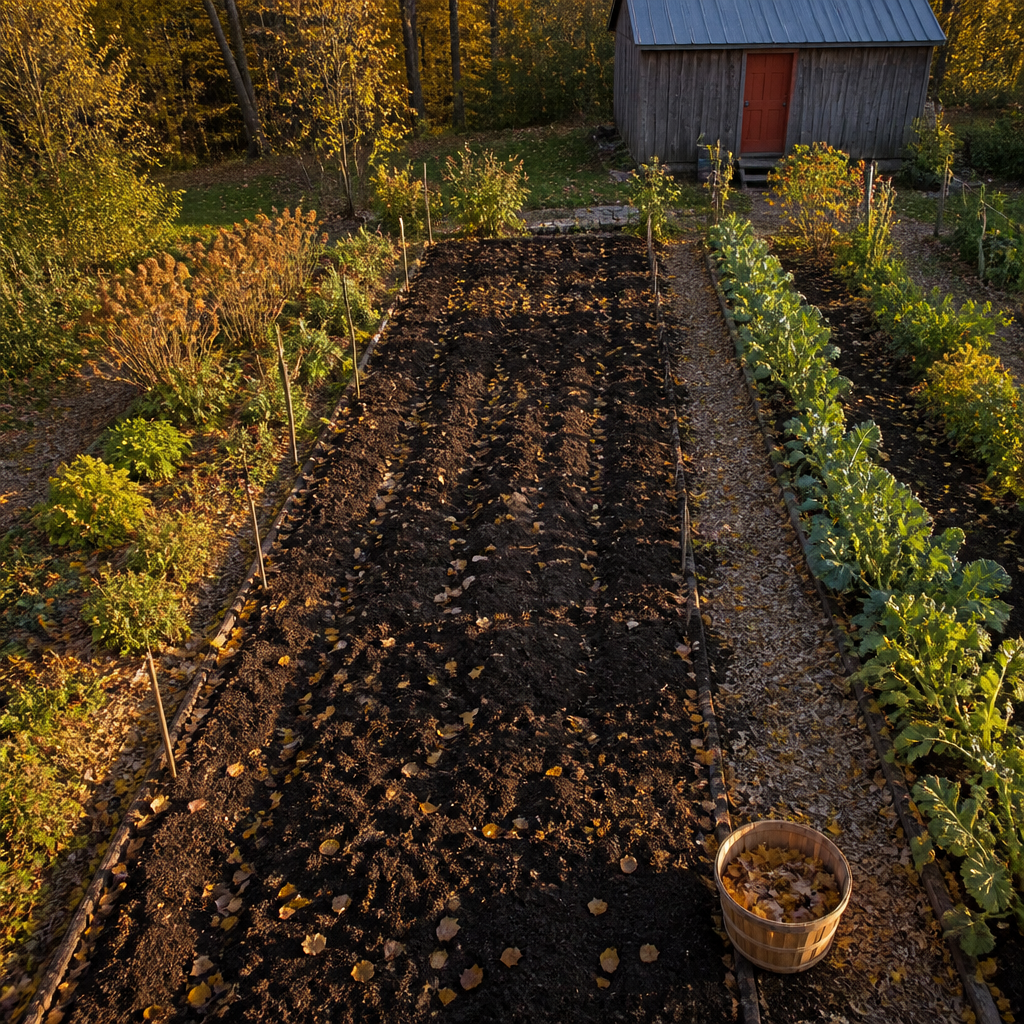
September arrives fast on a homestead, and if you are waiting until the last tomato is pulled to think about cover crops, you are already behind. Bare soil over a Canadian winter is not neutral – it is actively losing structure, organic matter, and nutrients with every rainfall and frost cycle. Cover crops for the homestead are the single most cost-effective investment you can make in your garden beds between now and next planting season. Get the timing right, choose the right species for your zone, and you will put beds to bed that are measurably better in May than they were in August.
Table of Contents
- Quick Takeaways
- Why September Is the Critical Window
- Best Cover Crops for Canadian Homesteads
- How to Sow Cover Crops on Your Homestead
- Cover Crop Comparison Table
- Terminating Your Cover Crop in Spring
- Cover Crop Mixes That Outperform Single Species
- Frequently Asked Questions
- References
Quick Takeaways
| Key Insight | Explanation |
|---|---|
| Sow 6 to 8 weeks before first frost | Cover crops need enough time to establish meaningful root systems before hard freezes arrive. For most of Canada, that means sowing no later than mid-September. |
| Winter rye is the hardiest option | Cereal rye can be sown up to 28 days after first fall frost and will still germinate. No other common cover crop comes close for late-sowing flexibility in cold Canadian zones. |
| Legumes fix nitrogen, grasses build organic matter | Legumes like hairy vetch and field peas feed your soil with nitrogen through root nodule bacteria. Grasses like winter rye add bulk carbon and protect soil structure. |
| Mixing rye with hairy vetch is the most effective pairing | The rye acts as a physical support and frost buffer for the less hardy vetch, while the vetch offsets rye’s tendency to tie up soil nitrogen during spring decomposition. |
| Tillage radish breaks compaction physically | The taproot on daikon-type radishes can penetrate 10 to 20 inches into compacted soil layers, opening channels that persist even after the root winterkills and decomposes. |
| Bare soil over winter is actively damaging | Rain compacts the surface, frost heaves structure, and nutrients leach below the root zone with every rainfall. A cover crop stops all three processes simultaneously. |
| Oats and field peas are the easiest mix for beginners | Both germinate fast, winterkill cleanly in most Canadian zones, and leave a soft residue that is easy to rake off or incorporate without specialized equipment in spring. |
Why September Is the Critical Window
When a summer crop comes out of the ground, the bed does not pause – it starts degrading. Rain hits the bare surface, forms a crust, and creates runoff. Frost heaves break aggregate structure. Nutrients that took all season to build up start leaching below the root zone with each autumn rain event. By the time spring arrives, a bed left bare all winter will have visibly compacted, darker water-pooling spots where structure has collapsed.
September is the last reliable window to establish a cover crop before soil temperatures drop too far for germination to occur. Most cover crop species need soil temperatures above 5 to 7 degrees Celsius to germinate, and they need at least four to six weeks of growth to develop a root system worth having. Do the math backward from your first expected frost and you will see why early September sowing is not optional – it is the deadline.
For Canadian homesteaders across zones 3 through 6, this window is tighter than for growers further south. Zone 3 gardeners in parts of Alberta, Saskatchewan, and northern Ontario may see first frosts as early as mid-September, which means sowing must happen in late August or the very first days of September. Zone 5 and 6 growers in southern Ontario, the BC interior, and coastal regions have more flexibility but should still treat the end of September as a hard cutoff for anything other than winter rye.
Bare soil is foreign in a healthy natural ecosystem. It dries out, invites weed seeds, and leaches nutrients. The goal is to keep the ground covered as much of the year as possible – not as an aesthetic choice, but as a functional one.
The good news is that cover cropping does not require clearing the entire garden at once. As each vegetable bed empties, sow it immediately. A patchwork of established cover crops across your beds is far better than waiting until everything is pulled and sowing all at once in late September.
Pro tip: Keep a small bag of winter rye seed in your barn or shed specifically for late stragglers. It is the only species you can confidently broadcast even after a light frost has already hit the ground. Everything else needs to go in earlier.


Best Cover Crops for Canadian Homesteads
Not every cover crop you read about in general gardening guides is appropriate for Canadian growing zones. Some species cannot handle hard freezes and will winterkill before they do meaningful work. Others are so winter-hardy they become a management headache in spring. The species below are the ones that consistently perform on homestead-scale plots across the Canadian climate range.
Cereal Rye (Secale cereale)
This is the workhorse of fall cover cropping in cold climates. Cereal rye germinates faster than any other small grain, tolerates dry conditions, and will still sprout from seed sown two to four weeks after first fall frost – a window no other common cover crop can match. Its fibrous root system anchors soil against erosion and can absorb and hold significant amounts of residual soil nitrogen through winter, returning it when the roots decompose.
The practical downside of cereal rye is its high carbon-to-nitrogen ratio, which means it decomposes slowly and temporarily ties up soil nitrogen as microbes break it down. Incorporate it two to three weeks before you plan to plant, not the day before. Better still, mix it with a legume to balance that ratio from the start.
Hairy Vetch (Vicia villosa)
Hairy vetch is a legume, which means it forms a partnership with Rhizobium bacteria in the soil to convert atmospheric nitrogen into a plant-available form stored in root nodules. When the plant is incorporated in spring, that fixed nitrogen becomes available to the crops that follow. It grows in zones 1 through 5, making it viable across most of the Canadian homestead range, though it appreciates the protection of a companion grass through the coldest months.
Vetch has a lower carbon-to-nitrogen ratio than rye, meaning it breaks down quickly after incorporation and releases nitrogen fast. This makes it ideal ahead of heavy-feeding crops like corn, squash, or brassicas. Planted solo it can look sparse in fall, but mixed with rye it fills in well and the rye supports the vetch vines physically.
Oats (Avena sativa)
Oats are one of the fastest-establishing cover crops available and are an excellent choice for homesteaders who want a crop that winterkills reliably, leaving a mat of soft residue that breaks down easily in spring without any mechanical intervention. Their fibrous roots loosen tight soil and add organic matter as they decompose. Oats work especially well as a companion with field peas, where the oat stem provides physical support for the climbing pea vines.
Field Peas (Pisum sativum)
Field peas fix nitrogen like hairy vetch but grow more quickly in fall and are easier to incorporate in spring. They are less likely to survive hard Canadian winters than vetch, but that winterkill is an advantage on a homestead – it eliminates the need for mechanical termination. Sow them with oats for a classic, beginner-friendly pairing that adds both nitrogen and organic matter to depleted beds.
Tillage Radish or Daikon (Raphanus sativus)
The tillage radish is the specialist on this list. Its taproot grows 10 to 20 inches deep into the soil, physically breaking through compacted layers that roots of other cover crops cannot reach. It is an excellent nitrogen scavenger, pulling residual nutrients from deep in the profile. In Canadian climates it winterkills reliably, and as the roots decompose they leave open channels in the soil – called biopores – that improve drainage and aeration long after the plant itself is gone. Sow at least six weeks before first frost for the taproot to develop fully.
Pro tip: If a bed had heavy foot traffic or machinery on it during the growing season, tillage radish is the right first-choice cover crop, not rye. The mechanical compaction-breaking effect of the taproot is something rye’s fibrous roots simply cannot replicate.
How to Sow Cover Crops on Your Homestead
Homestead-scale cover cropping does not require specialized equipment. Most small and medium beds can be broadcast-seeded by hand. The technique matters more than the tool: you want good seed-to-soil contact, not seeds sitting on top of a thick mulch layer or buried too deep to germinate.
Bed Preparation Before Sowing
Clear crop debris and pull any large weeds. You do not need to till deeply – a light surface rake to break up any crust is sufficient. If you are using tillage radish, the soil surface should be relatively loose so the initial root can penetrate without obstruction. For rye or vetch, even a minimally prepared surface will work if you can rake the seeds in to a depth of about half an inch to one inch.
Broadcasting and Raking In
Broadcast seeds evenly by hand across the bed, then rake them lightly into the top half inch of soil. Water the bed if rain is not forecast within 48 hours. Good seed-to-soil contact is the single biggest factor separating successful establishment from patchy failure. Loose seeds sitting on dry soil crust will not germinate reliably, no matter how optimal the timing.
As a general guide for small homestead plots: for rye, aim for about 2 to 3 pounds per 1,000 square feet when broadcast. For a rye-vetch mix, the proportion is typically around 75 to 80 percent rye to 20 to 25 percent vetch by weight. For oat-pea mixes, a pound of seed will cover roughly 200 square feet at a thick planting density.
Timing Relative to Frost
Sow most species 6 to 8 weeks before your average first frost date. Winter rye is the exception: it can be sown from 14 days before to 28 days after first fall frost and will still germinate. Austrian winter peas can also be sown later in the season than clovers, but clovers specifically need earlier sowing to establish before cold hits. Crimson clover, for example, should be in the ground 6 to 8 weeks before frost in zone 5 and earlier in colder zones where it is used as a summer legume that winterkills.

Cover Crop Comparison Table
Choosing the right species comes down to your specific goal: nitrogen building, compaction relief, organic matter, or simple erosion control. This table breaks down the three most practical options for Canadian homestead gardens.
| Cover Crop | Primary Benefit | Cold Hardiness and Canadian Zone Fit | Spring Management | Best Pairing |
|---|---|---|---|---|
| Winter Rye | Erosion control, nitrogen scavenging, organic matter, weed suppression | Hardiest of all cover crops. Reliable in zones 3 to 9. Can be sown after first frost. | Incorporate 2 to 3 weeks before planting. High C:N ratio means it needs time to break down. Mow or crimp before tilling. | Hairy vetch (balances C:N ratio, adds nitrogen) |
| Oats and Field Peas | Nitrogen fixation (peas), organic matter (oats), easy spring management | Both winterkill in most Canadian zones. Clean, easy spring residue with no termination effort needed. | Rake off or lightly till the winterkilled mat. Fastest and easiest spring transition of any cover crop option. | Each other (oats support pea vines, peas feed nitrogen to oat biomass) |
| Tillage Radish | Compaction relief, nitrogen scavenging, biopore creation | Winterkills in Canadian zones. Must be sown at least 6 weeks before first frost for root development. | Winterkilled roots decompose quickly in spring, releasing nitrogen. No tillage needed – the biopores remain intact. | Oats (adds biomass while radish handles subsoil compaction) |
Terminating Your Cover Crop in Spring
This step is where homesteaders most often lose the gains they made in fall. Terminating too late, or not allowing enough time between termination and planting, can create a nitrogen deficit in your soil rather than a surplus – especially with high-carbon cover crops like winter rye.
Winterkill Species: The Easy Path
Oats, field peas, and tillage radish all winterkill in Canadian zones without any intervention from you. In spring, what you find is a mat of dry or partially decomposed residue that can be raked aside for mulching or lightly incorporated. This is the easiest possible termination: nature does it for you, and the residue is already partially broken down before you even touch it.
Winter-Surviving Species: Winter Rye and Hairy Vetch
Winter rye and hairy vetch will resume active growth in spring the moment soil temperatures allow. Left unmanaged, rye can grow several feet tall and become genuinely difficult to incorporate without a tiller. The standard approach on a homestead is to mow it close to the ground, wait a week, then till or fork it in. For no-till operators, a rolling or crimping method flattens the residue into a mulch mat that smothers the plant without turning the soil.
Allow rye residue two to three weeks of decomposition time before direct-seeding into the bed. Transplants can go in a little sooner because they do not need to germinate through the decomposing mat. Hairy vetch, with its much lower carbon-to-nitrogen ratio, breaks down faster than rye and poses less nitrogen-lockup risk.
Nitrogen Release Timing by Species
Research from Ontario has noted that different cover crop species release their stored nitrogen at different points in the spring season. Oilseed and daikon radishes release nitrogen quickly as they decompose in early spring, but some of that nitrogen can leach before the spring crop needs it. Clovers tend to release in early summer. Ryegrass holds nitrogen more tightly, with main release occurring in early to mid-summer. Plan your spring planting timing around this: fast-releasing species like winterkilled radish work well ahead of early spring crops, while rye suits crops planted later in the season when that nitrogen finally unlocks.
Cover Crop Mixes That Outperform Single Species
Single-species cover crops do one thing well. Mixes do several things simultaneously, and in practice the combined effect is greater than either species manages on its own. On a homestead where you are managing diverse beds with different histories and different spring crop plans, mixes are the smarter default.
Winter Rye and Hairy Vetch
This is the most widely used and well-documented pairing for cold-climate homestead gardens. The rye provides immediate ground cover, anchors soil, and scavenges residual nitrogen. The vetch fixes atmospheric nitrogen and adds it to the soil. Crucially, the rye also acts as a physical windbreak and frost buffer that protects the less cold-hardy vetch through the worst of a Canadian winter, improving vetch survival in zones 4 and 5 compared to vetch planted solo. In spring, the combined residue has a lower overall carbon-to-nitrogen ratio than rye alone, which means faster decomposition and a smoother transition to spring planting.
A typical mix ratio is around 75 to 80 percent winter rye to 20 to 25 percent hairy vetch by seed weight. Seed at roughly 2 to 3 pounds per 1,000 square feet when broadcast by hand.
Oats and Field Peas
This is the beginner-friendly pairing. Both species germinate readily in September, grow quickly to cover bare soil, and winterkill in most Canadian zones without any spring effort on your part. The oat stems support the climbing pea vines, the peas fix nitrogen, and the oats add root mass and above-ground biomass. The resulting decomposed mat in spring is soft and easy to work with hand tools – no tiller required. This mix is particularly well suited to homesteaders who do not have mechanical tillage equipment and rely on broadforks, hand rakes, and mulching.
Tillage Radish and Oats
Use this pairing specifically on beds that suffered compaction during the growing season – paths that got walked on, areas where you ran a wheelbarrow repeatedly, or beds where the soil has developed visible puddles and poor drainage. The radish handles the subsoil work while the oats provide above-ground coverage and add organic matter at the surface. Both winterkill cleanly, leaving the biopore channels from the radish intact and a loose oat residue on the surface.
Pro tip: Broadcast your cover crop mix immediately after pulling the last crop from a bed. Do not wait until the entire garden is clear. Every day a bed sits bare in September, you are losing the growing window you need to get cover established before frost.
Frequently Asked Questions
Can I sow cover crops in September in zone 3?
Yes, but your timing window is narrow. Zone 3 areas in Canada can see first frosts by mid-September, which means you need to sow by late August or the very first days of September for most species. Winter rye is your best option this late in the season because it can germinate even after light frosts have already occurred. Field peas and oats are also possible if sown in early September, but they need at least four weeks of above-freezing growing time to establish a useful root system and canopy. Do not wait until after Thanksgiving in zone 3 to sow anything other than rye.
Do I need to till before sowing a cover crop?
Not deeply, and often not at all. Lightly raking the soil surface to break up any crust and create good seed-to-soil contact is usually enough. For beds that are heavily mulched, pull the mulch aside before broadcasting seed, then rake it back lightly over the seeds to act as a cover. Winter rye is particularly forgiving and will germinate in minimally prepared, even rough, soil. The critical factor is contact between the seed and moist soil, not deep tillage preparation.
Will cover crops suppress weeds over winter?
A well-established cover crop significantly reduces winter and early spring weed pressure by occupying the soil surface and shading out germinating weed seeds. Dense cover crops like winter rye are especially effective at this because they produce allelopathic compounds that suppress certain weed species even after the rye is mowed down. That said, the weed suppression only works if the cover crop is thick enough to form a genuine canopy. A sparse stand with gaps will give weeds exactly the open ground they need to establish.
What is the difference between winter rye and annual ryegrass?
These are two different plants that are frequently confused. Winter rye (Secale cereale) is a cereal grain – related to wheat and barley – and is extremely cold-hardy, surviving Canadian winters and resuming growth in spring. Annual ryegrass (Lolium multiflorum) is a turf-type grass that grows quickly in fall and develops dense roots fast, but may or may not survive winter depending on how cold the season is. For Canadian homesteads in zones 3 through 5, winter rye is almost always the right choice over annual ryegrass because its winter survival is reliable and predictable.
How do I manage a cover crop in spring without a tiller?
For winterkilled species like oats, field peas, and tillage radish, management is simple: rake off the loose residue in early spring, use it as mulch around transplants, and the bed is ready to plant. For winter-surviving species like winter rye or hairy vetch, cut or mow the growth as low as possible with a hand scythe, sickle, or even hedge shears. Let the cut material lie on the surface for one to two weeks to wilt and partially break down. Then use a broadfork to open the soil and a rake to work the residue in to the top few inches. It is more labor than a single tiller pass, but it works and it keeps soil structure intact.
Can cover crops replace compost in the homestead garden?
Cover crops and compost do different things and work best together, not as substitutes. Cover crops build soil biology, add fresh organic matter from root exudates and residue, fix nitrogen (legumes), and prevent erosion and compaction. Compost adds stable, already-decomposed organic matter with a diverse microbial community and available nutrients in a form immediately accessible to plants. The most productive approach cycles in the fall: clear the bed, add a layer of compost, then sow the cover crop on top. In spring, terminate the cover crop and plant directly into that layered, biologically active soil.
Is it too late to plant cover crops in late September?
For most species, yes – late September is past the reliable window in Canadian growing zones. Winter rye is the one exception. It can be sown up to about four weeks after first fall frost and will still germinate and establish enough root mass to protect the soil surface through winter. If you find yourself with bare beds in late September, broadcast winter rye immediately rather than leaving soil exposed. Even a thin stand of rye is meaningfully better than bare soil for erosion control and nutrient retention over the winter months.
Have you tried cover cropping on your homestead this fall? Share which species you are sowing and what your biggest challenge has been – we would love to hear what is working in your specific zone.
References
- SARE guide to cereal rye as a cover crop: hardiness, nitrogen scavenging, and spring management
- SARE guide to hairy vetch: nitrogen fixation, soil tilth benefits, and mixing with rye
- Ontario government resource on cover crop species selection, nitrogen release timing, and management
- September cover crop planting guide covering winter wheat, crimson clover, and timing relative to frost dates
- Detailed fall cover crop species guide covering seeding rates, zone hardiness, and termination methods
Leave a Reply