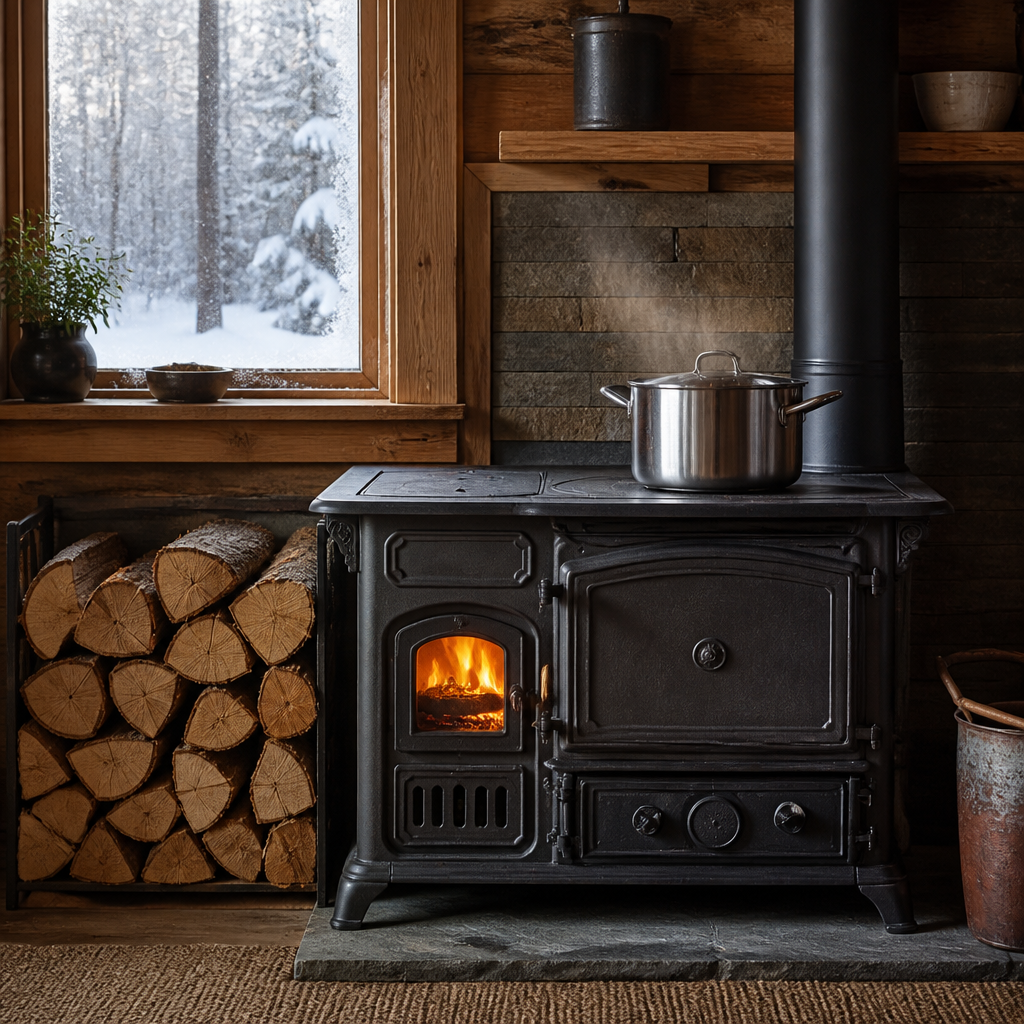
Pick the wrong cookstove for a Canadian homestead and you will feel it every day from November to March. The fuel you choose decides how much you haul, how often you check a gauge, whether the kitchen warms the cabin, and what happens when the weather turns. An off grid cookstove Canada households can live with has to cook reliably in a cold snap, not just look good in a showroom. Here is how propane and wood compare in a working kitchen, and where I land.
Table of Contents
- Quick Takeaways
- Where the Cookstove Fits Your Off-Grid Energy Plan
- Propane Cookstoves: Strengths and Limits
- Wood Cookstoves on the Canadian Homestead
- Cost, Insurance, and Installation Trade-Offs
- Propane vs. Wood Side by Side
- Matching the Stove to Your Cooking Habits
- Common Mistakes in Off-Grid Kitchens
- Frequently Asked Questions
- References
Quick Takeaways
| Key Insight | Explanation |
|---|---|
| Propane wins on daily effort | Lighting, simmering, and shutting off take seconds, and you skip the splitting and hauling. The trade is a fuel bill and tank refills you have to schedule. |
| Wood wins when you need heat anyway | A cookstove that warms the room in January can replace a separate heater. Plan the cooking load and the heating load together, not as two separate purchases. |
| Cold weather cuts propane output | Propane reaches the burner as vapour, and output drops as temperatures fall. Shelter outdoor tanks where allowed and size the system for your coldest week, not your average one. |
| Season firewood a full year ahead | Green wood smokes, dirties the flue, and gives less heat per load. Stack split wood off the ground, under cover, with airflow around it. |
| Ask your insurer before the stove goes in | Solid-fuel appliances can change premiums and coverage. Get the insurer’s answer in writing before you buy the stove. |
| Dual fuel fits many homesteads | Propane handles summer cooking and quick meals, while wood covers winter heat and slow cooking. Two systems cost more to set up, but each covers the other’s weak season. |
Where the Cookstove Fits Your Off-Grid Energy Plan
Most people shop for a cookstove as if it were a kitchen appliance. On a homestead it is part of your energy system. Whatever fuels the oven also boils your water and, in many cabins, carries part of the heating load. Wood heat and propane are the two most common off-grid heat sources, and many households run both, so the stove choice usually ties into the heating plan.

The first question is not which fuel is cheaper. It is which fuel you will still like using in February, when the driveway is drifted in and the sun has been down since late afternoon. A stove you resent by the third week of winter is the wrong stove, however good its oven looks on paper.
Before you shop, write down three numbers: how many people you cook for, how many days a week you bake, and whether the stove needs to heat the room you cook in. Those answers settle more of this decision than any spec sheet. A family cooking three meals a day and baking bread in a small cabin will push a wood range hard, while the same cabin in July may barely need the stove at all.
Winter load and summer load rarely match. That gap is where most regret comes from, and it is the first thing I check when someone asks me which stove to buy.
Propane Cookstoves: Strengths and Limits
A propane cooktop is the easiest stove to live with. You turn a knob, the burner lights, and you turn it off when you are done. There is no firebox to tend and no ash to empty, which matters most on the days you are sick, tired, or trying to get dinner on before dark. For many off-grid kitchens, that simplicity is the whole argument.
Fuel Storage and Refill Planning
The real cost of propane is logistics. You are buying fuel in tanks, and a tank lasts only as long as the cooking, water heating, and any other propane appliances allow. Track your consumption for one full month before you assume anything. Guessing from summer habits is a common error, because a summer cooktop is often the only thing drawing fuel.
Plan refills around the weather, not the calendar. Running a tank down to the last few percent before a storm is a bad day waiting to happen. If your supplier’s route is seasonal, keep a second tank on hand, and keep the gauge where you can read it from the kitchen.
Cold Snaps and Tank Pressure
Propane changes behavior in deep cold. Output drops as temperatures fall, so a tank sitting outside in a hard freeze can struggle to keep a cooktop running at full strength. Shelter tanks from wind and direct cold where your installer and local rules allow, and size the system for the coldest week you expect.
Pro tip: Before a forecast cold snap, check the gauge, schedule your fill early, and run one burner on high for a minute to confirm the flame is strong and steady. A weak, yellow flame in a cold spell usually means the tank is working harder than you think.
Propane is also heavier than air, so a leak settles low instead of rising. Put a propane detector near the floor, keep the kitchen ventilated, and treat any gas smell as an emergency that starts with leaving the building.
Baking and Simmering Realities
Propane ovens hold steady temperatures and make weekly bread predictable. Simmering a stockpot for hours at low heat is also easy on a gas burner, which is an underrated advantage when you cook from scratch on a homestead. The downside is that a propane cooktop gives you no heat to spare for the room. In a cold cabin you will still need a heater, and that heater is another fuel bill.
Wood Cookstoves on the Canadian Homestead
A wood cookstove does two jobs at once. The firebox that boils your kettle also warms the room, and a Canadian winter cabin usually needs that heat anyway. Radiant heat from a woodstove spreads through a room differently than heat from a propane burner, and it is the reason many off-grid cooks refuse to give up their wood ranges.

Wood heat warms you twice: once when you cut and split it, and again when you burn it.
Woodburners repeat that saying because the labor is the part most people underestimate when they picture a cozy kitchen. The stove is not the hard part. The supply chain behind it is.
Heat That Comes With the Cooking
The main reason to choose wood is that you get cooking and heating from one fire. A wood range can keep a kettle on the back of the stove, dry wet mitts, and take the chill out of a kitchen before you add a heater. One off-grid education center’s writeup on wood and propane lists this kind of heat, along with the fact that wood heat does not add moisture to the room, among its advantages of wood heat.
The trade-off is that heat is only as steady as your attention. A wood range does not regulate itself the way a thermostat does, so cooking temperature and room temperature both depend on how you load the firebox.
Firewood Volume and Seasoning
Whether your firewood is free or purchased changes everything. If you have a woodlot, cutting your own firewood can be cheap, but it is still hard physical work. The writeup I mentioned notes that cost depends heavily on whether you harvest your own wood or buy it, and that species, moisture content, and seasoning all affect how much heat you actually get.
Green wood is the most common mistake I see. It smokes, leaves creosote in the flue, and gives you a fraction of the heat per load. Season firewood for a full year, stack it off the ground under cover, and leave air moving through the pile. Splitting with a partner or neighbour is also a practical way to cut the time it takes to build a season’s supply.
Learning Your Stove’s Moods
Every wood range has its own draft, hot spots, and way of smoking when the damper is set wrong. The writeup is blunt on this point: you must learn your stove, and fires do go out and need restarting. Expect the first month to be frustrating.
Keep a stash of dry kindling and a reliable lighter near the stove, so a fire that dies overnight does not cost you breakfast. Plan to be in the house when you are cooking on the stove, because a range that is ignored at the wrong moment is how kitchens get smoky.
Cost, Insurance, and Installation Trade-Offs
Stove prices get the headlines, but the full system determines whether a kitchen works. Propane has costs for tanks, lines, regulators, and a qualified installer. A wood range has costs for the stove, the chimney, the clearances, and the hearth. Get quotes for the whole installation, not just the appliance on the showroom floor.
Upfront Equipment Costs
A quality woodstove is expensive, and the same off-grid writeup warns against skimping on safety. The cheapest range that fits your budget is not automatically the best one. Look at firebox construction, door seals, and the size of the cooktop relative to the meals you actually cook.
Propane is often cheaper to buy but not always cheaper to set up. Tanks, piping, and a professional hookup add up, and a bad hookup costs more later than a good one costs now.
Insurance Premiums and Written Answers
The same writeup notes that insurance costs can be higher if you have a wood stove. That is not a reason to skip wood, but it is a reason to call your insurer before installation. Describe the appliance exactly, including the make, model, and where it will sit, and ask for the answer in writing.
Ask about propane too. A tank and appliance can change how a property is rated, and a verbal yes from a phone call is not something you want to rely on after a claim.
Venting, Clearances, and Installer Planning
A wood cookstove needs a chimney that draws well, safe clearances from combustible walls, and a regular inspection schedule. Creosote builds up faster when you burn wet wood or run a smoldering fire, so the more you burn, the sooner you should check the flue. A propane range needs ventilation, a safe location for the tank, and a clear route for the fuel line.
The Propane Technical Pocket Guide is a technical reference on preparing for residential propane installations, and it is worth reading before you choose a site for tanks and appliances. Read it with your installer, not instead of them.
Propane vs. Wood Side by Side
Three setups come up again and again on Canadian homesteads. Each one solves a different problem, and the table below is how I would frame them when someone asks for a recommendation.
| Setup | Strongest Advantages | Main Trade-Offs |
|---|---|---|
| Propane cooktop and oven | Instant heat control, simple lighting, predictable bread baking, no ash | Tank logistics, reduced output in deep cold, no room heat |
| Wood cookstove or range | Cooks and heats the room together, heats water, low cash cost with your own woodlot | Heavy daily labor, learning curve, chimney maintenance, insurance questions |
| Dual fuel (propane plus wood) | Summer cooking without lighting a fire, winter heat from wood, backup if one fuel runs short | Two systems to install, maintain, and fuel |
If I were setting up a cabin from scratch and the budget allowed, I would choose dual fuel. A propane cooktop handles July without heating the house, and a wood range handles January while giving you heat. If the budget only stretches to one appliance, the choice depends on whether you have a woodlot you can work without resentment. Without one, propane is the better choice for most people.
Think about the failure modes too. A propane kitchen fails when the tank runs low in a storm. A wood kitchen fails when the woodshed is empty or the fire goes out during a cook. Pick the setup whose failure you can prevent with a habit you will actually keep.
Matching the Stove to Your Cooking Habits
Your menu matters more than your fuel preferences. A household that bakes sourdough twice a week, cans in late summer, and simmers stock for winter soup has different needs from a single cook who heats a can of soup and makes coffee. Start with the heaviest cooking you do, then choose the stove that handles it without drama.

Bread, Canning, and Slow Cooking
Propane ovens give steady, controllable heat for bread. A wood oven can produce excellent bread, but it takes practice to learn when the firebox is hot enough and how the oven temperature shifts as the wood burns down. Canning on a wood range works well in cool weather, though you need to manage the heat load carefully.
Slow cooking favors wood. A banked fire holds a pot at a simmer for hours, and the same heat that cooks dinner can dry your boots and warm the room in the evening.
Cooking for a Crew Versus Cooking for One
A crew of four or more puts real demand on any stove, and a wood range with a big cooktop can feed a crowd without much fuss once it is up to temperature. For one or two people, a small propane cooktop is often less work and wastes less fuel than lighting a whole firebox for a single pan.
Summer Heat and Kitchen Temperature
A wood range running in July can push a small cabin past comfortable very quickly. Many homesteaders move summer cooking to a propane burner outside or into a separate summer kitchen, and keep the wood range for the cold half of the year. This is one of the strongest arguments for dual fuel.
Common Mistakes in Off-Grid Kitchens
Most kitchens that disappoint their owners were built around the wrong assumption, not the wrong stove. The three mistakes below show up often enough that I now ask about them in the first conversation.
Buying the Stove Before the Fuel Plan
People buy the oven they saw online, then discover they have no plan for getting the fuel. A wood range without a seasoned supply is a stove you cannot run. A propane cooktop without a refill route is a stove that quits at the worst time. Write the fuel plan first, then choose the appliance that fits it.
Ignoring Ventilation and Detection
Ventilation is easy to overlook in a small cabin. Both fuels need airflow, and a kitchen that feels cozy can also be a kitchen with poor air exchange. Install detection suited to the fuel, check the chimney or fuel line on a schedule, and do not wait for a symptom to tell you something is wrong.
Waiting Until the Woodshed Is Empty
The woodshed is the most common place where wood kitchens fail. Homesteaders plan to cut in the fall, then the first big snow arrives and the stack is half split and half wet. Count your firewood in October, not December, and set a rule that you refill the woodshed before you start drawing on the last third of the stack.
Pro tip: Keep a written fuel log for one full season, noting tank readings or cords used each week. The log will show your real demand far better than any estimate, and it gives you something concrete to bring to your supplier, your insurer, or your installer.
Frequently Asked Questions
Is propane or wood cheaper for an off-grid cookstove?
If you own a woodlot and have the time and physical capacity to cut and split, wood is usually cheaper in cash because you pay with labor. Without a woodlot, propane often comes out ahead on time, and for many people that trade is worth it.
Can a wood cookstove be my only heat source in a cabin?
In a small, well-insulated cabin, a wood cookstove can carry most of the heating load. I would not rely on it alone without a backup heat source for nights when the fire goes out or the wood supply runs low.
Does propane work in a Canadian winter?
Yes, with planning. Shelter outdoor tanks where allowed, watch the gauge, schedule fills before forecast cold snaps, and size the system for the coldest week you expect rather than the average.
How often should a wood cookstove chimney be inspected?
Inspect the chimney regularly, and check it sooner if you burn wet wood or run smoldering fires, since creosote builds up faster in those conditions. Clean it when you see buildup, and make sure the inspection happens before the heating season starts, not in the middle of it.
Can I start with one stove and add the second fuel later?
Yes, and that is a sensible path for many homesteads. Start with the cooktop you need most, make sure the installation leaves room for the second fuel, and add the other system once your budget and fuel plan are proven.
Tell us in the comments which fuel your kitchen runs on, and what you would change if you were starting over.
We would love your feedback and any insights you would share with others. What perspective would you add?
References
- Off-grid heat comparison of wood and propane from long-term off-grid living experience
- Propane technical pocket guide for preparing residential propane system installations
Leave a Reply