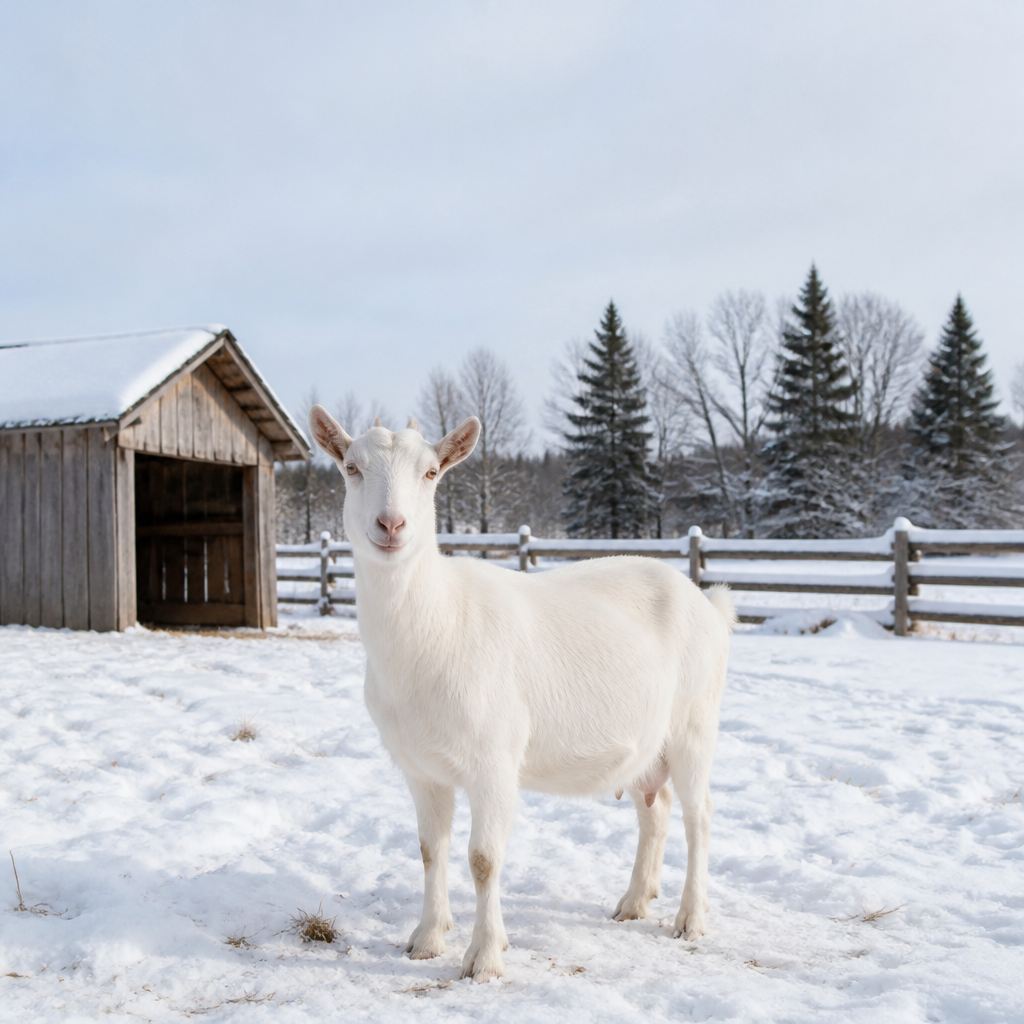
Anyone searching for off-grid goats Canada wants the same thing: an animal that pays its way in milk or meat without a grid-powered barn, a vet on speed dial, or a feed store run every week. The problem is that most breed advice is written for farms with a paved road, a pickup in the driveway, and a paddock next to the house. On remote land, a wrong breed choice costs more than money. A dairy doe that needs milking twice a day is a fine choice until your nearest neighbour is a long drive away and you are snowed in. This guide covers the breeds that matter, what they demand from your land, and how to match them to what your household actually needs.
Table of Contents
- Quick Takeaways
- Start With the Product You Actually Need
- Dairy Goat Breeds for Milk Production
- Meat Goat Breeds for the Homestead
- Dual-Purpose Breeds and When They Make Sense
- Off-Grid Infrastructure: Fencing, Shelter, and Water
- Feeding Goats on Your Land
- Matching Breed to Your Goals
- Herd Size and Daily Workload
- Frequently Asked Questions
- References
Quick Takeaways
| Key Insight | Explanation |
|---|---|
| Choose by product first | Pick milk, meat, or fiber before you consider looks or color. Most breeds were developed to excel at one job, and dual-purpose animals usually compromise on both. |
| Milking is a daily commitment | Dairy does need milking once or twice a day, every day while in milk. Build your routine around that schedule before you buy. |
| Plan for at least two goats | Goats are social animals. A single goat often becomes stressed, loud, or destructive, and stress shows up as illness or fence damage. |
| Fencing decides success | Use tall, heavy woven wire with a tight bottom edge. Standard cattle wire will not hold goats, and a single weak gap can cost you the herd. |
| Winter water is the hard problem | Wet cold is harder on goats than dry cold. Plan a dry, draft-protected shelter and a reliable way to keep water from freezing before the first snow. |
| Buy a buck only if you need one | A buck needs separate, highly secure housing and constant attention. Some owners borrow a buck for breeding season instead of keeping one year round. |
Start With the Product You Actually Need
Most people buy goats for the wrong reason and then spend two years trying to make an animal do a job it was never bred for. Dairy goats are built to turn feed into milk. Meat goats carry muscle and frame. Fiber goats grow coats that need regular shearing. None of them does all three well, and the ones that come closest usually give up something in each category.

Before you contact a breeder, write down the one product that will matter most to your household each week. If you want a steady supply of milk for cheese, yogurt, and soap, you are shopping for a dairy breed. If you want to fill a freezer each autumn, you are shopping for a meat breed. That single decision narrows the list more than any other factor.
Three questions to answer before you buy
Farmbrite’s breed guide asks the right questions, and I would add a fourth for off-grid properties. First, do you have time for grooming and shearing? Fiber goats need regular shearing and careful coat maintenance. Second, can you commit to milking every day while a doe is in milk? Third, are you ready to manage a buck in separate, secure housing if you want kids or a steady milk supply?
The fourth question is the one most people skip: how far are you from help? A doe that kids in the middle of a cold snap, with the nearest vet a long drive away, is a very different management problem than one kidding in a barn a short drive from town. Choose a breed you can handle yourself, because on remote land you often will.
Dairy Goat Breeds for Milk Production
If milk is your priority, the Saanen and the Alpine are the breeds most homesteaders consider first. The MOFGA guide on choosing a goat breed calls them the premier milking goats and cites averages of about 2,700 pounds of milk a year per animal. Treat that figure as a realistic target for a well-managed doe, not a guarantee. Feed quality, genetics, and how consistently you milk all push the number up or down.
Saanen and Alpine: high volume, big appetite
Saanens are generally white, large, and calm, which makes them easier for beginners to handle. Alpines come in many colours and tend to be lively foragers. Both produce more volume than the smaller dairy types, which is an advantage if you are making cheese or feeding a family, and a cost if you are hauling hay up a rough gravel road every week. Expect their feed bill to be noticeably larger than a small breed’s.
Nigerian Dwarf: small herd, rich milk
Farmbrite points to Nigerian Dwarfs as the go-to choice for dairy on a smaller scale, and that matches what small-herd owners tell me. They are compact, eat less, and their milk is high in butterfat, which suits a household that wants a few liters a day rather than a full milk pail twice daily. The trade-off is volume. You will not fill a cheese vat from one Nigerian Dwarf, so be honest about how much milk your family really uses.
A common mistake is buying a high-volume breed because it sounds more productive, then letting the milking routine slip in midwinter when the chores feel heavier. A smaller doe you milk reliably beats a large one you neglect.
Pro tip: Ask any breeder for milk records or recent production numbers before you pay. Actual output from a specific line tells you far more than a breed average.
Meat Goat Breeds for the Homestead
For meat, Farmbrite names the Boer as the breed to choose, and for most homesteads that want market-weight animals, I agree. Boers are bred for muscle, frame, and fast growth, so they put on weight on good forage and a sensible grain supplement. They are not a dairy breed, so do not expect a useful milk supply from a Boer doe beyond what her kids need.
Boer: the standard for meat
A Boer gives you more meat for the feed you put in, which matters on a property where every bale is moved by hand or by a small tractor. Their size also means you need sturdy gates, strong handling equipment, and a loading setup you can manage alone. Build that infrastructure before the first kid is ready for market, not after. Owners who wait often end up hauling animals in ways that stress both the goats and the people.
Processing and rules come before the first sale
Plan your processing before you plan your breeding. Check your municipal bylaws and provincial rules on keeping livestock and on-farm slaughter, because they vary and some restrictions catch new owners off guard. Then find a processor willing to take goats before the animals are ready. A freezer full of meat is only useful if you know how it got there legally and safely.
Hardy meat types for rough land
Other meat breeds, including some traditional hardy types, often handle rough forage and wet pasture better than Boers in many setups. They generally grow more slowly and finish at lighter weights. If your land is mostly brush and you do not need fast turnover, a hardy meat type can be the better fit, even though the numbers look smaller on paper.
Dual-Purpose Breeds and When They Make Sense
Dual-purpose goats promise milk and meat from one animal. In practice, they rarely excel at both. A dual-purpose doe usually gives you less milk than a dedicated dairy breed and less meat than a dedicated meat breed. If you have a small property and want one animal to cover both needs, they can make sense. If you have room for two separate goats, keep the jobs separate.
Where dual-purpose goats fit
The best case is a small homestead with one or two goats, a household that drinks some milk and eats the occasional animal, and limited time for breeding. You milk the doe through her lactation and raise the wethers for meat. The compromise is that every decision becomes a balance rather than a clear call, and balance is harder to plan around when the weather turns.
Fiber and pet goats: decide before you buy
Angoras are the fiber breed Farmbrite highlights, and their coats need regular shearing and grooming. That makes them a poor fit for a remote property where you may be away for days at a time. Pet goats are another matter. Many owners keep a few for companionship, but a goat with no job still eats hay, needs shelter, and needs a companion of its own. Count the full cost before you add one for the pleasure of it.
A goat that does not earn its feed in milk, meat, or fiber still costs you in hay, shelter, and hours of your time.
Off-Grid Infrastructure: Fencing, Shelter, and Water
Infrastructure matters more on off-grid land than almost anywhere else, because you cannot call someone to fix a broken water line or a fence gap at dusk. Farmbrite lists three basics: secure woven-wire fencing, shelter from wet weather, and enough room to thrive. I would rank water first. A goat that cannot drink enough will eat less, lose condition quickly, and become harder to get back on track.

Fencing that actually holds a goat
Standard cattle wire will not hold goats. Goats test every gap, climb, and push through weak spots, and kids can slip under a loose bottom edge. Use tall, heavy woven wire with the bottom set tight to the ground. Electric wire can serve as a secondary strand, but do not rely on it alone for a herd you cannot check every day.
Dry shelter and winter water
Wet cold is harder on goats than dry cold. A three-sided shelter with a roof and raised, dry bedding gives them a place to lie down out of the damp. Position the opening away from the prevailing winter winds, because that choice often matters more than the size of the building. Water is the harder problem. Plan for heated buckets or a warming setup that runs on a power source you can sustain, and test it before the first hard freeze.
Pro tip: Check water twice a day in cold months, once in the morning and again in the late afternoon. A bucket that froze overnight is easy to miss and slow to recover from.
Feeding Goats on Your Land
Goats are browsers rather than grazers, and that changes how you think about pasture. They prefer shrubs, brush, and weeds to grass, which is why many owners use goats to clear overgrown areas. Turning goats into a clearing crew is a real option, but a careless setup can turn clearing into a poisoning problem if your land holds toxic plants.
Matching forage and feed to breed and purpose
A dairy doe in milk needs more energy and protein than a dry doe or a wether. Good hay and a quality mineral mix form the baseline. If you add grain, introduce it gradually to avoid digestive upsets, and expect milk volume to drop when forage quality falls in late winter. Track that drop rather than assuming it is temporary.
Plants to check before you turn goats loose
Walk the property before the goats arrive. Several common ornamental and wild shrubs and trees are toxic to livestock, and goats will sample what is within reach. Identify every plant in the areas they will access, fence off anything suspicious, and remove what you cannot safely manage. This is a one-time job that prevents expensive losses later.
Matching Breed to Your Goals
Put the trade-offs side by side and the right choice usually becomes obvious. The table below compares three approaches that cover most off-grid situations. Use it as a starting point, then look at the animals in person before you commit.
| Breed or Approach | Best Use | Main Trade-off |
|---|---|---|
| Saanen or Alpine | High-volume milk for cheese, yogurt, and a larger household | Higher feed demand and a daily milking commitment every lactation |
| Nigerian Dwarf | Smaller herd with rich milk for drinking, cooking, and soap | Low volume, not enough for large-scale cheese making |
| Boer | Market or freezer meat with fast growth on good forage | Little usable milk, and the size demands sturdy handling equipment |
If you need both milk and meat, the simplest off-grid approach is one dairy doe for milk and the male kids raised for meat. Dairy wethers are a common source of meat on small homesteads. The alternative of keeping a dedicated meat breed alongside a dairy doe doubles your housing and feed needs, so run the numbers on your land before you split the herd.
Buying from a breeder who can show you the parents and talk openly about health problems saves more money than any breed choice. Ask about the herd’s history, how kids are raised, and what they feed. A reputable seller will answer those questions without hesitation.
Herd Size and Daily Workload
Goats are intensely social, and Farmbrite is right that you should plan to acquire at least two. A single goat often becomes stressed, vocal, and destructive, and stress shows up as illness or damaged fences. Two goats is the practical minimum for most owners, whether that is a pair of does or a doe and a companion wether.

Daily chores you cannot skip
A milking doe needs milking once or twice a day, every day of the lactation. On a remote property, add water checks, feeding, hoof inspections, and fence walks. Before you commit, add up the time those chores take in a typical day, then add more for winter, when everything takes longer and the weather steals your patience.
Buck management and breeding season
Breeding keeps the milk coming, but a buck adds cost and danger. Keep him in separate, highly secure housing, and do not let him run with does outside the breeding season unless you want an unplanned kidding schedule. Some owners borrow a buck from another herd for a season instead of keeping one all year, which avoids housing a male you may not need most of the time.
Pro tip: Keep a simple logbook of breeding dates, kidding dates, milk volume, and any treatments. When something goes wrong at 3 a.m. in February, the written record will matter more than your memory.
Frequently Asked Questions
Which goat breed is best for off-grid milk production in Canada?
For most small off-grid households, a Nigerian Dwarf is the easiest starting point because it produces rich milk in a manageable quantity and eats less. If your household uses a lot of milk for cheese or sells surplus, a Saanen or Alpine gives you more volume, but you must be ready for higher feed costs and a stricter daily routine.
What is the best meat goat breed for a homestead?
The Boer is the standard choice for homesteads that want market-weight meat with fast growth on good forage. If your land is mostly brush and you are not in a hurry to finish animals, a hardy meat type may suit you better, even though it grows more slowly.
How many goats should I start with?
Start with at least two. Goats are social, and a single animal often develops stress behaviors that lead to illness or fence damage. Two goats also gives you a backup if one needs care, which matters a great deal when you are far from a vet.
Can one dairy goat supply a family with milk?
One doe in milk can usually cover drinking milk and some cooking for a small household, but it will not supply large-scale cheese making. Her output also drops over the course of her lactation and during periods of poor feed, so plan for seasonal shortfalls rather than assuming a steady supply all year.
Do goats need electricity on an off-grid property?
Goats do not need electricity in the strict sense, but water access becomes the main challenge in winter. Many owners use heated buckets or warming systems powered by solar and battery setups, while others rely on frequent manual water checks and hauling. Choose the method you can sustain every day, and test it before the first freeze.
Are dairy goats hard to milk for beginners?
Milking is a learnable skill, but most beginners do better with hands-on help from an experienced keeper before they start alone. The first few weeks are often the hardest, so schedule your learning before the doe is near her peak milk production.
Which breed are you leaning toward for your own land, and what has milking or processing taught you that a breed guide could not?
References
- Farmbrite guide to goat breeds for dairy, meat, and fiber
- MOFGA guide to choosing the right goat breed for a homestead
- Nine-step beginners guide to raising goats
Leave a Reply