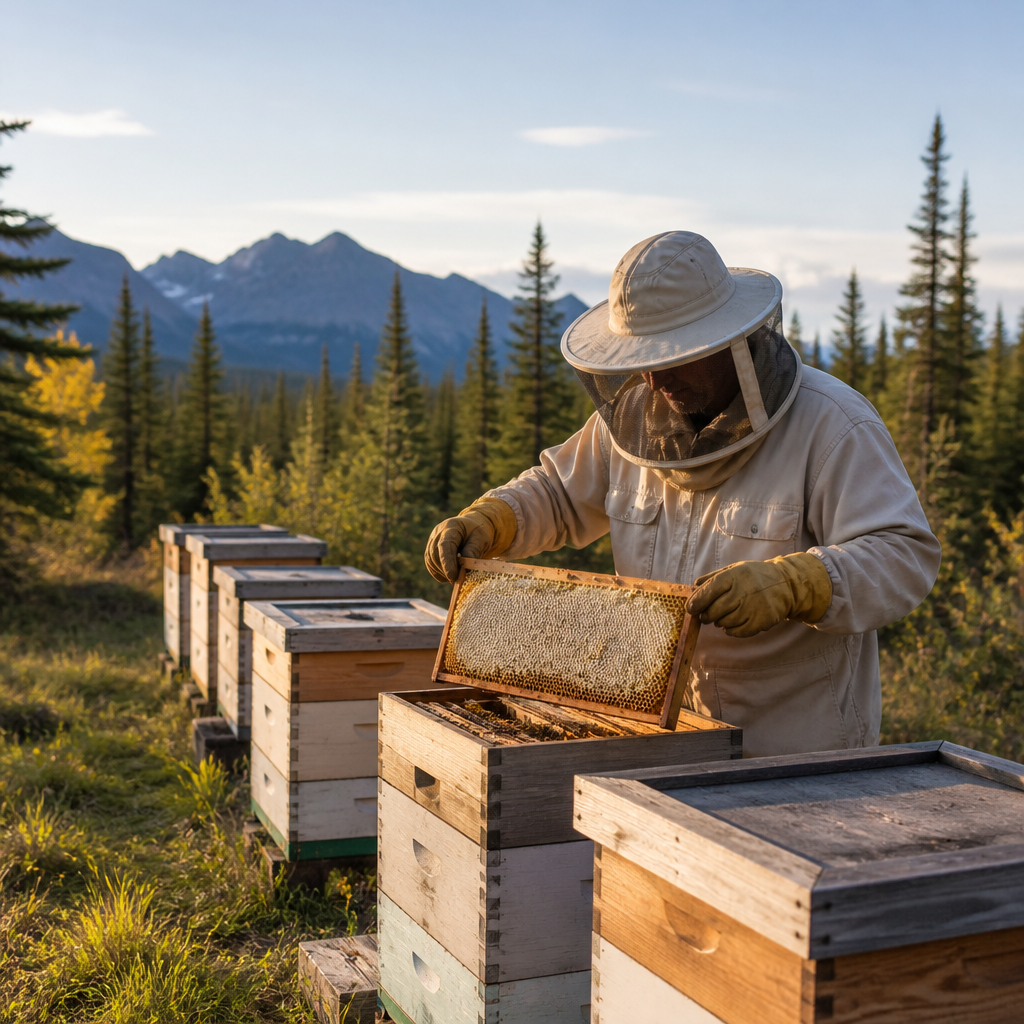
Off-grid beekeeping in Canada comes with a math problem most suburban keepers never face. A colony that looked strong in August can die by March if its fall work was rushed or skipped, and when you live far from town, you cannot fix a mistake in February by running to the supply store. Your winter prep has to be finished before the first hard freeze, using what you already have on site. This guide walks through the fall steps that decide whether your colonies come out in spring, including a few points that run against popular advice.
Table of Contents
- Quick Takeaways
- Why Canadian Winters Break Off-Grid Colonies
- Fall Timeline: What to Do and When
- Stores, Feeding, and Moisture Control
- Insulation and Ventilation
- Entrance, Mice, and Pest Control
- Single Brood Box or Two Deeps?
- Off-Grid Winter Monitoring Without Power
- Frequently Asked Questions
- References
Quick Takeaways
| Key Insight | Explanation |
|---|---|
| Stores decide survival | Colonies need enough capped honey within reach of the cluster to last until spring. Weigh hives in fall instead of guessing. |
| Mite counts come before the cold | Test and treat for varroa in late summer. A colony loaded with mites enters winter with fewer healthy bees. |
| Ventilate, do not seal tight | Moisture from condensation harms a cluster in the cold. Let vapour escape through a top vent or absorbent quilt box. |
| Shrink the entrance early | A reduced opening keeps out mice, wasps, and robber bees. Clear dead bees and debris from it throughout the winter. |
| Limit lid lifts once it turns cold | Each time you open the hive in near-freezing weather, heat escapes and the cluster is disturbed. Finish major work in the last warm days. |
| Match the box setup to colony strength | A weak colony in too much space struggle to heat it. A strong colony in one box may run short of room for stores. |
| Plan one mid-winter check | Pick a mild day, look for signs of activity, and lift the back of the hive to confirm the colony still has food. |
Why Canadian Winters Break Off-Grid Colonies
Honey bees do not hibernate. In cold weather a colony forms a tight cluster, generates heat by contracting its flight muscles, and slowly rotates bees from the cold outer shell toward the warm core where the queen sits. That process burns through honey all winter, and it only works while the cluster has food within reach and enough dry air to breathe.

Canadian winters test that system hard. Long stretches below freezing keep bees clustered for weeks, with few cleansing flights and little chance to move to a new food source. One overwintering guide puts it simply: honey bees are good at staying warm, but survival is far more likely with a well-reasoned plan.
We would love your feedback and any insights you would share with others. What perspective would you add?
How the Winter Cluster Uses Its Resources
The cluster is not a static ball of bees. It expands and contracts with temperature, and the bees on the outside can sit well below the temperature at the core. In practice, the colonies that come through best are the ones with a large population of young bees going into winter, since those bees live longer and keep the cluster strong through the coldest months.
Honey is the fuel, and the cluster will not reach for stores it cannot reach. A colony can starve with honey in the box if that honey sits in frames on the far side of the cluster. Where stores sit matters as much as how many there are.
Where Off-Grid Colonies Fail Most Often
Off-grid keepers have fewer options when something goes wrong, so the failure modes are predictable. Starvation, moisture, and mite damage cause most winter losses in cold regions, and each one is largely decided in the fall, not in January.
Distance makes every one of these more dangerous. A neighbour with a pickup can rescue a hive in town. On a remote property, a single missed step in September may not get fixed until April, when the colony is already gone.
Fall Timeline: What to Do and When
Work backward from your first expected hard frost rather than from a calendar date. The timing shifts a lot across the country, and a colony in a sheltered valley can be in cluster weeks before one on an exposed ridge. The sequence below holds regardless of where you are.
Late Summer: Mite Treatment and Feeding
Mite counts should happen before the last major flow ends, not after the first cold snap. A colony loaded with varroa in late summer raises fewer healthy winter bees, and mite-related viruses can weaken the bees that do survive. Test, treat according to the product label and your local guidance, then recheck after treatment.
If your colonies are short on stores, start feeding while the bees are still flying and can take syrup efficiently. Feeding in cold weather is slow and often ends with syrup sitting uncapped in the box, where it can ferment or draw moisture. Get the job done early.
Early Fall: Consolidating Boxes and Stores
Once the flow stops, size the colony’s living space to its population. A strong colony can winter in one deep or two, but a weak colony in too much space cannot hold heat, and the empty comb becomes a cold, damp area. Remove supers that hold no useful honey, and keep only frames that are capped or nearly capped.
Stores should sit in the frames directly above and beside the cluster, so the bees can move up through them as they eat. Uncapped honey is a liability in cold weather, so either remove it or make sure the bees have time to cap it before the temperature drops.
Once Nights Turn Cold: Final Sealing Tasks
Final tasks belong on the last warm days of the season. Reduce the entrance, install mouse guards, check the lid and seams, and add your wrap or insulation. Avoid major work once temperatures stay near freezing, because each lift of the lid lets heat escape at the worst possible time.
Pro tip: Keep a simple written log for each hive with the date of mite treatment, the weight at fall inspection, and the entrance setting. When you are alone on a remote property in February, that record tells you more than memory will.
Stores, Feeding, and Moisture Control
Stores are the most important variable you control in fall. Honey bees need enough capped honey to last until flowers return in spring, and the amount depends on your climate, the length of your winter, and the size of the cluster. Guessing is the most common failure, and weighing is far more reliable.
Weighing Hives to Estimate Stores
Tilt each hive slightly from the front, or use a hanging scale under the hive, and compare the weight with a known empty box. Keep a record so you can see how fast colonies use honey through the season. A hive that feels heavy from the back may still be light if most of the honey sits in the wrong box.
If a colony is clearly light, feed it until it reaches a weight that lets it finish the season comfortably. Do not assume the bees will consume all the sugar you give them before cold sets in, and feed only while the weather is warm enough for bees to take it.
Managing Condensation Inside the Box
Moisture is the quiet killer. Bees release water vapour as they metabolize honey, and that vapour rises to the cold underside of the lid, condenses, and drips back onto the cluster. Wet bees chill quickly and can die in the cold even when they have plenty of food.
In practice, the fix is ventilation at the top, not a tighter seal. Use an upper vent or a moisture board that lets vapour escape while keeping wind and rain out. The condensing hive concept proposes that the loss of carbon dioxide keeps bees too active through winter, but it is a model rather than an established rule, so it should never replace basic ventilation.
Insulation and Ventilation
Insulation and ventilation work as a pair, and getting one without the other causes problems. Insulation slows heat loss so the cluster does not burn honey faster than it must. Ventilation removes the moisture that insulation would otherwise trap inside the box. The right combination depends on your hive style, your exposure to wind, and how cold your winters get.

Outer Wraps and Windbreaks
Tar paper, foam board, or a commercial wrap around the hive reduces wind chill. Wind pulling heat off the box matters more than many keepers expect, especially on exposed sites. Leave the entrance and top vent clear, and avoid wrapping in materials that trap water against the wood.
Place hives out of the prevailing winter wind if you can, using a windbreak of brush or snow fence on the side the wind hits hardest. Good placement costs nothing and works all winter.
Quilt Boxes and Top Insulation
A quilt box sits on top of the hive, holds absorbent material such as wood shavings or straw, and adds insulation above the top bars while soaking up condensation. Many off-grid keepers prefer it because it does not depend on electricity or supplemental heat, and it lets you judge moisture without opening the lower boxes.
The common mistake is making the quilt box too thick or leaving it sealed with no vent. A box with no ventilation simply moves the problem from the lid to the absorbent material, which then grows mould. Replace the material if it stays wet.
What the Hive Cover Research Shows
A 2022 study on honey bee hive covers found that covered colonies consumed less food and survived better, but only when the other recommended overwintering preparations were also done. That last clause matters. A cover is not a substitute for stores, ventilation, or a sound entrance setup.
In practice, a dry, ventilated box protects a colony better than a tightly sealed one, even when the cold is severe.
Entrance, Mice, and Pest Control
The entrance is the one opening you control, and it has two jobs in winter. It needs to let bees out for cleansing flights on warm days, and it needs to keep out mice and robber bees. Many winter losses trace back to an entrance left at its summer setting.
Reducing the Entrance
Set the entrance to a small opening, typically with a reducer that leaves a narrow slot, so guard bees can defend against wasps, robbers, and mice. Check it regularly for dead bees and debris, since a blocked entrance restricts airflow and can trap moisture. On snowy sites, keep snow cleared from the entrance so bees can get out on warm days.
Mouse Guards and Robbing Risk
Mice look for a warm, dry place to nest once temperatures drop, and a hive is an attractive target. A mouse guard, a metal screen placed over the entrance, keeps them out while still allowing bee passage. Install it in fall, before mice move in, rather than waiting for chewed comb to show up in February.
Robbing can happen in fall when a weak colony has light defenses and its stores are exposed to strangers. Keep entrances small, avoid leaving honey or syrup open around the apiary, and clean up any spilled syrup from feeding. A colony robbed in October often has no time to recover.
Pro tip: Put the mouse guard on before the first cold week, and check it on every visit. A mouse that gets inside can chew comb and disturb the cluster before you notice anything wrong.
Single Brood Box or Two Deeps?
The number of brood boxes you winter in changes how the cluster moves, how much heat it needs to hold, and how much work you do in spring. There is no single correct answer. Choose the setup that matches your colony size, your stores, and how much you want to open the hive during winter.
Why Configuration Affects Heat and Stores
A single brood box concentrates the cluster in a smaller space, which makes it easier to keep warm and keeps stores within reach. Two deep boxes give more room for honey and a larger cluster, but a weak colony can struggle to heat the extra air volume. A common mistake is leaving a weak colony in a two-deep setup with half the frames empty.
Matching the Setup to Your Hive Count
If you run many colonies and want low-maintenance winters, a single brood box with a strong population and adequate honey is easier to manage, since you do less lifting and less lid work. If you have a few strong colonies, two deeps can suit a large cluster that consumes honey heavily. Either way, mark the frames that hold stores so you can find them by feel in February without opening the hive.
| Approach | Where It Works Best | Main Trade-off |
|---|---|---|
| Single brood box with supers removed | Colonies with a strong population and adequate capped stores | Little margin if stores run low or the cluster is weaker than expected |
| Two deep brood boxes | Large colonies with heavy honey consumption | Extra air space can be hard for a small cluster to heat |
| Single box with a quilt box on top | Exposed sites where insulation and moisture control matter most | More materials to source and maintain each fall |
Pick one approach and keep records for two winters before switching. A single season tells you little, because mild and harsh winters produce very different results from the same setup.
Off-Grid Winter Monitoring Without Power
Once the colony is buttoned up, your main winter job is to confirm it is alive and has food, without disturbing it. The University of Florida IFAS guide to overwintering in northern climates advises that once winter begins, beekeepers should manipulate hives as little as possible, though quick checks are possible at lower temperatures. That balance is where most off-grid keepers struggle.

Mid-Winter Checks on a Mild Day
Pick a mild day, and open the hive only as long as the check requires. Look at the top bars or the feeder for signs of the cluster, check the entrance for dead bees, and lift the back of the hive to note its weight. Close it up quickly, and keep the visit short.
Record each check in the same log you used in fall. A pattern of steady weight loss across several checks tells you more than any single reading, and it helps you decide whether emergency feeding is needed before the colony runs out.
Listening and Lifting Instead of Opening
A healthy colony hums audibly in winter, especially when you put your ear near the side of the hive on a quiet day. Silence is a warning sign, but do not treat it as a diagnosis on its own. Pair listening with a weight check before you decide what to do.
Lifting the back of the hive is the fastest way to see whether stores have dropped since fall. Combine that with the entrance check, and you will know most of what you need to know without taking the lid off in the cold.
Frequently Asked Questions
How much honey does a colony need to survive a Canadian winter?
No single number works everywhere, because consumption depends on cluster size, winter length, and how often the hive is disturbed. The practical approach is to weigh hives in fall, compare them with a known empty box, and feed light colonies while bees can still take syrup. Capped honey near the cluster matters more than the total on paper.
Should I wrap my hives in Canada, or is it unnecessary?
Wrapping helps most on exposed sites with long, windy winters, and it matters less in sheltered locations. Wrap only if you also manage ventilation and entrance size, because a wrap on a poorly vented hive can trap moisture against the wood.
Can I winter a colony in a single deep box?
Yes, if the colony is strong and has enough capped honey placed where the cluster can reach it. A weak colony in a single deep with too little food is one of the most common winter losses, so decide based on a weight check and an honest assessment of the population.
Is a quilt box better than a standard inner cover?
A quilt box holds more absorbent material and gives more insulation, which helps on cold sites. A standard inner cover is simpler and cheaper, and it can work well if you add a top vent and manage moisture through the entrance and lid. The better choice depends on your climate and how much fall work you can handle.
How do I know if a colony died over winter?
Dead colonies often have honey left in the box, dead bees clustered on the bottom board, and no activity at the entrance on warm days. A mid-winter weight check and listening can reveal trouble early, but confirmation usually comes in spring when you open the hive on a warm day.
Do I need to feed in winter?
Feeding in deep cold is generally ineffective and can cause problems, since bees cannot take liquid syrup easily and it may ferment. Fall is the time to feed. If a colony starts running low in late winter, emergency feeding with fondant or dry sugar placed above the cluster on a warm day is the usual fallback, but it is a rescue measure rather than a plan.
Tell us how your colonies came through last winter and which fall step you would change first, because your experience with your own climate is the kind of field data that helps the next keeper.
References
- University of Florida IFAS guidance on overwintering honey bee colonies in northern climates
- Fundamentals guide to overwintering honey bees
- Study on honey bee hive covers and colony food consumption
- Explanation of the condensing hive concept for winter colonies
Leave a Reply