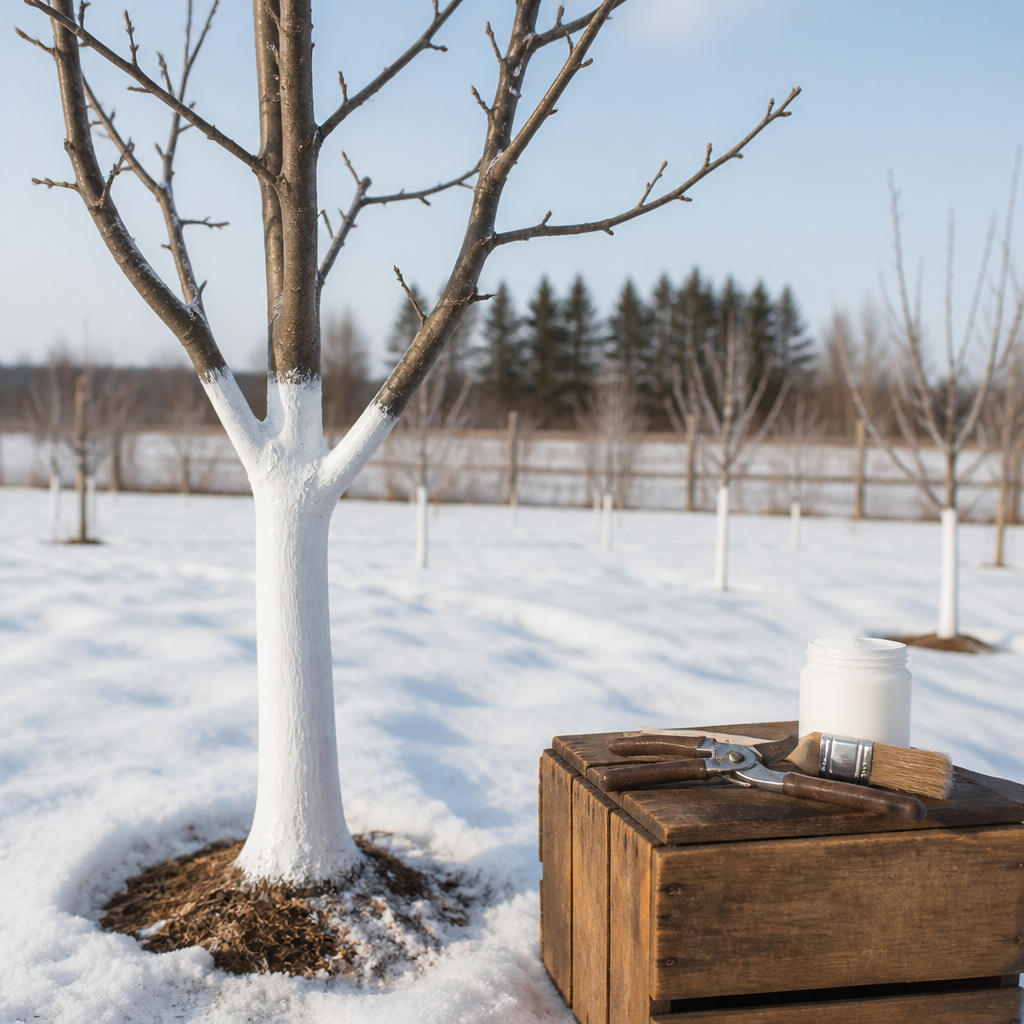
Every Canadian homesteader with fruit trees has seen it: a healthy apple tree leafs out beautifully in spring, then slowly fails because a bark split opened on a sunny February afternoon. Winter damage rarely announces itself. It shows up months later as dieback, weak fruiting, or a tree that never fully recovers. The good news is that most fruit tree winter protection in Canada comes down to a handful of practical steps you can finish before the first hard freeze, using materials you probably already have on the property.
Table of Contents
- Quick Takeaways
- Why Winter Damage Hits Fruit Trees Harder Than You Think
- Trunk Protection: Paint, Wraps, and Guards
- Rodents, Rabbits, and Snow Cover
- Watering and Mulch Before the Ground Freezes
- Pruning Timing and Clean Cuts
- Protecting Young Trees and Graft Unions
- Choosing the Right Protection Method for Your Orchard
- Frequently Asked Questions
- References
Quick Takeaways
| Key Insight | Explanation |
|---|---|
| Protect the trunk before the first hard freeze | Sunscald and frost cracks start on the sunny side of the trunk during warm winter afternoons. Paint or wrap in late fall, because repairing bark damage after it appears is not possible. |
| Take plastic guards off in spring | A University of Tennessee Extension publication on winter injury lists trunk guards and trunk painting as the two most common protection methods. Guards left on all year can trap humidity, so remove them once the cold season ends. |
| Save major pruning for late winter | Cuts made in late fall stay open during the coldest weeks and invite dieback. Wait until the tree is fully dormant and the weather is steadier. |
| Water deeply before the ground freezes | Wind and dry winter air pull moisture from bark and evergreen foliage, and frozen soil cannot replace it. Water during mild spells while the ground is still unfrozen. |
| Keep rodents away from the trunk | Voles and rabbits can girdle bark under snow cover, where you cannot see the damage. Pull mulch back from the trunk and use a wire cylinder around young stems. |
| Cover the graft union on young trees | The graft union is often the weakest point on a young tree. Keep it wrapped or protected, and check it after heavy snow or animal activity. |
Why Winter Damage Hits Fruit Trees Harder Than You Think
Winter is not one threat. It is several threats arriving at the same time, and most of the serious damage lands on the trunk and the crotches where major branches meet. Cold alone rarely kills a hardy tree that was properly acclimated in autumn. The killers are the swings, the sun, the wind, and the animals.
Sunscald is the most common problem on a Canadian homestead. On a clear winter day, the bark on the sunny side of the trunk warms above freezing, then temperatures drop sharply after sunset and the warmed tissue ruptures. In spring you see sunken, cracked bark on the south or southwest side that may spread over several seasons.
Frost cracks are the second common form of damage. They are long splits in the trunk that open when rapid temperature changes stress the wood, and thin-barked young trees are especially prone. Desiccation is the quiet third problem. Dormant branches keep losing water to dry air and wind, and when the soil is frozen, the roots cannot supply replacements, so the tips brown out by late winter.
Trunk Protection: Paint, Wraps, and Guards
Trunk protection is the first line of defence because sunscald and frost cracks are the damage you cannot fix later. The two most common approaches are trunk paint and trunk guards, and the choice between them depends on your climate, how many trees you have, and how much time you want to spend each autumn. Both work when they are applied before the first warm winter spell.
Whitewash and Trunk Paint
White trunk paint reflects sunlight, which keeps the bark temperature closer to the air temperature and smooths out the daily swings that cause sunscald. In practice, a light-coloured latex or a traditional lime-based whitewash applied from the base of the trunk up to the first major branches does most of the job. Paint is cheap, requires no plastic waste, and does not trap moisture against the bark.
The weakness of paint is coverage. It fades and washes off over the winter, so a thin coat applied in October may be patchy by February. Reapply in late fall each year, and check the trunk after heavy rain or a thaw.
Tree Wraps for Cold Climates
Tree wraps are useful on young trees with thin bark, particularly when the trunk is exposed to the sun on bright, cold days. A breathable wrap that is loosely applied and secured with tape at the top and bottom gives you insulation without sealing the bark in. Wrap from the base to the first branches and overlap the material so rain runs off rather than soaking in.
When Guards Trap Moisture
Plastic spiral guards are convenient, but they carry a risk that many homesteaders learn about the hard way. Seed Savers advises removing tree guards with inadequate airflow after the cold season, because leaving them on year-round can trap humidity and create a breeding ground for disease. Set a calendar reminder to take them off in spring, check the bark underneath, and let the trunk dry out before the growing season begins.
The protection that works is the protection you apply before the first warm afternoon, not the protection you wish you had installed after the bark split.
Pro tip: Paint the trunk on a mild, dry day in late fall, and apply the coat from the bottom up so drips do not streak the bark. A second light coat is more durable than one thick coat.
Rodents, Rabbits, and Snow Cover
Animal damage is the form of winter injury that surprises people most, because it happens under the snow where nobody looks. Voles tunnel through the snowpack and feed on the bark at the base of the trunk, and rabbits chew young stems that stick above the drifts. A tree can be girdled in a single winter, and by spring the top looks dead while the root system is still alive.
The fix is physical exclusion. A cylinder of fine galvanized hardware cloth placed around the trunk, pushed a few centimetres into the soil and extending above the expected snow line, stops most chewing. Remove the cylinder in spring so the trunk can grow and the metal does not girdle the tree as it expands.
Mulch is useful for moisture and soil temperature, but it becomes a hiding place for voles when it is piled against the bark. Pull mulch back from the trunk so there is a clear ring of bare soil around the base, and keep the grass mowed near the trees in late summer. On an off-grid property, this simple bare ring also makes it easier to inspect the trunk in February without digging through snow.
Pro tip: Walk the orchard after the first heavy snowfall and look for small gnawing marks or tunnels at the snow surface. Catching animal activity early gives you time to add a cylinder before the damage reaches the cambium.
Watering and Mulch Before the Ground Freezes
Most people stop thinking about water once the leaves drop, but dormant trees still need moisture. Evergreens and young trees are the most vulnerable to desiccation, especially after a dry autumn or a winter with strong wind. The window to fix this is small, because once the ground freezes solid, the roots can no longer draw water.

Deep Watering in Mild Weather
Water deeply during a mild spell when temperatures are above freezing and the soil is not frozen. A slow, deep soak that reaches the root zone is far more effective than a quick sprinkle, and it gives the tree a reserve going into the cold. On an off-grid system, drip tape run along the root zone lets you deliver that water with minimal waste, and reclaimed grey water can serve the same purpose where local rules allow it.
Mulch Depth and Placement
A layer of organic mulch a few inches deep around the root zone keeps the soil temperature steadier and holds moisture through the winter. Keep the mulch pulled back from the trunk, as described earlier, so the bark stays dry and the mulch does not become a shelter for rodents. Wood chips, straw, and shredded leaves all work, though straw can blow away on exposed sites.
Leave Frozen Soil Alone
Do not till, dig, or amend soil once the ground has frozen. Breaking up frozen soil damages fine roots and churns the mulch layer you spent the autumn building. Surface mulch is the right tool in winter, and deeper soil work belongs in spring when the ground has thawed and drained.
Pruning Timing and Clean Cuts
Pruning is one of the biggest winter chores in an orchard, and it is also one of the easiest ways to create damage yourself. The tree you prune at the wrong time can end up with open wounds that stay vulnerable through the coldest weeks. Timing matters more than the cut itself, so plan your pruning around the calendar and the weather rather than around the first free weekend.
Why Late Fall Pruning Backfires
Cuts made in late autumn are exposed at the worst possible moment. The wound cannot seal before the hard freeze arrives, and the exposed tissue is open to cold injury and to moisture that can encourage decay. Late fall is the time for removing only broken or dangerously hanging limbs, and even those should be cleaned up as neatly as possible.
Late Winter Is the Right Window
Major structural pruning is best done in late winter while the tree is still fully dormant and the weather is steadier. The tree has not yet started to push sap or open buds, and the cuts can begin to callus as soon as growth resumes. Make cuts just outside the branch collar, avoid leaving stubs, and sterilize your pruners between trees if disease is a concern in your orchard.
Protecting Young Trees and Graft Unions
Young trees are the most vulnerable trees in any orchard. They have thin bark, shallow root systems, and little internal reserve to recover from a bad winter. A tree in its first few winters can lose a season of growth to damage that an established tree would shrug off, so it is worth giving them extra attention.
The graft union, the swollen joint where the fruiting variety was attached to the rootstock, is often the weakest point on a young tree. Damage at the union can kill the scion above it while the rootstock sprouts below. Keep the union covered with the same wrap or paint you use on the trunk, and inspect it closely each spring for cracks, gumming, or suckers coming from below the join.
Heavy snow can also break young branches. Brush snow gently from the branches with a broom rather than knocking it off, because frozen wood snaps easily. Staking a young tree can help it stand up to wind, but check the ties in spring so the trunk is not constricted as it thickens.
Choosing the Right Protection Method for Your Orchard
No single method covers every threat, and the best approach on a homestead usually combines two or three. Paint handles sunscald, cylinders handle rodents, and sound pruning timing reduces the wounds that let disease in. The table below compares three common approaches so you can match them to your trees and your time.

Start with the threat that has actually hurt your trees before. If you have seen sunken bark on the south side, prioritize trunk paint. If you lost stems to voles or rabbits, prioritize cylinders and mulch clearance. Most orchards need both, and the cost of each method is small compared with replacing a mature tree.
| Approach | Best For | Watch Out For |
|---|---|---|
| White trunk paint or whitewash | Sunscald on thin-barked trees, budget-friendly coverage for large orchards | Fades and washes off, so it needs annual reapplication, especially after thaws and heavy rain |
| Plastic spiral trunk guards | Quick installation on young trees and areas with heavy sun exposure | Can trap humidity against the bark if left on year-round, so remove them in spring |
| Breathable wrap plus wire cylinder | Young trees, rodent-prone sites, and properties with heavy snow cover | Wraps must be loosened or removed in spring, and cylinders must be cleared of debris and checked after snow |
Frequently Asked Questions
When is the best time to protect fruit trees from winter damage in Canada?
Protect the trunk in late fall, before the first hard freeze and before any long warm spell that might trigger sunscald. Hardware cloth cylinders should be in place before the first significant snowfall, since voles can start tunnelling as soon as the snowpack builds.
Is white trunk paint better than plastic tree guards?
Neither is better in every case. Paint is cheap, breathable, and easy to apply to large numbers of trees, but it needs yearly renewal. Plastic guards are quicker to install but must be removed in spring to avoid trapping humidity against the bark.
Should I prune my fruit trees before winter?
Limit pruning in late fall to removing broken or dangerously hanging limbs. Save major structural cuts for late winter, while the tree is dormant, so the wounds can begin to heal as growth resumes.
Do I need to water fruit trees in winter?
Yes, especially evergreens and young trees on exposed or windy sites. Water deeply during a mild spell when the ground is not frozen, then add surface mulch and avoid digging into frozen soil.
What is the most overlooked winter risk for fruit trees?
Rodent damage under the snow is the most overlooked risk. Voles and rabbits can girdle the trunk or chew young stems without leaving any visible sign until spring, so check the base of the trunk after every major snowfall.
Tell us which winter protection method has worked best on your property, and what damage you saw before you changed your routine.
We would love your feedback and any insights you would share with others. What perspective would you add?
References
- University of Tennessee Extension publication on protecting fruit trees from winter injury
- Seed Savers guide on preparing fruit trees for winter
- Checklist for preparing the homestead for winter
- Key elements of an off-grid homestead, including water reuse and drip irrigation
Leave a Reply