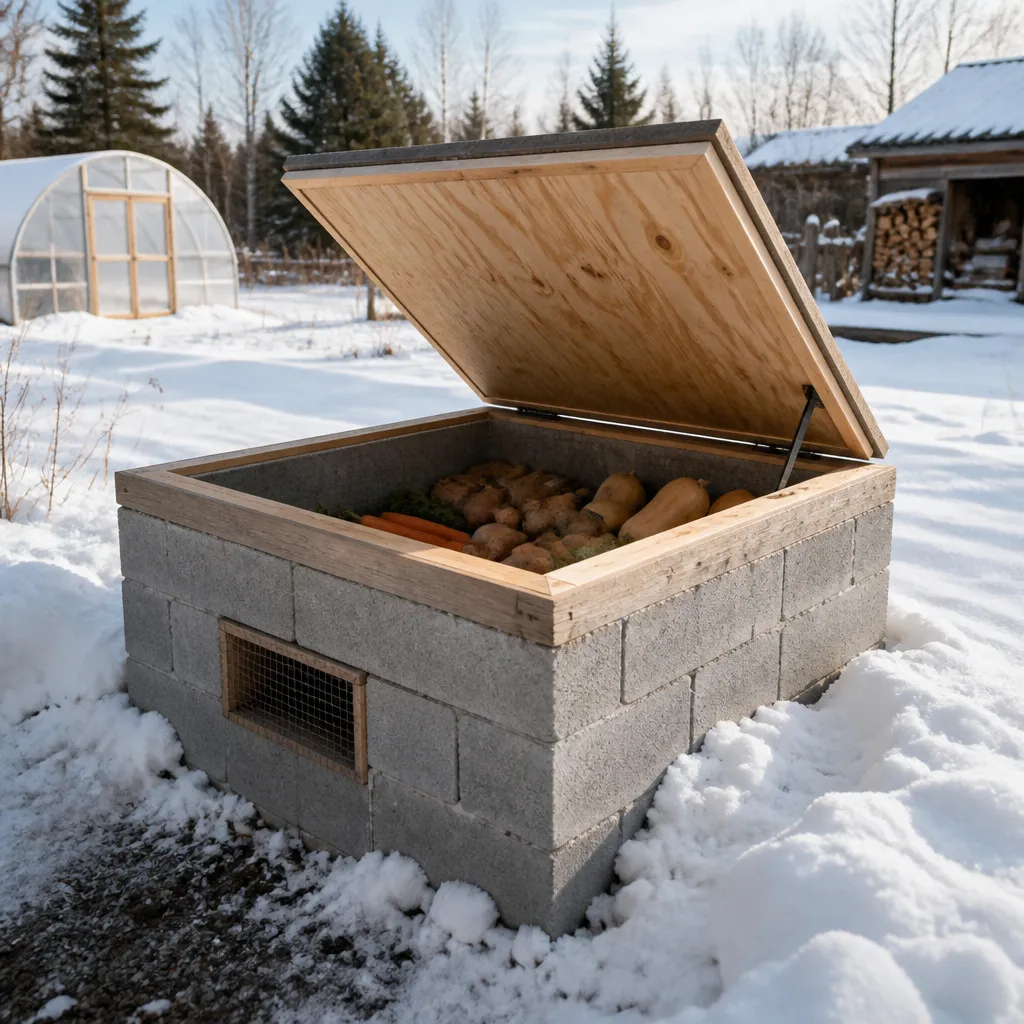
Every fall, the same problem shows up on homesteads: a good harvest of carrots, beets, potatoes, and cabbage, and nowhere reliable to keep it. A DIY outdoor cold storage box can solve that problem for a modest budget, but only if you get two things right: temperature and rodent control. Most failed winter storage traces back to one of those two, not to a lack of effort. This guide walks through the materials, site choice, and build details that matter for a Canadian winter, along with the mistakes that cost homesteaders their crops.
Table of Contents
- Quick Takeaways
- Why Root Crops Need a Separate Cold Store
- Choosing a Site That Stays Just Above Freezing
- Building the Cement Block Bin
- Lid, Ventilation, and Mouse Proofing
- Filling, Layering, and Monitoring Through Winter
- Common Mistakes That Ruin Winter Storage
- Cold Storage Options Compared
- Frequently Asked Questions
- References
Quick Takeaways
| Key Insight | Explanation |
|---|---|
| Test the site on the coldest day | Leave a min-max thermometer through at least one hard cold snap. An autumn reading tells you almost nothing about January. |
| Aim for just above freezing | Produce that freezes is ruined. If the site drops below freezing, move buckets indoors for a few weeks rather than heating the box. |
| Build with 16 x 8 x 8 inch blocks | One cold cellar build used 22 blocks of this size with a plywood lid, with blocks costing roughly $2 each in that region. |
| Seal every rodent route | Cover vents and lid edges with hardware cloth, and set bait outside the box before you fill it. |
| Vent to control moisture | A sealed box breeds rot, and a wide-open one dries the crop and lets temperature swing. Use an adjustable vent with a screen. |
| Keep apples out of the potato bin | Apples release ethylene gas, which triggers sprouting. Separate them or accept shorter potato storage. |
| Check weekly, especially during thaws | Warm spells cause condensation and fast rot. Remove soft or sprouting roots as soon as you see them. |
Why Root Crops Need a Separate Cold Store
Root crops are the easiest harvest to store and the easiest to lose. Potatoes, carrots, beets, and cabbage need cold, humid, dark conditions, and a kitchen fridge rarely offers all three at the volume a homestead produces.

Two problems decide whether a root crop lasts until spring: temperature and rodents. Most failed storage traces back to one of them, not to a lack of skill or the wrong variety of carrot.
The Two Problems That Decide Success
Temperature fails in two directions. Produce kept too warm sprouts, shrivels, and rots, while produce that freezes turns soft and unusable once it thaws. Mice fail you in the other direction, because a bin full of potatoes is a grocery store to anything with teeth.
Older houses with stone foundations are especially exposed. Any gap in the masonry gives determined mice and squirrels a route in, so the storage box has to be sealed on its own terms rather than relying on the house to keep pests out.
What a Dedicated Box Adds Over a Basement Shelf
A basement shelf depends on the basement cooperating. A dedicated box gives you direct control over the space, with walls that hold a steady mass of cold, a lid that keeps light and drafts off the crop, and an outdoor location that frees up your basement for other storage.
A cement block bin built as a cold cellar shows the same principle. Storage improves when you stop hoping the conditions will hold and start controlling them.
Choosing a Site That Stays Just Above Freezing
The target is simple to state and harder to hit: keep the box above freezing without letting it warm up. Produce that freezes is ruined, and produce kept in a warm space ages fast, so the site decides more than the build does.
Testing the Site Before You Commit
Put a min-max thermometer in the spot you have in mind and leave it through at least one hard cold snap before you buy blocks. An October reading tells you very little about the coldest weeks of the year.
Garages and cold basements are the usual candidates. An attached garage can run warmer than expected on mild days and colder than expected whenever the door opens, so test it rather than guess.
Pro tip: Before you buy a single block, check the site on the coldest morning of the year. A reading taken at noon in autumn tells you nothing about January.
When the Coldest Weeks Drop Below Freezing
If the site falls below freezing during the coldest stretch, you have two realistic options. You can carry buckets to a mudroom or unheated pantry for a few weeks at a time, or you can add heat.
I would push most homesteaders toward moving the crop rather than heating the box. A heated box needs a reliable power source, ventilation, and a fire safety plan, and on an off-grid system that power costs you in fuel and attention. Carrying buckets costs a few trips per week.
Building the Cement Block Bin
The cold cellar build referenced here uses 22 cement blocks and a piece of plywood. Blocks measuring 16 inches long, 8 inches wide, and 8 inches tall generally cost about $2 each in that build, so 22 blocks come to roughly $44 before the lid. Prices vary by region and change over time, so check local suppliers before you set a budget.
Layout, Level, and Footprint
Set the first course on firm, level ground and check it with a level before you lay the second. A wobbly bottom course throws the whole bin out of square, and the lid will not seat properly, which leaves a gap for cold air and mice.
Size the footprint to what you actually harvest. A bin that is too big wastes cold air and makes the bottom hard to reach, while one that is too small forces you to pile crops deeper than they can handle without bruising.
Drainage and Bedding
Do not set the bin directly on a plastic sheet. Work it on well-drained ground or lay down gravel so meltwater can leave, because standing water at the base is where rot starts in the lowest layer.
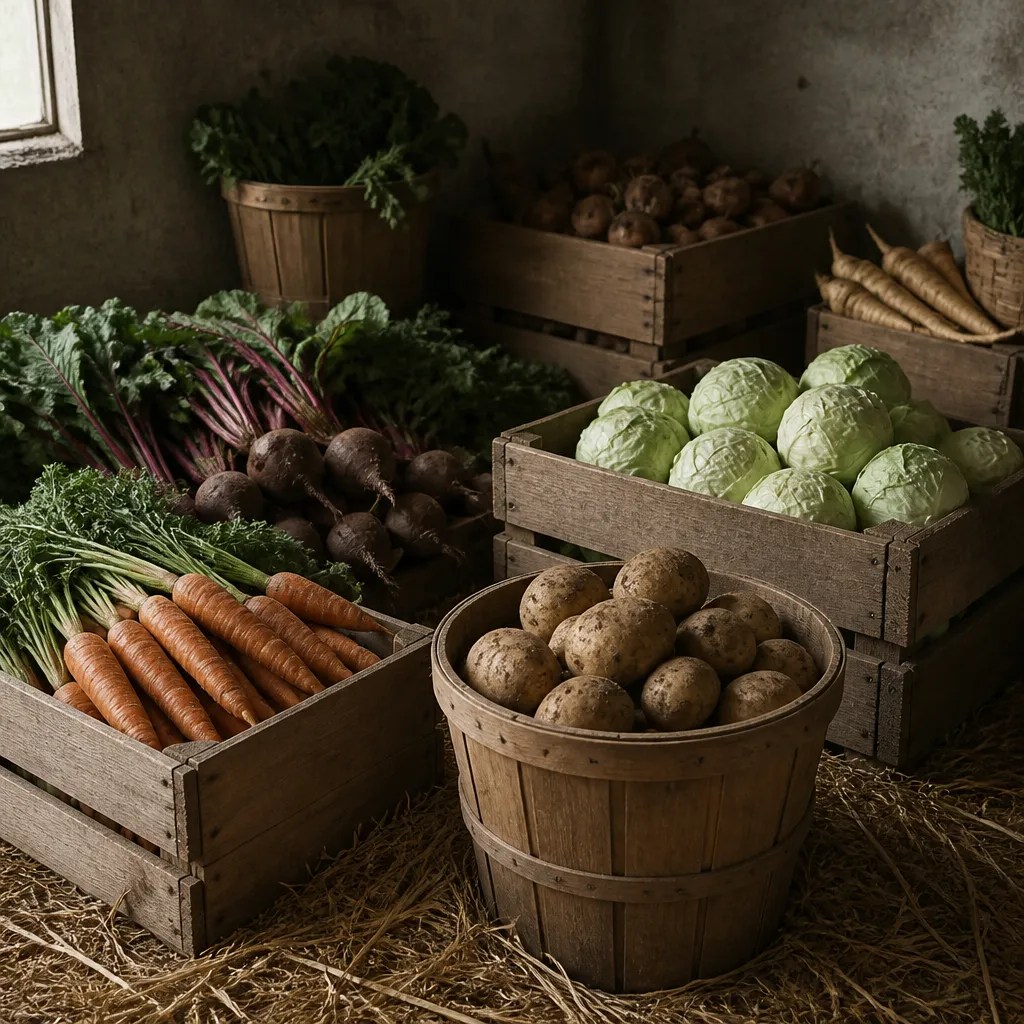
Bed potatoes on dry straw or clean sawdust rather than bare block. Carrots and beets keep better in slightly damp sand or sawdust, which slows shriveling. Replace the bedding if it gets wet or starts to smell sour.
Lid, Ventilation, and Mouse Proofing
The plywood lid does two jobs. It blocks light and most drafts, and it gives you a way to reach in without dismantling the box. A bare sheet of plywood lets through a lot of winter air, so add rigid foam insulation to the underside and seal the edges with weatherstripping.
Ventilation Without Losing the Cold
Humidity and ventilation matter as much as temperature. A fully sealed box traps moisture and breeds rot, while a wide-open one dries the crop and lets the temperature swing with every warm day.
Use a small adjustable vent fitted with a cap and a screen, and open or close it as the weather moves. On mild spells in late fall, open it more to shed moisture. During a deep cold snap, close it nearly all the way to hold the cold.
Sealing Against Mice and Squirrels
Mice get through openings far smaller than most people expect, so a loose lid is not a barrier. Line vents and any gap at the lid edge with hardware cloth, and check the bottom course where the blocks meet the ground.
Pro tip: Set traps or bait stations outside the box before you fill it. Waiting until you find the first chewed potato means the damage has already started.
Walk the perimeter every few weeks in late fall. Look for droppings, chewed edges, and fresh tunnels in the soil or mulch near the box.
Filling, Layering, and Monitoring Through Winter
Curing and Choosing What Goes In
Store only roots that are clean, undamaged, and dry on the surface. Cut or bruised produce rots first and spreads the problem to its neighbours. Let potatoes and onions cure briefly in a dry, shaded spot before they go in, because wet skin invites decay.
Keeping Apples Away From Potatoes
Apples give off ethylene gas, which encourages potatoes to sprout early. Store apples in a separate container or a separate bin, or accept shorter potato storage through the winter.
Weekly Checks Through the Thaws
Plan a short check every week, and more often during mild spells. Pull out anything soft, sprouting, or moldy, and read the box thermometer each time you open the lid.
Winter thaws are where storage fails. The box warms, condensation forms on the lid and walls, and rot moves from one crop to the next quickly. A single rotten potato left in the bin can take out a whole layer within days.
University of Georgia Extension guidance on long-term food storage recommends clean, dry, dark places away from any source of moisture, because quality holds longer under those conditions. The same logic applies to a root crop bin, where moisture is the main thing to check for.
Common Mistakes That Ruin Winter Storage
Most failures follow a few predictable patterns. Each one is easy to avoid once you know it is coming.
Building the Box Too Tight
A box sealed like a cooler feels like a good idea until condensation starts dripping onto the crop. Give it a vent and some airflow from the first day, even if the site looks cold enough without one.
Trusting an Autumn Thermometer Reading
October weather tells you very little about February. Test the site through a deep cold snap, or assume it will be warmer than the thermometer says in the middle of winter.
Storing Damaged Roots Alongside Sound Ones
Damaged roots belong in a separate basket for eating first. Mixing them into the bin is the fastest way to lose a full layer of sound stock.
A cold box that runs too warm rots its crop, and a box that runs too cold freezes it. Most of the work is holding the middle, and the middle is found by checking, not by building.
Cold Storage Options Compared
Not every homestead needs a purpose-built box. Some households already have a spare refrigerator, a cold basement, or an old crock with a lid, and each approach trades cost, capacity, and control in a different way.
Matching the Method to Your Harvest
A cement block bin makes sense when your harvest is large enough to fill it and your site stays cool without power. A refrigerator makes sense for small quantities where exact temperature matters more than volume. A crock in a cold basement works for modest amounts, but you accept whatever temperature the basement delivers that week.

| Storage Option | Where It Works | Main Drawback |
|---|---|---|
| Cement block bin with plywood lid | Large harvests, outdoor or unheated space, very low running cost | Requires a well-chosen site, rodent proofing, and regular manual checks |
| Spare refrigerator | Precise temperature control for small quantities of crops that need tight conditions | Small capacity and constant electricity use, which is a real cost on an off-grid system |
| Crock with plywood lid in a cold basement | Modest amounts, and a basement that already stays cool | Temperature swings with the basement, and you have little control over humidity |
On an off-grid system, the refrigerator’s power draw is often the deciding factor. Reserve it for crops that need the tightest control, and keep the bulk of the harvest in the outdoor box.
Frequently Asked Questions
Can I build an outdoor cold storage box if I do not have a basement?
Yes. An outdoor box works on well-drained ground in a spot that stays above freezing through the coldest stretch of winter. Test the site with a min-max thermometer before you commit, because location matters more than the build.
How much does a cement block cold storage box cost?
In the build referenced here, blocks measuring 16 by 8 by 8 inches cost about $2 each, so 22 blocks come to roughly $44 before the plywood lid. Prices vary by region and change over time, so check local suppliers.
What temperature should a winter vegetable box stay at?
Keep it just above freezing. Produce that freezes is ruined, while produce kept warm sprouts and rots. Put a thermometer inside the box and check it through cold snaps, not just on mild days.
Why do my stored potatoes keep sprouting?
Warmth and light are the usual causes, and apples are a common hidden cause because they give off ethylene gas. Store potatoes cool and dark, and keep apples in a separate container.
How do I keep mice out of a cold storage box?
Cover vents and lid edges with hardware cloth, check the bottom course where the blocks meet the ground, and set traps or bait stations outside the box before you fill it. A loose lid by itself is not enough.
Should I add a heater to the box when it gets very cold?
Usually not. Moving buckets to a mudroom or unheated pantry for a few weeks is simpler and safer than running power and managing ventilation for a heated box, especially on an off-grid system.
Have you built a winter storage box, or are you still deciding where it should go? Share your experience with us, including what you store and what failed in your first winter.
References
- Gardening guide to building a cement block cold cellar for root vegetables
- University of Georgia Extension guide to long-term food storage conditions
Leave a Reply