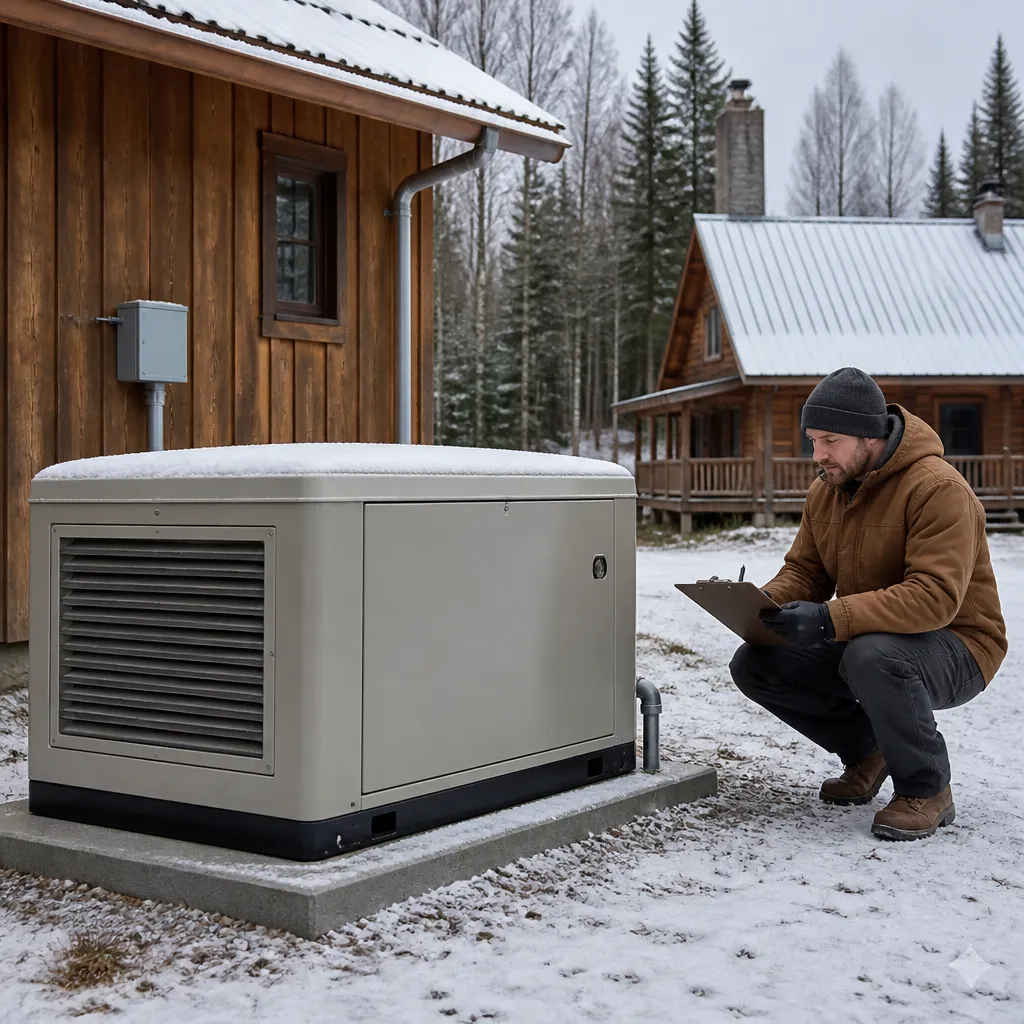
A generator that starts easily on a warm September afternoon can refuse to turn over on a January morning with a foot of snow on the roof. For off-grid homesteaders across Canada, that failure is not a minor inconvenience. It can mean a dead well pump, frozen water lines and a freezer full of food going bad. Off-grid generator maintenance in Canada comes down to doing the unglamorous jobs before the cold arrives: battery health, oil grade, fuel, airflow and a real load test. This checklist walks through each one in the order I would run it.
Table of Contents
- Quick Takeaways
- Why Winter Hits Generators Harder
- Battery Care Before the First Cold Snap
- Oil Grade and the Crankcase Heater
- Fuel Stabilization and Diesel Gel
- Air Intake, Exhaust and Safe Placement
- Cooling System and Coolant Protection
- Load Testing and Keeping a Maintenance Log
- Choosing Your Cold-Weather Approach
- Frequently Asked Questions
- References
Quick Takeaways
| Key Insight | Explanation |
|---|---|
| Load test the battery in early autumn | A battery that reads fine on a multimeter can still fail a cold start. Test it under load before the first hard frost. |
| Match oil grade to your coldest night | Check the viscosity range in your owner’s manual and any heater requirement, then pick the grade for your lowest expected temperature. |
| Stabilize gasoline before the last run | Fill the tank, add stabilizer at the printed rate and run the engine a few minutes so treated fuel reaches the carburetor. |
| Ask for winter diesel before it gels | Diesel wax can crystallize in cold weather and starve the engine. Request a cold-rated blend or add anti-gel before the first hard frost. |
| Clear the intake and exhaust after every snowfall | Snow and ice restrict airflow in and out, which raises overheating risk and pushes exhaust toward your building. |
| Never run a generator indoors | Carbon monoxide is odourless and builds quickly in garages, sheds and porches, even with the door open. |
| Keep a dated log of every run | Starting attempts, voltage and runtime trends reveal weakening parts while there is still time to fix them. |
Why Winter Hits Generators Harder
Cold attacks a generator in three ways at once. It thickens the oil, it cuts the battery’s ability to deliver cranking current, and it lets moisture work into places that stayed dry all summer. Any one of these is manageable on its own. All three together, on the night the power drops, is how a standby unit becomes an expensive lawn ornament.

Off-grid properties feel this more than grid-connected homes. For many of us the generator is not a rare backup. It is the charging source for the battery bank during short winter days when solar output drops. A generator that will not start can leave the water pump, the freezer and the heating controls dark at the same time.
The Three Failures I See Most Often
Dead batteries are the most common winter call. The second is a gummy oil film that turns a quick start into a long, grinding crank that drains the battery further. The third is a clogged fuel line or carburetor, usually caused by stale gasoline left in the tank from the previous season.
None of these failures are exotic. They show up in roughly the same order on almost every unit that goes unmaintained. A checklist that works through the battery first and finishes with a load test catches most problems while there is still time to fix them.
Why Timing Matters More Than Effort
Most of this work takes an afternoon. The difficulty is doing it in early autumn, before the first hard frost, when you can work outside in mild weather. Waiting for the first snowfall means changing oil with numb fingers, and a battery swap done in a blizzard is one you will remember for the wrong reasons.
Battery Care Before the First Cold Snap
The battery is the first thing I check and often the first thing that fails. Cold reduces how much current a battery can deliver, and a battery that is only partly charged loses even more capacity in the cold. A battery that cranks the engine easily in September can be marginal by January.
Load Test Before You Trust It
A voltage reading tells you the battery is charged. It does not tell you whether the battery can deliver a cold start. Use a load tester, or have a shop run one, and replace any battery that drops sharply under load or is near the end of its rated service life. Swelling, cracks or a rotten-egg smell mean replace it immediately, and handle it with gloves and eye protection.
Battery Warmers and Battery Placement
Winter kit guidance describes two main types of battery warmer. Manual units need you to switch them on, while thermostatic units turn on by themselves when the temperature falls to around 40°F (4°C). I prefer thermostatic units, because the one time you forget a manual switch is the one time you need the generator. Either style can wrap the battery or sit beneath it, but keep cables and wiring clear of fuel lines and exhaust.
Pro tip: If the generator sits idle all winter, keep the battery on a maintainer or trickle charger. A discharged lead-acid battery in a cold shed can freeze and crack, and a cracked case means a dead battery and a leak risk.
Oil Grade and the Crankcase Heater
Oil keeps the engine from grinding itself apart, and it is also the fluid that suffers most in the cold. Once it thickens, it cannot reach the bearings quickly enough during a cold start. The friction in those first minutes causes most of the winter wear, so getting the right oil in before the freeze is one of the cheapest insurance policies you can buy.
Choosing 5W or 10W Oil
The number before the W describes how easily the oil flows when cold, and lower numbers flow more easily at low temperatures. Some heaters require 10W oil and others require 5W, so check the heater’s requirement before you buy oil. Your owner’s manual lists the viscosity range for your engine, and that range is the boundary you should not cross.
Synthetic Oil and Heater Compatibility
Most crankcase heaters also require synthetic oil, which keeps its flow better at low temperatures than conventional oil. Confirm that requirement before you buy the heater, not after. Installing the heater usually means draining and replacing the oil, so schedule that job with your regular maintenance before the cold arrives.
Oil Change Timing for Winter Storage
Some service providers recommend changing oil in spring. For a unit that sits through winter, I would change it in autumn after the last heavy use. Used oil carries combustion contaminants and acids that sit against metal for months, so a fresh change gives you a clean starting point.
Pro tip: Write the oil grade and the change date on a strip of tape stuck to the engine. Next October you will not have to guess what went in, and you can check the dipstick against a known baseline.
Fuel Stabilization and Diesel Gel
Fuel is where I see the most avoidable failures. Gasoline breaks down in storage and forms gums and varnish that clog the small passages in a carburetor. A unit that sat idle for a few months can look fine, then struggle to run smoothly once it takes a load.
Gasoline: Stabilize It and Run It Through
Fill the tank close to full in autumn so there is less air space for condensation to form. Add a fuel stabilizer at the rate printed on the bottle, then run the engine for several minutes so treated fuel reaches the carburetor. If the unit will sit all winter, draining the carburetor bowl removes the gumming risk completely, though it is fiddly work.
Diesel and Cold-Rated Fuel
Diesel behaves differently. Wax in the fuel can crystallize at low temperatures, a process called gelling, and a gelled line will starve the engine. Ask your fuel supplier for winter-blend diesel before the first hard frost, and use an anti-gel additive if a cold-rated blend is not available. Keep the tank as full as practical, since a partly empty tank holds more air and more moisture.
Propane Units and Supply Pressure
Propane avoids most gasoline storage problems, but the regulator and hoses still need attention. Propane vapour pressure drops as temperatures fall, so a tank that runs low can deliver less fuel on the coldest nights. Inspect hoses for cracks and stiffness once the cold sets in, and replace any that feel brittle.
Air Intake, Exhaust and Safe Placement
Airflow is the least glamorous part of winter preparation and one of the most dangerous. A generator needs clean air coming in and clean exhaust going out, and snow, ice and drifting can block both. A blocked intake can cause the engine to run poorly and overheat, and a blocked exhaust can push fumes back toward the building.
Frost and Snow at the Intake
Some winterizing kits include equipment designed to keep frost from building up on the air intake or alternator. Whether or not you buy a kit, check the intake after every snowfall and knock off any accumulation. A storage cover keeps out dust and debris, but remove it before you start the engine.
Carbon Monoxide Is the Real Winter Risk
Never run a generator in a garage, shed, basement, porch or any enclosed space, even with the door open. Carbon monoxide is odourless and can reach dangerous levels within minutes in a closed space. Place the unit outdoors on level ground, facing away from doors, windows and vents, and keep the exhaust path clear of snowbanks.
Install battery-powered carbon monoxide alarms on every level of the home and near sleeping areas, and test them at the start of the season. Snow piled against a wall can redirect exhaust back toward the building, so check placement again after every storm.
Pro tip: Before the first snowfall, mark the generator’s location with a tall stake. Plow operators and snow blower users then know to go around it, and you can find the unit quickly during a storm.
Cooling System and Coolant Protection
Liquid-cooled generators need the same coolant protection as a car in winter. Seasonal guidance from one service provider tells owners to inspect the radiator and check coolant levels, and in cold climates that check matters more than most people expect. Coolant that is too weak can freeze and crack the engine block or radiator, and that repair is expensive.
Testing Antifreeze Strength
Use a coolant tester to check the freezing point. Make sure it is rated comfortably below your lowest expected temperature. Use the coolant type specified in the owner’s manual, since mixing chemistries can cause deposits and poor heat transfer. If the fluid looks brown, rusty or smells burnt, drain and refill before the cold arrives.
Hoses, Belts and Radiator Fins
Squeeze the radiator hoses while the engine is cold. Hoses that feel soft, crunchy or bulging should be replaced now, not after the first freeze, when a split hose can empty the system in minutes. Clean debris from the radiator fins, check the drive belts for cracks, and keep leaves and grass clippings away from the cooling air intake.
Load Testing and Keeping a Maintenance Log
A generator that starts is not the same as a generator that carries a real load. The only way to know your unit can handle a winter outage is to run it under the loads you expect, long enough for the engine to reach normal operating temperature. Idling in the driveway for five minutes proves very little.

Run a Loaded Test Before the Season
Connect the heaviest equipment you would actually run during an outage, such as a well pump, a chest freezer or an electric space heater on a suitable circuit. Let the unit run at that load for at least 30 minutes. Watch for voltage sag, surging, smoke, unusual vibration or rising temperature. Never backfeed household wiring without a proper transfer switch, because doing so can endanger line workers and your neighbours.
What to Log Every Time You Run It
Keep a notebook or spreadsheet with the date, runtime, approximate load, number of starting attempts, voltage readings, oil level and any warning lights. A log turns vague impressions into patterns. If starts take two tries this November after one try last winter, the battery or fuel system is giving you an early warning.
Pro tip: If it is safe to run the generator outdoors, exercise it monthly through winter to keep fuel moving and the battery charged. Skip the run during heavy blowing snow, when the intake may be blocked.
Choosing Your Cold-Weather Approach
No single setup suits every property. The right approach depends on how cold your site gets, how often you run the generator and whether you have a sheltered place to keep it. The table below compares three common approaches, including where each one falls short.
| Approach | How It Works | Where It Falls Short |
|---|---|---|
| Thermostatic battery warmer and crankcase heater | Warms the battery and oil automatically when temperatures drop, so starts stay reliable without manual steps. | Needs a power source and the correct oil grade. It does nothing for fuel gelling or frost on the intake. |
| Manual battery warmer with cold-weather oil | Lower cost, and you decide when to switch it on. | Depends on you remembering to switch it on before a storm, which is the most common point of failure. |
| Battery moved indoors during storage with the generator left outside | Keeps the battery out of the cold and easy to maintain on a charger. | Does nothing for the engine, oil or fuel. The battery must be reinstalled and cabled carefully before use, and the generator itself must never come indoors. |
My recommendation for any unit that must start on short notice is the thermostatic setup, paired with a fresh cold-weather oil change and stabilized fuel. Manual warmers are fine for a shed that rarely sees an outage, but they put the burden of memory on you during the worst weather.
A generator that has never been tested under load is an assumption, not a backup.
Frequently Asked Questions
How early should I start generator maintenance before a Canadian winter?
Start in early autumn, ideally September or early October, before the first hard frost. Battery testing, oil changes and fuel stabilization take a few hours in total and are far easier before snow arrives.
Can I use the same oil all year in an off-grid generator?
Not if your site gets much colder than the range in your owner’s manual. Use the grade the manual lists for your lowest expected temperature. If you add a crankcase heater, confirm its oil requirement first, since some heaters call for 5W and others for 10W.
Is it safe to run a generator in a garage with the door open?
No. Open doors and windows do not provide enough ventilation to keep carbon monoxide at safe levels. Run the generator outdoors, away from doors, windows and vents, and keep working carbon monoxide alarms in the building.
Does a battery warmer replace a battery load test?
No. A warmer helps the battery deliver current in the cold, but it cannot show whether the battery is worn out. Load test the battery in autumn and replace it if it fails under load.
How long can gasoline sit in a generator tank?
Untreated gasoline can start to degrade within a few months, and the timeline depends on fuel quality and temperature. Add a stabilizer in autumn and run the engine after dosing, or drain the carburetor if the unit will sit all winter.
Should I bring the generator inside during a winter storm?
No. Exhaust contains carbon monoxide, and an enclosed space can fill with it quickly. Keep the generator outdoors in a sheltered, well-ventilated spot, and bring only the battery indoors if you need to keep it warm.
Share your experience in the comments: what was the first cold-weather problem your generator threw at you, and how did you solve it?
References
- Seasonal generator maintenance guide covering battery, oil and cooling checks
- Cold weather generator guide explaining battery warmers, oil heaters and winter accessories
Leave a Reply