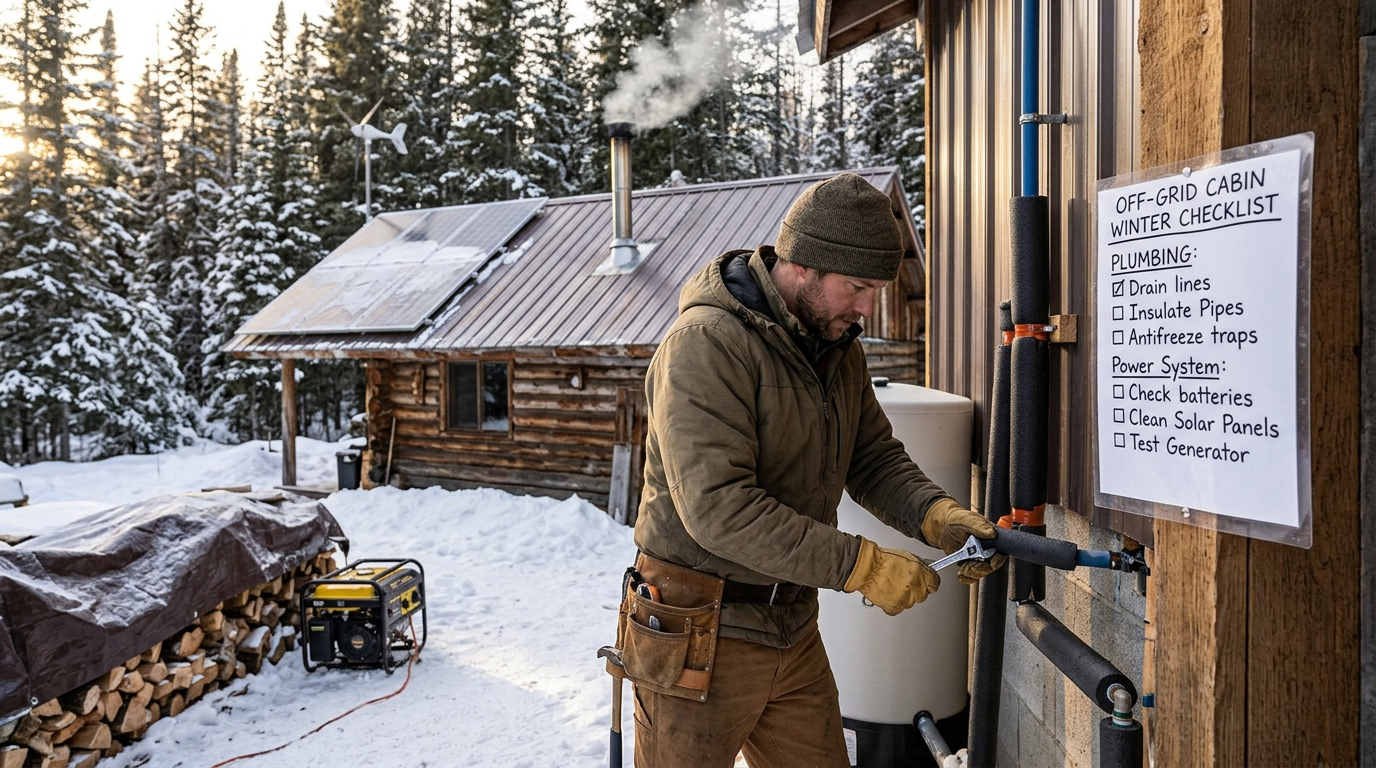
Winterizing an off-grid remote cabin starts with draining vulnerable plumbing or maintaining dependable freeze protection, then preparing your power system for cold weather and prolonged low solar output. If you leave for weeks without reliable winter access, a full water-system shutdown gives you fewer powered systems to maintain during an outage.

Your biggest risk is a chain of failures: snow covers your panels, your batteries run low, and your heat tracing stops while water remains in exposed pipes. For seasonal off-grid living in Canada, plan around the coldest conditions your cabin will face between visits.
Finish your preparations before the first deep freeze and while your access road remains usable. Give every system left running a backup plan and a person who can respond.
How Do You Protect Cabin Plumbing From Freezing?

You protect your plumbing by removing trapped water or keeping every water-filled component safely above freezing. Your choice needs to cover hidden pipe runs and equipment, including anything beneath the floor.
Choose Between Full Drain-Down and Continuous Freeze Protection
Choose a full drain-down when your cabin will sit empty and you cannot guarantee heat or a prompt response. Keep your water system active only when your winter power supply and heating equipment support continuous freeze protection.
| Your planning factor | Full drain-down | Continuous freeze protection |
|---|---|---|
| Unattended power demand | None for drained plumbing | Ongoing |
| Arrival routine | Refill and inspect | Check operation |
| Outage preparation | Verify complete drainage | Backup heat and response |
| Main vulnerability | Trapped water | Loss of heat or power |
For an active system, measure temperatures beside your coldest pipes. A thermostat reading in the living area gives you little information about a pump beneath the cabin.
Trace the failure path before leaving. If heat cable depends on your inverter, account for inverter standby consumption and low-battery shutdown. If backup power will run out before someone can reach your property, arrange an earlier drain-down.
Drain Pipes, Pumps, Water Heaters, and Fixtures Safely
Use your equipment manuals to establish the shutdown sequence. Prepare a written checklist so you handle concealed components consistently each autumn.
- Shut off your water supply and pump power. Release system pressure through a faucet.
- Isolate water-heater energy. Switch off electricity and shut down its fuel supply as instructed. Let stored water cool before draining.
- Open your designated drains and fixtures. Drain hot and cold branches, including outdoor taps and shower hoses.
- Empty vulnerable equipment. Follow the procedures for your pump housing, pressure tank, filters, treatment equipment, and appliances.
- Protect your fixtures and traps. Remove retained water where required, then add compatible plumbing antifreeze according to its label.
- Label your shutdown controls. Mark the water heater clearly so you refill it before restoring energy.
Check faucet cartridges, toilet fill valves, and check valves for retained water. Opening a low-point drain will not empty every pocket in a poorly sloped installation.
If your system requires compressed-air blowout, use clean, regulated air and stay within the lowest pressure limit specified for any connected component. Have a plumber establish the procedure if you do not know your system’s limits. Never use automotive antifreeze in your cabin plumbing.
Protect Wells, Cisterns, and Plumbing That Remains in Use
Keep your well cap secure and protect exposed risers, pump enclosures, and entry points. Have buried water lines assessed against local frost conditions; ground cover and burial depth need to suit your site.
Inspect your cistern’s lid, fittings, overflow, and outlet. Follow its manufacturer’s winter instructions, including any requirements for water level and protection against freezing or groundwater uplift.
For exposed lines that remain active, use certified heat cable approved for your pipe material and installation. Follow its instructions for insulation and ground-fault protection, and inspect it before covering it.
Pair each heated enclosure or cable circuit with temperature monitoring and an outage response. Avoid relying on a dripping tap at an unattended cabin: you consume stored water, run your pump, and risk freezing the drain.
Prepare Batteries, Solar Panels, and Backup Power

Your winter power plan needs to keep essential loads operating through poor solar conditions while protecting your batteries within their temperature limits. Separate the energy you need for freeze protection from the energy you use for comfort.
Follow Chemistry-Specific Battery Charging and Storage Limits
For your LiFePO4 batteries, check charging, discharging, and storage limits separately. Many models prohibit charging below 0°C unless an approved heating system first warms the cells; your manual supplies the exact threshold.
Verify that low-temperature charge protection works across every charging source, including solar and your generator charger. Use the manufacturer’s storage state of charge if you shut the bank down, and account for any remaining battery-management-system consumption.
For your lead-acid batteries, prepare for reduced cold-weather capacity and maintain the specified charge level. A discharged lead-acid battery freezes at a much warmer temperature than a fully charged one.
Before leaving your bank unattended:
- Inspect terminals and use the specified connection torque.
- Check flooded-cell electrolyte levels according to the manual, using appropriate protective equipment.
- Confirm compatible charging settings and temperature compensation.
- Maintain required ventilation, including in insulated enclosures.
- Follow the prescribed isolation sequence for seasonal shutdown.
If you remove batteries, check their storage-temperature limits and terminal-protection requirements before transporting them.
Use Insulated Enclosures and Approved Battery Heating
Use an insulated enclosure to slow heat loss, with approved battery heating where your operating temperatures require it. Without a heat source, your enclosure eventually approaches the surrounding temperature.
Choose manufacturer-approved heating pads or an integrated heated battery system with suitable temperature controls. Keep sensors positioned as directed so charging resumes only when your cells are warm enough.
Include heater consumption in your energy budget. For example, your 40-watt heater running for 12 hours uses 480 watt-hours before conversion losses or other loads.
Plan for depleted batteries as well as cold batteries. Your shutdown plan should isolate nonessential loads and preserve safe charging controls; your backup plan should provide an approved way to warm the bank and restore power.
Budget for Winter Solar Output and Test Generator Backup
Build your winter budget from local conditions during your lowest-production period. Include shading from low sun angles, snow cover, and consecutive overcast days.
List each essential load in watt-hours per day. Include heat tracing, battery heaters, communications equipment, inverter standby draw, and automatic-heater controls. Check motor-starting requirements separately.
Test your backup generator with the charger and essential loads connected. Verify cold starting, suitable oil, fuel condition, and the operating sequence before you need emergency power.
Operate a portable generator outdoors at least 6 metres from your cabin and away from doors, windows, and vents, with exhaust directed away. Follow any greater clearance in its manual. Keep it out of enclosed porches, sheds, and crawl spaces, and use approved electrical connections.
If you rely on automatic starting, test a simulated low-battery event. Arrange a response for failed starts or fuel depletion, and confirm that snow will not block ventilation or exhaust.
Keep Heat Reliable and Reduce Heat Loss
You need dependable heating for occupied stays and a separate, verified plan for any heat left running during an absence. Reduce heat loss after you have secured your plumbing and winter power supply.
Service Wood Stoves, Chimneys, and Vented Propane Heaters
Arrange inspection and cleaning of your wood-burning system before heating season. Check door gaskets, firebrick, chimney supports, and required clearances through a qualified professional where needed.
Store seasoned firewood under cover with airflow around it. Keep an accessible supply away from your stove’s clearance zone, and place ashes in a covered metal container outdoors on a non-combustible surface.
Have your vented propane heaters serviced, including their combustion-air and exhaust arrangements. Confirm whether your heater requires electricity for ignition, controls, or a blower, then include that demand in your backup-power plan.
Keep propane cylinders outdoors in an approved location. Clear drifting snow from regulators and vents without damaging them, and follow applicable provincial requirements. Use only heating equipment approved for its intended installation.
Seal Drafts and Improve Roof, Floor, and Window Insulation
Start with accessible air leaks around your doors, window frames, attic hatches, and service penetrations. Replace worn weatherstripping and use sealants suited to the materials and temperatures involved.
Fit window inserts securely while preserving any required emergency exits. Check behind removable inserts during occupied stays for condensation.
Inspect your roof or attic insulation for gaps and moisture damage. Protect exposed floor insulation against wind and rodents, especially beneath a raised cabin.
Keep combustion-air openings and required ventilation clear. For major insulation work, have your air barrier and vapour-control details assessed for your climate and wall assembly.
Understand What Radiant Heat and Thermal Mass Can Provide
Use radiant heat to improve comfort near a stove or another approved heat source. You still need temperature checks around plumbing beyond that heated area.
Treat thermal mass as stored heat with a limited duration. Masonry and other dense materials release energy previously absorbed, then cool as that supply runs down.
Account for the extra warm-up time when you arrive at a cold cabin. Have structural support and stove clearances assessed before adding heavy masonry features.
Prepare Warm Sleeping Gear for Heating Failures
Keep sleeping bags rated for your expected indoor emergency conditions, insulated sleeping pads, and dry layers accessible. Choose gear with a temperature margin because personal comfort and rating methods vary.
Use insulated bedding beneath you to limit heat loss into a cold mattress or floor. Keep spare clothing dry so you retain body heat if your heater stops.
Set an early departure threshold based on indoor temperature and travel conditions. Carry reliable communications and avoid waiting until a heating failure coincides with an unsafe route out.
Secure the Property and Plan Remote Winter Checks
Your winter checks need to catch building damage and system failures early enough for someone to respond. Remote monitoring supports that work when its power supply and communications connection remain available.
Inspect Roofs, Drainage, Pest Entry Points, and Snow Access
Inspect your roof from a safe location for loose roofing, damaged flashing, and vulnerable penetrations. Clear gutters where fitted and direct runoff away from your foundation before freeze-up.
Have snow-load concerns assessed for your roof design and location. Arrange qualified snow removal when needed; avoid climbing onto an icy roof yourself.
Seal pest entry points with durable materials suited to each opening. Remove food and rubbish, and inspect screened vents without restricting required airflow.
Plan access for your winter visits and emergency help. Mark hazards that disappear under snow, secure outbuildings, and keep entrances and fuel access clear. Confirm your insurer’s requirements for vacancy and inspection frequency.
Test Safety Alarms and Set Up Temperature and Battery Alerts
Test your smoke and carbon monoxide alarms using their instructions, check replacement dates, and confirm their rated operating temperatures. Provide battery backup where required.
Position temperature sensors near vulnerable plumbing and inside your battery enclosure. Set warning levels early enough for travel time; a pipe-space alert around 5°C gives you more response time than an alert at freezing.
Monitor battery state of charge where your equipment supports reliable reporting. Add loss-of-contact alerts so silence triggers a check.
Your monitoring equipment still depends on power and connectivity. Cellular outages, a buried antenna, or an exhausted battery will interrupt reporting, so assign a local contact with keys and written shutdown instructions.
Use a Before-Frost, Midwinter, and Spring Reopening Checklist
Use a dated checklist and photograph your valve positions and controller settings. Share the record with anyone responsible for winter access.
Before frost
- Complete your drain-down or test active freeze protection.
- Prepare batteries using the correct chemistry-specific procedure.
- Service heating equipment and test backup power under load.
- Finish weather sealing and check your roof and drainage.
- Confirm alarm delivery and your local response arrangement.
During winter
- Review alerts and investigate missed check-ins.
- Schedule visits around your insurer’s requirements and system risks.
- Inspect after major storms when travel is safe.
- Check fuel, battery condition, snow accumulation, and evidence of leaks.
- Drain active plumbing if dependable heating becomes uncertain.
At spring reopening
- Inspect your building and plumbing before restoring services.
- Close drains and restore valves using your shutdown record.
- Refill and check for leaks with someone present.
- Fill your water heater completely before energizing it.
- Flush winterized lines and service your drinking-water system as instructed.
If you suspect frozen pipes, isolate the water supply and arrange a safe assessment. Never use an open flame to thaw them.
Leave Every Critical System Ready for a Long Absence
You are ready to leave when your water system is drained or reliably protected, your batteries are within their operating limits, and your response plan is in place. Check that each powered safeguard has a workable backup or shutdown procedure.
Before departure, record your final temperatures and battery readings, then send them to your designated contact. Confirm your backup generator’s status and leave clear instructions for isolating water if frozen pipes or a heating failure become a concern.
Book your winterization visit before the first deep freeze. Allow enough time to correct a failed test while your cabin remains safely accessible.
Frequently Asked Questions
You can use these answers to confirm your shutdown approach before leaving your cabin for winter.
Can I leave an off-grid cabin unheated all winter?
You can leave your cabin unheated when you have fully winterized its plumbing and prepared equipment for the expected temperatures. Check your appliance manuals, remove freeze-sensitive supplies, and confirm any insurer requirements before departure.
Is pipe insulation enough to prevent freezing without heat?
You need drainage or a dependable heat source to protect water-filled pipes through prolonged freezing conditions. Your pipe insulation slows heat loss but supplies no heat of its own.
Can LiFePO4 batteries stay in an unheated cabin?
You can store your LiFePO4 batteries in an unheated cabin if your expected temperatures fall within their specified storage range. Follow the required storage charge level and prevent charging below the model’s permitted cell temperature.
What antifreeze is safe for winterizing cabin plumbing?
Use a propylene-glycol RV or marine antifreeze labelled for potable-water-system winterization and compatible with your equipment. Follow its application and dilution instructions, check septic compatibility where relevant, and keep automotive antifreeze out of your plumbing.
How often should I check a remote cabin during winter?
Set your inspection schedule around your insurer’s requirements, your equipment’s unattended runtime, and local access conditions. Arrange additional checks after severe weather or alerts, with a named person able to arrive before your remaining freeze-protection reserve runs out.
Leave a Reply