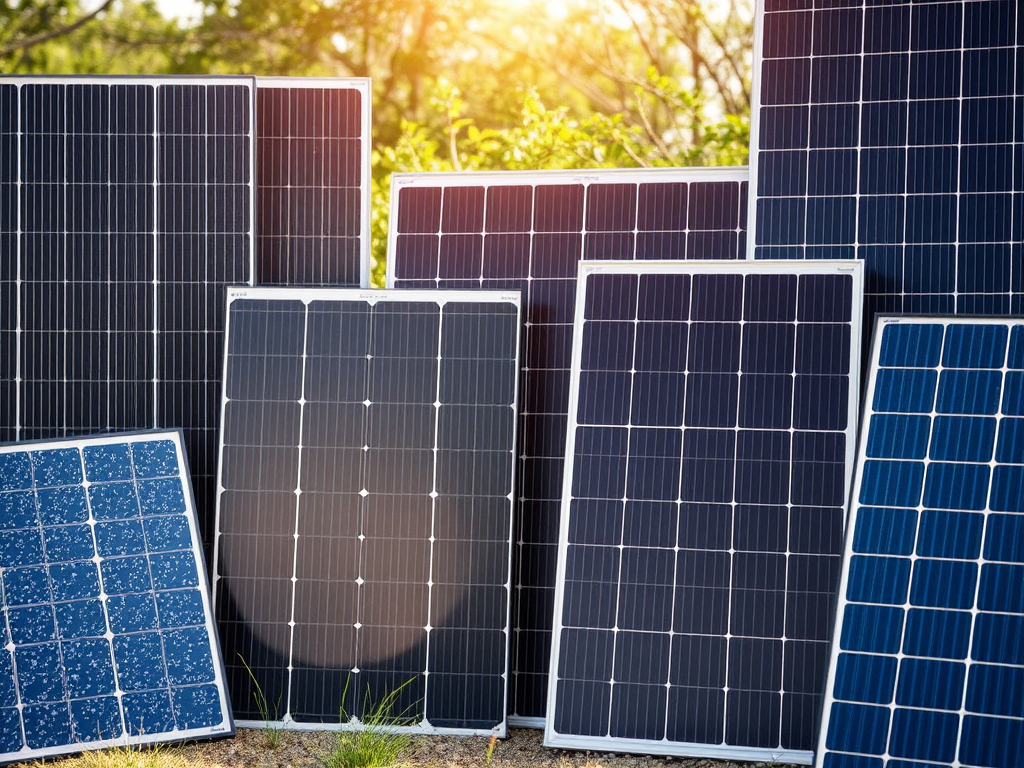

Solar power has become one of the most popular renewable energy sources for homes, cabins, RVs, and off-grid homesteads. However, not all solar panels are the same. Understanding the different types of solar panels can help you choose the best option for your needs, budget, and location.
Below are the main types of solar panels available today and how they compare.
1. Monocrystalline Solar Panels
Monocrystalline panels are made from a single, pure silicon crystal. They are easily recognized by their uniform black color and rounded edges.
Pros:
- Highest efficiency (18–23%)
- Perform well in low-light and cold conditions
- Long lifespan (25+ years)
- Require less space for the same power output
Cons:
- More expensive than other types
Best for: Off-grid cabins, rooftops with limited space, and cold climates like Canada.
2. Polycrystalline Solar Panels
Polycrystalline panels are made from multiple silicon fragments melted together, giving them a blue, speckled appearance.
Pros:
- More affordable than monocrystalline
- Reliable performance for most applications
- Widely available
Cons:
- Slightly lower efficiency (15–18%)
- Require more space for the same output
Best for: Budget-friendly home systems and larger installations with plenty of space.
3. Thin-Film Solar Panels
Thin-film panels are created by depositing photovoltaic material onto a surface such as glass, plastic, or metal. They are lightweight and flexible.
Pros:
- Lightweight and flexible
- Easy to transport and install
- Better performance in high heat and shade
Cons:
- Lower efficiency (10–13%)
- Shorter lifespan
- Require much more space
Best for: RVs, sheds, portable setups, and unconventional surfaces.
4. Bifacial Solar Panels
Bifacial panels can capture sunlight from both the front and the back, increasing total energy production when mounted over reflective surfaces like snow or gravel.
Pros:
- Higher energy output (up to 30% more)
- Excellent for snowy or reflective environments
- Durable design
Cons:
- Higher upfront cost
- Requires proper mounting for best results
Best for: Ground-mounted systems, open fields, and snowy regions.
5. PERC Solar Panels (Passivated Emitter and Rear Cell)
PERC panels are an advanced version of monocrystalline panels with an added layer that improves light capture.
Pros:
- Higher efficiency than standard mono panels
- Better low-light performance
- Increasingly common
Cons:
- Slightly higher cost
- Can degrade faster in extreme heat if poorly made
Best for: High-performance residential and off-grid systems.
Which Solar Panel Is Right for You?
| Use Case | Best Panel Type |
|---|---|
| Off-grid cabin | Monocrystalline or PERC |
| Budget setup | Polycrystalline |
| RV / portable | Thin-film |
| Snowy climate | Bifacial |
| Limited space | Monocrystalline |
Final Thoughts
Choosing the right solar panel depends on your space, climate, budget, and power needs. For most off-grid and residential systems, monocrystalline panels offer the best balance of efficiency and durability, while polycrystalline panels remain a solid budget option.
Solar technology continues to improve, making renewable energy more accessible than ever. Join me on my YouTube Channel HERE
Leave a Reply