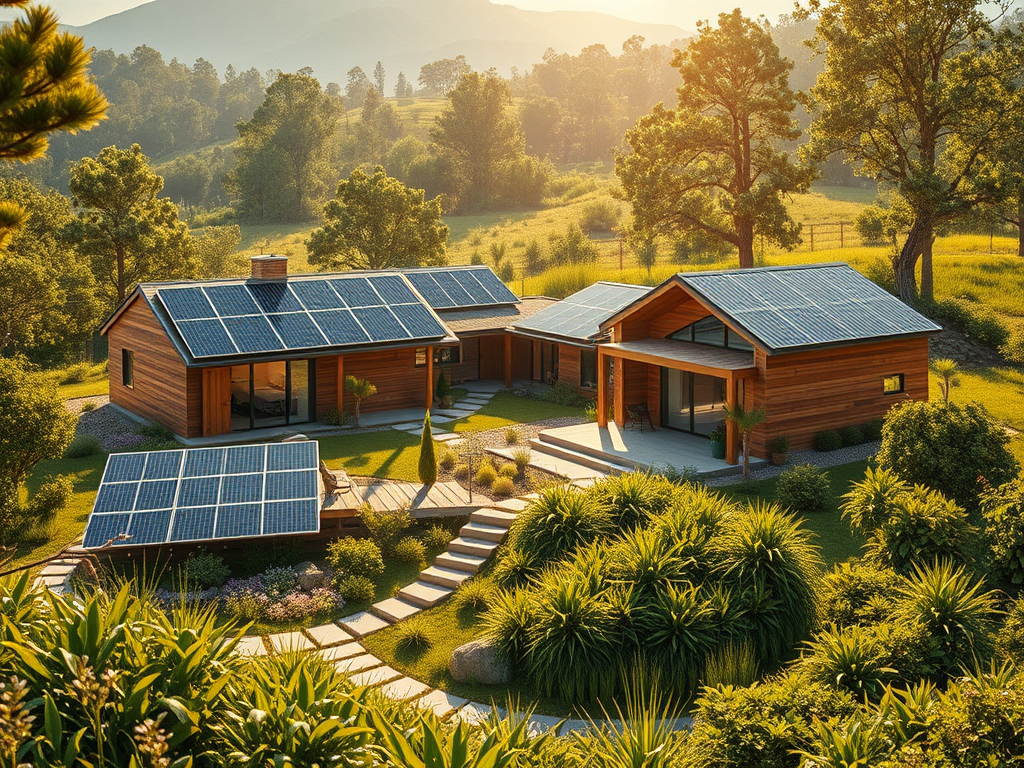
From solar breakthroughs to smart self-sufficient communities — the off-grid revolution is here.

Off-grid living has grown from a niche fringe pursuit into a mainstream lifestyle and sustainability movement — fueled by climate change concerns, soaring energy costs, technological advances, and a cultural desire for independence. No longer limited to rugged cabins deep in the woods, off-grid living now ranges from luxurious zero-emission estates to modular tiny homes and mobile micro-homesteads.
In this post, we explore the real trends defining off-grid life in 2026 — energy systems, water independence, smart tech, social shifts, communities, and what the future holds.
1. Energy Independence: Solar Still Rules — But Smarter


Solar power remains the heart of off-grid energy systems — but the technology powering it has matured dramatically.
☀️ High-Efficiency Solar and Hybrid Systems
Advances in photovoltaics mean modern panels exceed 24% efficiency, plus flexible, foldable, and integrated solar solutions let homeowners place energy generation almost anywhere.
Many systems today combine:
- Solar panels
- LiFePO₄ battery storage (longer life, safer than lead-acid)
- Smart inverters and controllers
- Supplemental wind or micro-hydro where appropriate
The result? Off-grid power systems that can reliably power everything from laptops to refrigerators — even in varied climates.
🔋 Battery Breakthroughs
Battery technology is advancing fast. LiFePO₄ chemistry is now standard in many systems, offering longer cycle life and higher safety, while larger modular storage can now support multi-day autonomy.
This shift means real off-grid living is no longer about compromise — it’s about choice.
⚡ Smart and AI-Assisted Energy Management
The next frontier isn’t just panels and batteries — it’s intelligence. AI-driven energy systems can predict usage patterns, optimize charging, and even balance multi-source renewable inputs for maximum output with minimal waste.
These systems let homeowners:
- Track energy use from a phone
- Automate peak shaving and power distribution
- Integrate satellite internet monitoring
This integration of digital tech makes off-grid energy more reliable and less hands-on than ever.
2. Water Independence: From Harvesting to Recycling


Energy gets the headlines, but water independence is equally critical.
💧 Rainwater Harvesting Goes Mainstream
Modern rainwater collection systems are smarter, more efficient, and easier to install. Stackable tanks, first-flush diverters, and freeze-resistant designs make harvesting usable water even in challenging climates.
🚰 Advanced Filtration and Purification
Gone are the days of bulky filters. New portable systems combine ceramic, UV, and micro-filtration tech to safely purify hundreds of gallons per day with minimal maintenance.
🔄 Greywater Recycling
Even water reuse has evolved. Greywater systems now legally complement compost toilets and irrigation systems in many regions, letting you reuse shower and sink water for gardens and crops — something that’s expected to become standard practice rather than an optional extra.
3. Homes That Work With Nature


Off-grid living is no longer about deprivation — it’s about design that works with natural systems.
🏡 Passive Solar Design
Smart passive architecture — south-facing windows, thermal mass walls, proper insulation and overhangs — reduces heating and cooling needs. This “low-tech smart” home design keeps spaces comfortable with barely any electricity.
🛖 Modular and Tiny Homes
Lightweight, modular structures built with SIPs (structural insulated panels) or prefabricated kits are rising in popularity. They’re energy-efficient, easier to install, and can often be relocated as needs change.
🍃 Composting Toilets & Eco Sanitation
Modern compost toilets are clean, odorless, and attractive — making off-grid sanitation practical and pleasant. Advanced separation systems speed decomposition and reduce waste.
4. Food, Storage & Self-Sufficiency
Off-grid isn’t just about energy and water — it’s about sustaining life over the long term.
🌱 Food Preservation & Production
Traditional food preservation methods like fermentation and dehydration are seeing a renaissance, while insulated root cellars and solar dehydrators make food storage efficient without electric appliances.
Some off-grid homesteads now use hydroponics and automated irrigation to grow crops year-round with minimal input.
5. Tech Meets the Wild: Connectivity & Smart Systems
One early barrier to off-grid living was isolation — now digital access is changing everything.
📡 Satellite Internet & Mesh Networks
Affordable low-orbit satellite services have transformed connectivity in remote areas. Combined with local mesh networks, these systems ensure reliable communication — essential for remote work, telehealth, schooling, and community coordination.
📱 Home Dashboards & Monitoring
Smart dashboards let off-grid residents:
- Monitor energy and water systems
- Receive alerts for system thresholds
- Control devices remotely
This internet-assisted autonomy blends modern comfort with self-sufficiency.
6. Evolving Social Trends — Off-Grid Isn’t Just Isolation
📈 Mainstream Cultural Interest
Off-grid living has moved into popular consciousness, partly thanks to social media influencers sharing setups online — for better and worse. Some believe this trend contradicts the ethos of simplicity and privacy.
🧑🌾 Community Models & Eco-Villages
Contrary to the stereotype of rugged individualism, many are choosing community-based off-grid living. Shared land, tools, water systems, and gardens make self-sufficiency more accessible and more sociable.
Examples like intentional communities demonstrate how off-grid living can be collaborative and resilient.
🧘 Digital Detox and Off-Grid Retreats
Even luxury travelers are seeking “off-grid stays” — secluded cabins without Wi-Fi or tech distractions — as a way to unplug from modern stress.
7. Luxury and High-End Self-Sufficiency
Off-grid living isn’t just cabins and tiny homes — it’s moving upscale too.
Architects and designers now create high-end zero-emission estates complete with geothermal systems, atmospheric water generation, and pre-industrial aesthetics. These homes push sustainability without sacrificing comfort.
8. What’s Coming Next — Future Trends to Watch
🚐 Mobile Micro-Homesteads
Tiny homes on trailers, caravan-style setups, and floating homes equipped with full off-grid systems are gaining traction. This mobility allows people to live sustainably in diverse environments.
🏘 Microgrids and Local Power Networks
More ambitious developments are exploring microgrid systems — shared energy hubs that balance generation, storage, and consumption for groups of homes or communities.
🧠 Regenerative Land Use
Off-grid systems increasingly incorporate eco-restorative practices — reforestation, soil regeneration, and stormwater management — making sites not just self-sustaining, but ecologically net-positive.
📜 Policy & Regulation Evolution
By 2026, building codes in many regions are catching up with off-grid innovations — providing clearer standards for solar, battery systems, and water recycling.
9. Real-World Advice for Aspiring Off-Grid Dwellers
If you’re considering going off the grid, remember:
✔ Invest in oversized systems for reliability — margins matter.
✔ Prioritize good storage for both energy and water.
✔ Choose modular systems — they’re easier to upgrade.
✔ Connect with communities — shared knowledge is invaluable.
Conclusion: Off-Grid Isn’t a Trend — It’s a Transformation
In 2026, off-grid living is no longer a subculture — it’s an evolving lifestyle blending sustainability, innovation, resilience, and community. From smart solar grids and water independence systems to connected digital infrastructure and communal living models, the off-grid movement is redefining what it means to live free from utility dependence.
Whether you’re planning a rural homestead, a tiny traveling home, or simply want to reduce your footprint, the tools and trends available today make off-grid life both attainable and empowering.
Leave a Reply