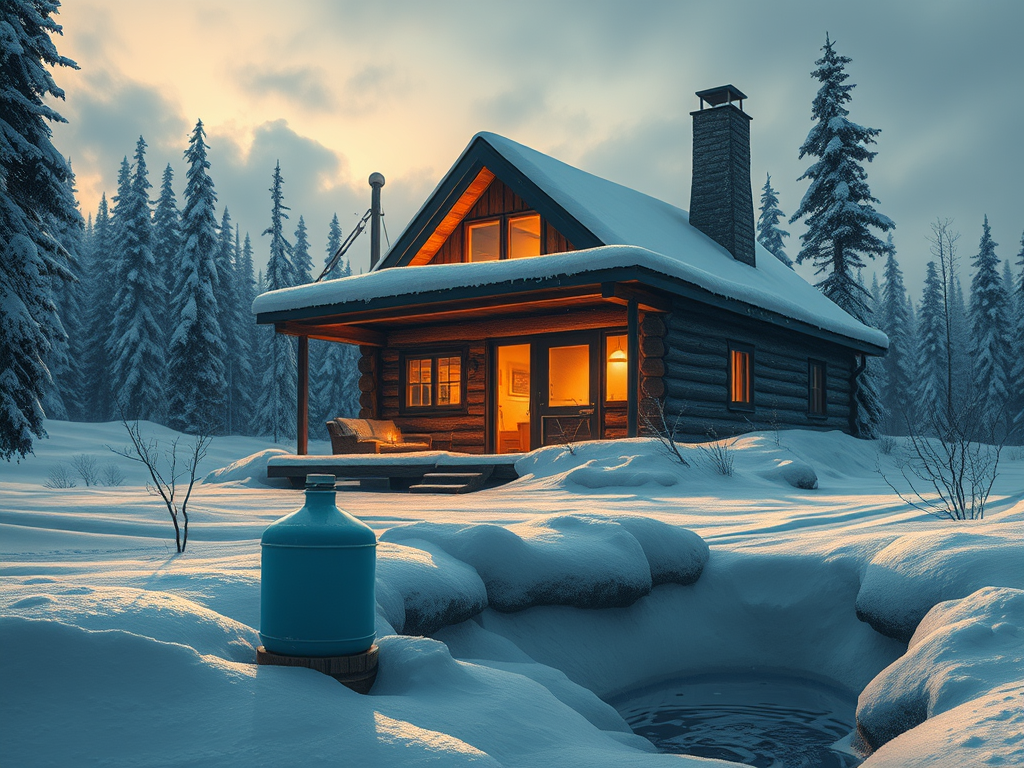
Real Solutions for Cabins, Homesteads, and Cold Canadian Winters

When you live off-grid, water isn’t just a convenience — it’s survival. And in cold climates like Canada, winter has a way of reminding you of that very quickly. A frozen water line, solid ice in your jugs, or a pump locked up by frost can turn a peaceful cabin morning into a full-blown crisis.
Keeping water from freezing off-grid isn’t about one magic solution. It’s about layering smart systems, understanding your environment, and accepting that winter always wins if you stop paying attention.
This guide covers practical, low-tech, and proven ways to keep water flowing when temperatures drop — whether you’re in a remote cabin, a homestead, or living off-grid full-time.
Why Water Freezes So Easily Off-Grid
In a grid-connected home, water systems benefit from:
- Heated crawl spaces
- Insulated basements
- Continuous water movement
- Backup heat sources
Off-grid systems don’t get those luxuries. Many cabins have:
- Shallow water lines
- Exposed pipes
- Intermittent use
- No constant heat
Water freezes at 0°C (32°F), but pipes can freeze even when air temps are just below freezing — especially with wind, shade, or poor insulation.
The goal isn’t just keeping water liquid. It’s keeping your entire system functional, accessible, and repairable in winter conditions.
1. Keep Water Inside Heated Space Whenever Possible
This is the single most important principle.
If water is inside your heated living space, it is dramatically easier to manage.
Best practices:
- Store water jugs indoors
- Route water lines through the cabin, not under it
- Place pumps and filters inside heated areas
Even a small amount of heat goes a long way. A cabin kept at 5–10°C will protect water far better than exposed pipes outside.
Rule of thumb:
If you can see it, touch it, and heat it — it’s safer.
2. Bury Water Lines Below Frost Depth (If You Have Them)

If your off-grid setup includes buried water lines from a well, cistern, or spring, depth matters.
In much of Canada, frost depth can range from:
- 4 feet in milder regions
- 6–8 feet in colder or northern areas
Tips:
- Research local frost depth before burying lines
- Use larger diameter pipe (freezes slower)
- Avoid sharp bends where ice can form
If burying that deep isn’t possible, insulation and heat become critical — but buried below frost line is always best.
3. Insulation Is Necessary — But Not Sufficient
Insulation slows heat loss, but it does not create heat.
Common insulation methods:
- Foam pipe insulation
- Rigid foam board
- Spray foam (where appropriate)
- Straw bales around exposed areas
Insulation works best when:
- Combined with residual heat
- Shielded from wind
- Kept dry
Wet insulation loses effectiveness fast. Always protect insulation from moisture and snow buildup.
4. Use Passive Heat From the Ground

The earth stays warmer than the air in winter — especially below frost depth.
Ways to use ground heat:
- Run water lines along the ground under insulation
- Create insulated trenches
- Store water containers partially buried
A simple insulated box placed on the ground can stay above freezing even during extreme cold.
This is old-school wisdom and still incredibly effective.
5. Keep Water Moving (When Possible)
Moving water freezes slower than stagnant water.
This works best for:
- Gravity-fed systems
- Slow drip systems
- Short-term cold snaps
Even a very slow drip can prevent freezing in marginal conditions — but it does waste water, so it’s best used sparingly.
Off-grid reality: sometimes wasting a bit of water is better than losing your entire system.
6. Heat Tape: Use Carefully Off-Grid
Electric heat tape can work — but it comes with risks.
Pros:
- Effective for exposed pipes
- Relatively easy to install
Cons:
- Power hungry
- Can fail unnoticed
- Fire risk if installed incorrectly
If you use heat tape off-grid:
- Only use self-regulating heat tape
- Power it through a reliable inverter or generator
- Never overlap or cross heat tape
- Inspect it regularly
Heat tape is best as a backup, not your primary solution.
7. Build an Insulated Pump Box
Pumps are one of the most common freeze failures.
An insulated pump box should:
- Be airtight but accessible
- Be insulated on all sides
- Use residual heat from the cabin or ground
- Avoid moisture buildup
Some off-grid setups add:
- A small incandescent bulb
- A low-watt heating element
- A vent to cabin air
Even 15–40 watts of heat can keep a small enclosure above freezing.
8. Drain Systems When Not in Use
If you’re not living at the cabin full-time, drain everything.
This includes:
- Pipes
- Pumps
- Filters
- Pressure tanks
Install drain valves at the lowest point of your system so gravity does the work.
A drained system can’t freeze — and draining is often faster than repairing burst pipes.
9. Store Emergency Water Separately

Always assume something will freeze eventually.
Keep:
- Several jugs of water indoors
- A way to melt snow or ice
- Backup containers that won’t crack
Wide-mouth containers freeze more safely than narrow ones and are easier to thaw.
Water security off-grid means redundancy.
10. Use Wood Heat to Your Advantage
If you heat with wood, you already have a powerful tool.
Ways to use it:
- Run water lines near the stove (not touching)
- Place water storage near warm walls
- Use stove heat to warm pump areas
Wood heat is reliable, grid-independent, and forgiving — perfect for off-grid water protection.
11. Accept Seasonal Adjustments
Off-grid living changes with the seasons.
Winter might mean:
- Hauling water instead of pumping
- Smaller water systems
- More manual effort
This isn’t failure — it’s adaptation.
Many experienced off-grid folks simplify their systems in winter and rebuild complexity in summer.
12. Learn From Freezes (Because They Will Happen)
Even with preparation, something will freeze eventually.
When it does:
- Don’t panic
- Never use open flame on pipes
- Thaw slowly with warm air or heat pads
- Inspect for cracks after thawing
Every freeze teaches you where your system is weakest.
Those lessons are expensive — but valuable.
Final Thoughts: Water Is the Heart of Off-Grid Life

Keeping water from freezing off-grid isn’t about comfort. It’s about self-reliance, resilience, and respect for winter.
The best systems are:
- Simple
- Accessible
- Redundant
- Adaptable
If you design your water setup assuming cold will win — you’ll rarely be caught off guard.
Winter doesn’t have to be your enemy. It just demands preparation.
And when your water keeps flowing during a –30°C night, you’ll know you’ve done something right.
Leave a Reply